An hourly moving rate is only half of your price. The other half is how many hours the mover bills, and that depends on when the clock starts, when it stops, how travel time is counted and what the minimum is. For a local move in San Francisco, the Peninsula, Silicon Valley or Marin, you get a reliable number only when you compare rates alongside a written estimate built on a documented scope. At Impel Moving, local moves carry a three-hour minimum, and the final cost comes from a written estimate, not from a rate quoted over the phone.
Key Takeaways
- Local movers commonly bill by the hour for a crew and truck. FreightWaves reports that two movers and a truck typically fall between $100 and $200 per hour, with the total driven by how long the job takes and which add-ons apply.
- Compare billing rules, not just the rate: minimum hours, how travel time is counted, and whether stairs, long carries or packing are billed separately.
- Under California’s household goods tariff, hourly time for moves of 100 miles or less includes loading, unloading and double the driving time between origin and destination.
- A written estimate based on a documented scope protects you from surprises on move day. Impel Moving’s planning ranges are on our rates page, and the final cost comes from a written estimate.
- Be wary of any mover that quotes only by phone or online, asks for cash only or a large deposit, or has no verifiable license and insurance information.
Table of Contents
- Why local movers bill by the hour
- What the hourly rate usually includes
- How the clock actually runs
- What changes the number of hours
- Fees that can sit on top of the rate
- Hourly pricing versus a flat or binding price
- How to turn a rate into a real total
- Protection: what happens if something is damaged
- Warning signs when you compare hourly quotes
- Perspective: why the estimate matters more than the rate
- Get a written estimate for your move
- FAQ
- Sources
Why local movers bill by the hour
Short-distance moves are driven by time, not mileage. A move across San Francisco can take longer than one from Palo Alto to Mountain View because of hills, parking, elevators and traffic, even though the distance is smaller. FreightWaves explains that traffic, stairs, elevators, parking distance and how organized a home is all affect the bill for exactly this reason.
So the hourly rate is a price for a crew’s time, and the total is that rate multiplied by the billable hours. Two movers with a well-organized one-bedroom apartment and an elevator may finish quickly. The same crew in a walk-up with a long carry to the truck will bill more hours, even at the same rate.
That is why a low rate does not guarantee a low total. The FMCSA, the federal agency that regulates interstate movers, warns that choosing a mover on the lowest price alone can cost you in safe handling and on-time delivery.
What the hourly rate usually includes
In California, the state’s Bureau of Household Goods and Services publishes a 2026 tariff of maximum rates and rules for household goods carriers. It states that hourly rates include pickup and delivery, subject to separate provisions for flights of stairs and long carries. In plain terms: the rate covers loading, driving and unloading, while some conditions at the home can be charged on top.
When you compare estimates, ask each mover to list, in writing, what the rate covers. A useful list includes:
- The number of movers in the crew and whether they are the company’s own employees.
- Furniture protection such as pads and wrap.
- Disassembly and reassembly of standard furniture.
- The truck and the fuel for local travel.
- Whether packing materials and packing labor are separate.
At Impel Moving, standard residential moves include furniture protection plus furniture disassembly and reassembly, and the crew members are Impel’s own uniformed, trained employees. Furniture assembly and disassembly is part of a booked moving service.
How the clock actually runs
Two movers can quote the same hourly rate and produce different totals because they start and stop the clock in different places. There are three things to pin down.
Minimum hours
Most local movers set a minimum number of billable hours, so even a small job is charged at that floor. Impel Moving’s local moves have a three-hour minimum. If your studio move takes two hours of work, the three-hour minimum still applies, so it helps to fill the time sensibly by moving everything in one trip and handling any packing or disassembly questions in advance.
Travel time
This is the most common source of confusion. FreightWaves describes two methods: on-site billing charges only the loading and unloading time, while door-to-door billing runs from the crew’s arrival at pickup through completion at delivery.
California’s tariff is specific for intrastate moves of 100 miles or less. According to the BHGS 2026 tariff, hourly time is calculated from loading, unloading and double the origin-to-destination driving time, subject to exceptions. Doubling the drive time accounts for the crew’s travel to and from the job. On a cross-town San Francisco move, that may add little. On a Marin to San Jose move, it can add hours.
Billing increments
The same tariff converts fractions of an hour using listed minute ranges, so a job does not have to be billed in rigid whole hours. Ask your mover whether they bill in quarter-hour, half-hour or full-hour steps. The difference matters most on short moves.
What changes the number of hours
Hourly cost is a function of time, and time depends on your home and your date. These are the factors that matter most around the Bay Area.
- Access. A third-floor walk-up in the Mission, a Victorian with steep front steps or a condo with a shared freight elevator you must reserve all slow the crew down. The BHGS tariff treats flights of stairs and long carries as separate provisions.
- Parking. If the truck cannot park near the door, the crew carries farther. Dense San Francisco blocks often need a plan for loading space ahead of time. Check with the SFMTA for temporary no-parking signs if you need to reserve curb space.
- Volume and preparation. A fully packed, labeled home moves faster than one where boxes are still being filled on arrival. Time spent waiting for you to finish packing is billed time.
- Heavy or delicate items. Pianos, safes, large artwork and server equipment take extra care and sometimes extra crew.
- Timing. Weekends, month-end dates and summer move-ins are busier, which affects availability and sometimes pricing.
- Packing. If the crew packs, that labor is time. The BHGS tariff requires the time actually spent packing or unpacking on an hourly move to be recorded on the shipping document, so ask to see it.
Fees that can sit on top of the rate
An hourly rate is a starting figure. Before you sign, ask whether any of these are billed separately, and get the answer in writing:
| Possible add-on | What to ask |
|---|---|
| Stairs or long carry | Is there a charge per flight or per distance, or is it already in the estimate? |
| Travel time | Is it billed door-to-door, on-site only, or as a flat fee? |
| Packing materials | Are boxes, tape and wrap included or itemized? |
| Heavy or specialty items | Is there a surcharge for pianos, safes or oversized pieces? |
| Extra stops | What is the charge for a second pickup or delivery address? |
| Disposal | Can unwanted furniture be removed, and how is it priced? |
Impel Moving works from a written estimate based on a documented scope, with no added charges on move day for work that should have been seen. If you want a piece of furniture removed, we offer furniture disposal as a listed service.
Hourly pricing versus a flat or binding price
Hourly pricing suits local moves where the scope is simple and the time is predictable. A flat price suits jobs where the mover can see the full scope up front and commits to a total. Long-distance moves are generally priced differently from local ones, and the cost depends on the shipment and the services. Other service trades also use bundled pricing, such as flat-rate roll-off dumpster pricing that folds delivery and pickup into one figure, and the principle is the same: a clear scope makes a clear total.
For interstate moves, the FMCSA draws a clear line between estimate types. In its estimating charges guidance, a binding estimate guarantees the charges for the listed quantities and services. A non-binding estimate is based on actual weight, services and tariff, and the mover can require payment of up to 110% of the estimate at delivery, plus permitted additional-service charges. The FMCSA calls this the 110 percent rule on its mover selection page. Our guide to a binding moving estimate explains what it guarantees and how it works. For distance moves from the Bay Area, see our long-distance moving page.
How to turn a rate into a real total
Use this routine with any mover you are considering.
- List what is moving. Count rooms, large furniture, boxes you will pack and anything delicate or heavy.
- Note the access at both addresses. Floors, elevators, stairs, driveway or street parking, and the distance from the door to where the truck stops.
- Ask for a written estimate based on a documented scope. The FMCSA says to get written estimates from several movers based on an in-person inspection, not a phone call alone. A video walkthrough can serve a similar purpose for a smaller move.
- Confirm the minimum, the travel-time method and the increments. Write down the answers.
- Check the paperwork. The estimate should be written and signed by both parties, and you should receive a dated copy at signing, according to the FMCSA.
- Check the license and insurance. Verify the mover’s U.S. DOT number and insurance, and check complaint history in the FMCSA’s search tool. Our page on licensing, insurance and COI for Bay Area moves shows what to look for. Many Bay Area buildings also require a certificate of insurance (COI) before a crew can use the elevator, so request it early.
Impel Moving is licensed and insured under California permit Cal-T / MTR 0192323, and long-distance moves operate under US DOT 3549568. Our guide on how to check a licensed moving company walks through the same verification steps.
Protection: what happens if something is damaged
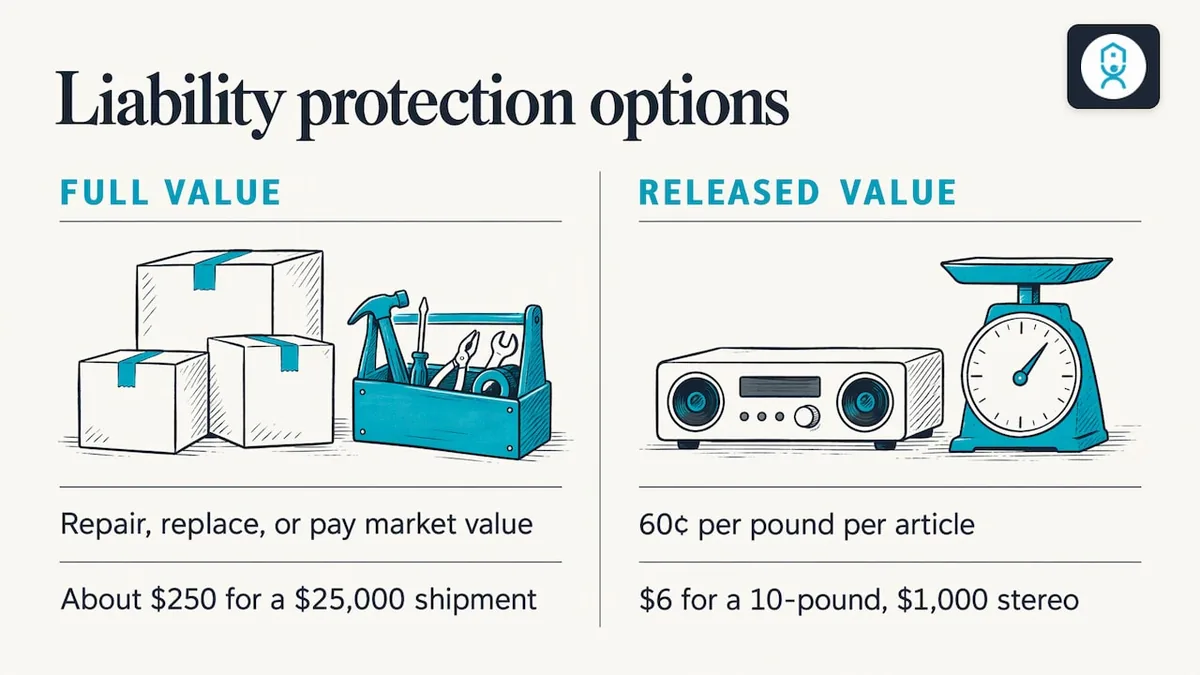
A low hourly rate means little if damaged items are not covered. For interstate moves, the FMCSA’s consumer guide describes two liability options. Full Value Protection means the mover repairs, replaces or pays the current market replacement value of lost or damaged items; the FMCSA gives the example that a $25,000 shipment costs about $250 to protect this way. Released Value Protection pays 60 cents per pound per article at no extra cost, so a 10-pound, $1,000 stereo would recover only $6.
Ask any mover which option applies to your move and what it costs, and get it in writing. For how our crews handle furniture and fragile items, see how we protect your belongings.
Warning signs when you compare hourly quotes
The U.S. Department of Transportation’s Office of Inspector General publishes a household goods fraud card with red flags that are worth keeping next to your quotes:
- No local address or FMCSA and insurance information on the website.
- Generic phone greetings instead of a company name.
- Estimates given by phone or online with no inspection.
- No written estimate.
- Refusal to provide the “Your Rights and Responsibilities When You Move” booklet.
- Payment by cash, wire or money order only, or a large upfront deposit.
- A rental truck arriving on moving day.
- A request to sign blank documents before loading.
An unusually low hourly rate paired with any of these is a reason to keep looking.
Perspective: why the estimate matters more than the rate
We are a locally owned and operated Bay Area moving company, not a franchise or a broker, and we think the most useful number in any move is not the hourly rate. It is the written estimate.
A rate tells you what an hour costs. An estimate built on a documented scope tells you what the move costs, because someone has looked at the access, the volume and the services before the truck arrives. That is why every Impel Moving job starts with a documented scope and a written estimate, and why you work with one coordinator from quote to placement.
The crews who arrive are Impel’s own uniformed, trained employees, never day labor. That matters on an hourly move, because efficient, practiced crews are what keep billable time down. Standard residential moves include furniture protection plus furniture disassembly and reassembly, so those do not turn into surprises. Our promise is no added charges on move day for work that should have been seen.
Our local moves have a three-hour minimum, and our planning ranges are published on our rates page. They are planning ranges, not quotes: the final cost comes from your written estimate.
Julia
Get a written estimate for your move
Whether you are moving out of a San Francisco apartment, a Peninsula or Silicon Valley house, a Marin home or a Bay Area office, the next step is the same: get a free written moving estimate from Impel Moving. See our local movers page for how hourly local moves work, or our apartment movers page if access and elevators are your main concern. Packing, unpacking and white glove delivery are listed services you can add to a booked move. Start at impelmovingca.com to request your free written estimate.
For planning ranges before you request an estimate, see Bay Area moving rates and pricing and Bay Area moving costs and written quotes.
FAQ
How much do movers charge per hour?
FreightWaves reports that two movers and a truck typically run between $100 and $200 per hour across the United States. Rates vary by market, crew size and the conditions of the move. For Impel Moving, use the planning ranges on our rates page and request a written estimate for your final cost.
Does the hourly rate include travel time?
It depends on how the mover bills. On-site billing counts only loading and unloading, while door-to-door billing runs from arrival at pickup through completion at delivery. For California intrastate moves of 100 miles or less, the BHGS tariff counts loading, unloading and double the driving time. Ask for the method in writing.
Is there a minimum number of hours?
Most local movers set one. Impel Moving’s local moves have a three-hour minimum, so even a small job is billed at that floor. Ask every mover you compare for their minimum, since it changes the cost of a small apartment move more than the rate does.
Can the final bill be higher than the estimate?
With a non-binding estimate on an interstate move, the mover can require up to 110% of the estimate at delivery, per the FMCSA. A binding estimate guarantees the charges for the listed quantities and services. At Impel Moving, the written estimate is based on a documented scope, with no added charges on move day for work that should have been seen.
What should I check before hiring a mover?
Verify the U.S. DOT number and insurance, read the written estimate and confirm what is included. Also look for the warning signs on the DOT inspector general’s fraud card, such as cash-only payment or a quote with no inspection.
Sources
- Maximum Rates and Rules for the Transportation of Used Household Goods, 2026 tariff (California BHGS)
- Average Hourly Rate for Local Movers: What To Expect (FreightWaves)
- Steps to Select a Mover (FMCSA)
- Estimating Charges, Subpart D (FMCSA)
- Before Requesting Services from Any Mover, Subpart B (FMCSA)
- Household Goods Moving Fraud (DOT Office of Inspector General)
- Miami Dumpster Rental Prices, flat-rate pricing
- SFMTA