The best California mover is a licensed company that sends its own trained crew, inspects your home before quoting, and puts a written estimate in your hands before moving day. In the Bay Area that matters more than anywhere, because tight San Francisco streets, walk-up apartments and Peninsula hillside homes are exactly where vague estimates turn into extra charges. At Impel Moving, a locally owned company serving San Francisco, the Peninsula, Silicon Valley and Marin, every move starts with a documented scope and a written estimate. Below is how to judge any California mover on the same terms.
Key Takeaways
- California household movers must be licensed by the state’s Bureau of Household Goods and Services (BHGS), and interstate movers also need federal authorization. Verify both before you book.
- Get written estimates based on an in-person inspection. For a move within California, the signed agreement should include a “not to exceed” price.
- Moves under 100 miles may be charged by the hour. Moves over 100 miles must be charged by weight and mileage.
- A very low bid is a warning sign, and so is a request for a large deposit.
- Book early, and ask who actually carries your belongings: the company’s own employees or hired day labor.
Table of Contents
- What a California moving company does
- Step 1: Confirm the license and insurance
- Step 2: Get an in-person estimate
- Step 3: Read what the estimate says
- What movers in California cost
- Red flags when hiring a mover
- Planning a Bay Area move: timing and prep
- Where Impel Moving fits
- Our perspective
- FAQ
- Sources
What a California moving company does
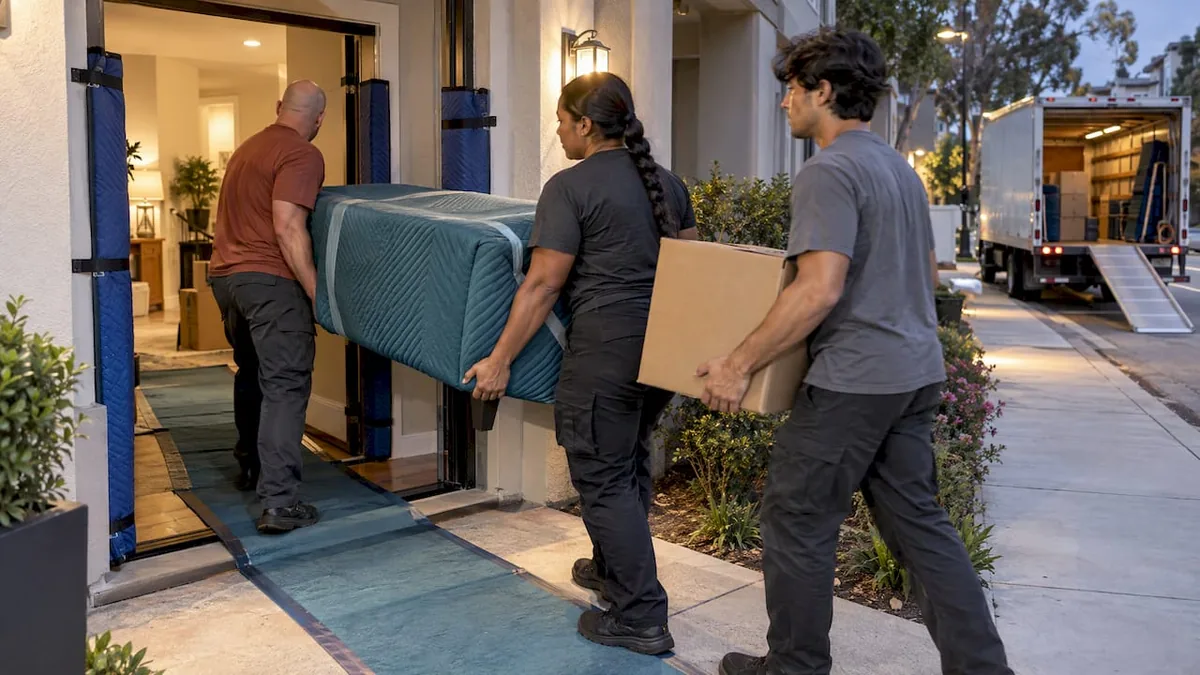
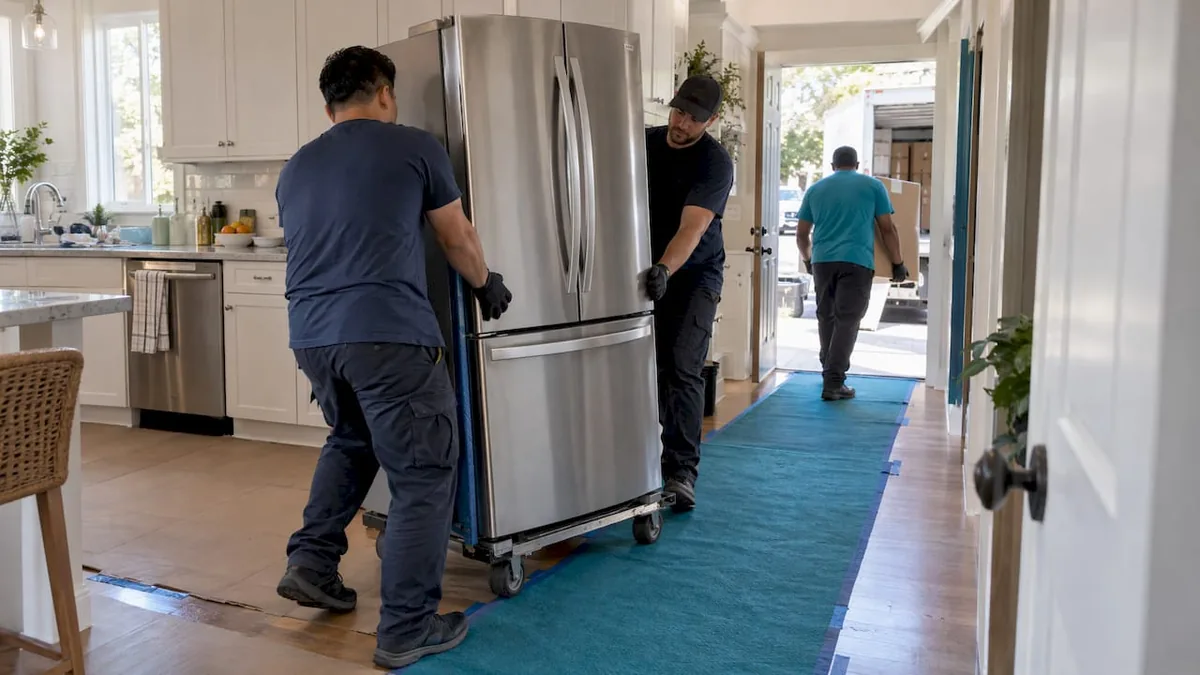
A full-service mover does more than drive a truck. For a household move, the usual scope includes:
- Loading, transporting and unloading furniture and boxes.
- Protecting furniture with pads and wrap.
- Optional packing and unpacking.
- Placing furniture in the rooms you choose.
For a business, it adds planning around equipment, downtime and building rules.
Impel Moving covers both sides. For homes, that means residential movers, apartment movers, large home movers, local and long distance moving. Packing, unpacking, white glove delivery and furniture disposal are also available. Furniture assembly and disassembly is offered as part of a booked moving service, and standard residential moves include furniture protection plus disassembly and reassembly.
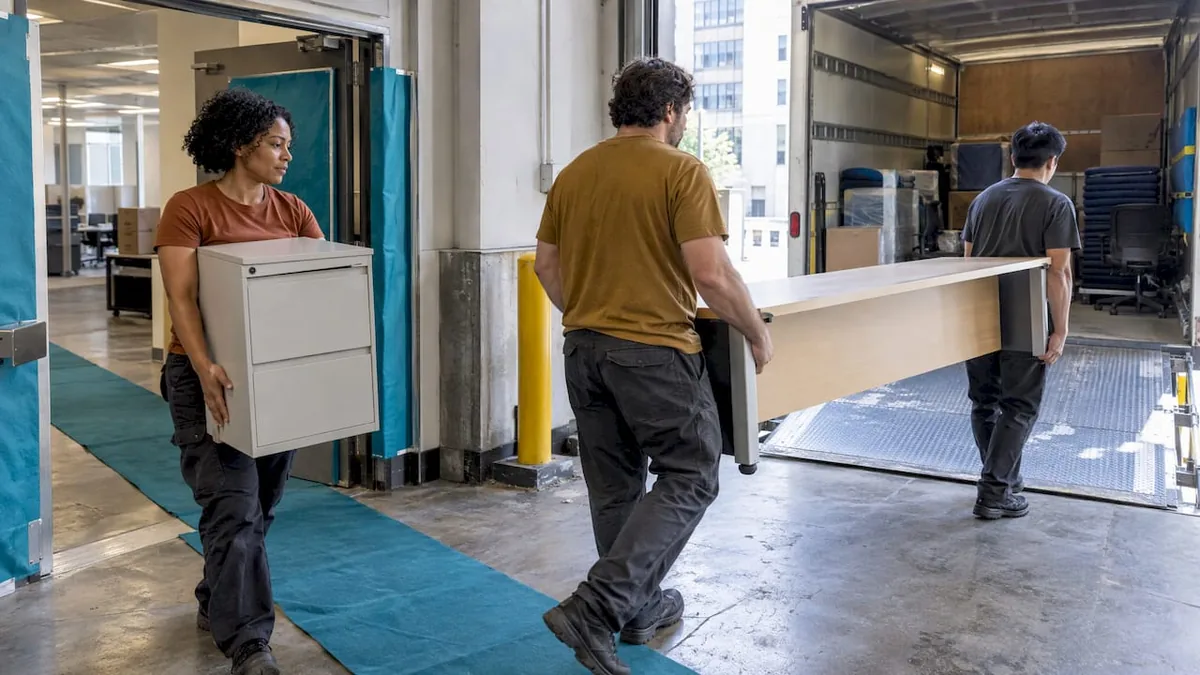
For businesses, Impel handles office relocation, commercial movers work, corporate relocation, retail store relocation, medical and dental office moves, restaurant moves, hotel and hospitality relocation, warehouse moves and IT and server relocation.
Step 1: Confirm the license and insurance
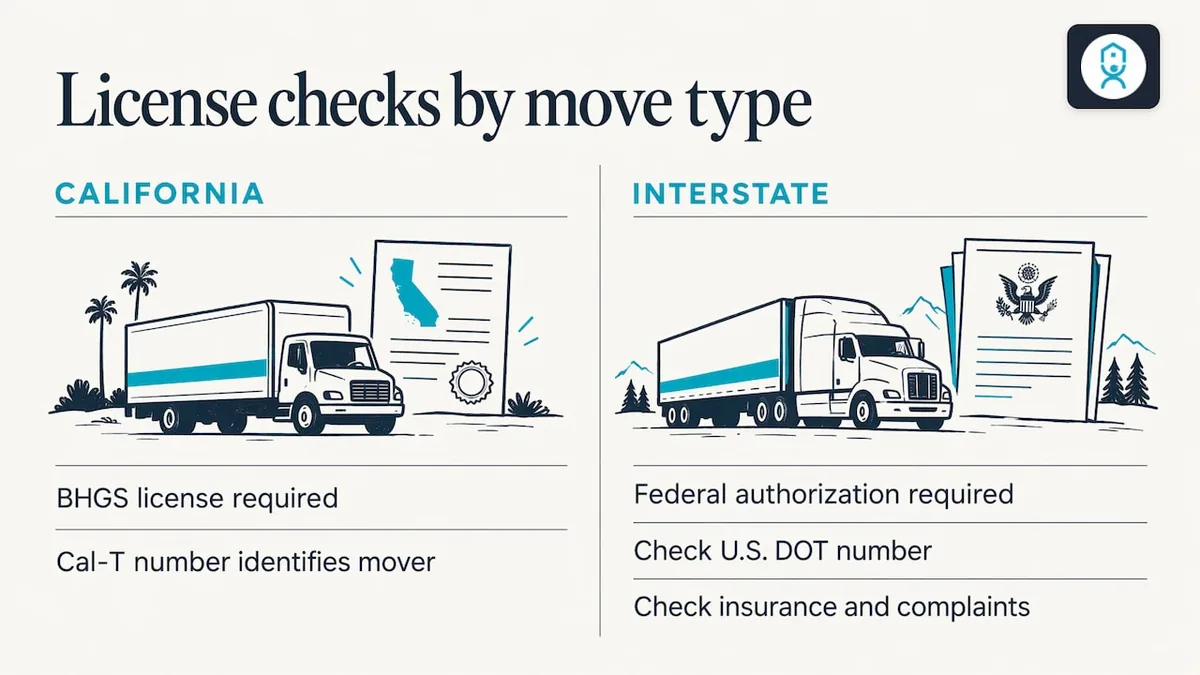
This is the step that separates a real mover from a risk. The California Department of Consumer Affairs says movers of household goods within, into or out of California must be licensed by BHGS, and interstate movers also need federal authorization.
In practice, California movers are identified by a Cal-T license number. The California Moving and Storage Association advises checking the six-digit Cal-T number and avoiding companies whose license is missing, revoked or suspended. Many movers still say “PUC permit” out of habit, but the state licensing bureau now holds the register.
For an interstate move, the federal side matters too. The FMCSA (Federal Motor Carrier Safety Administration) tells customers to check authorization, insurance and complaint history in its mover search tool. That check runs on the mover’s U.S. DOT number.
Impel Moving is licensed and insured under California permit Cal-T / MTR 0192323, and runs long-distance moves under US DOT 3549568. Our licensing, insurance and COI page lays out the credentials. A COI, or certificate of insurance, is the document many Bay Area buildings ask for before they let movers in. If you want the full checklist, see how to verify a licensed moving company and how to check a San Francisco mover is licensed.
Step 2: Get an in-person estimate
A phone or web quote is a guess. The California Attorney General recommends at least three written, in-person estimates and warns that phone or internet estimates may leave out costs and may be unenforceable. BHGS says an intrastate household move requires a visual inspection with the estimate, and recommends doing it in person.
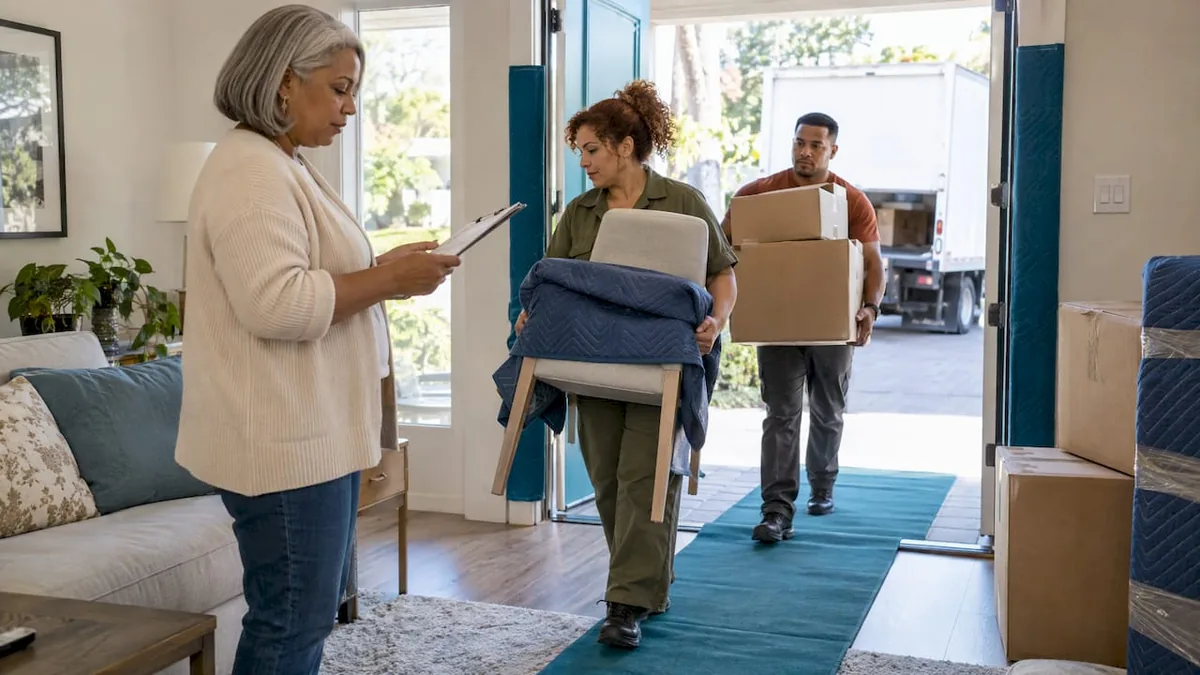
The visit is not only about price. The California Moving and Storage Association notes that it also helps the carrier plan the right crew size and equipment. That is how a crew arrives with the right protection and enough people for your stairs, elevator and parking situation.
What the inspector should see:
- Every room, closet, garage and storage area that is moving.
- Large or fragile pieces, such as a piano, a glass table or a safe.
- Access: stairs, elevators, long carries from the door to the truck, and where the truck can park.
At Impel Moving, every move gets a documented scope and a written estimate, with no added charges on move day for work that should have been seen. One coordinator stays with you from quote to placement, so the person who wrote down your scope is the person you call.
Step 3: Read what the estimate says
Two estimates with different totals are often two different scopes. The Bureau’s guidance is to compare written estimates after a visual inspection, checking total transportation and service charges, the payment method and the type of insurance.
For a move within California, confirm the signed agreement includes a not-to-exceed price. That is the maximum you can be charged for the listed work. For a move into or out of California, note whether the estimate is binding or non-binding. On interstate moves, federal rules say a mover cannot demand more than 110% of a non-binding estimate at delivery.
Line up each estimate against this list:
| What to compare | What to look for |
|---|---|
| Scope | Every room, stairs, elevators, special items and services listed |
| Price type | Not-to-exceed price (in-state) or binding versus non-binding (interstate) |
| Charges | Transportation, packing, unpacking, storage and any extra services |
| Payment | When payment is due and by what method |
| Protection | Which type of loss and damage coverage applies |
| Credentials | Cal-T number and, for interstate moves, U.S. DOT number |
The Attorney General also advises specifying all goods, services and pickup and delivery conditions when you compare. Our guide on how to read a moving quote walks through the line items.
What movers in California cost
Cost depends on what you move and how far. The Attorney General says costs primarily depend on the amount or weight of goods and the distance, with possible extras for packing, storage, unpacking, extra coverage, stairs and difficult or costly items.
How you are charged depends on distance. Under California rules, moves under 100 miles may be charged hourly, while moves over 100 miles must be charged by weight and mileage. A San Francisco to San Jose move is typically an hourly local move. San Francisco to Los Angeles is a long-distance move priced differently.
For local moves with Impel Moving, there is a three-hour minimum. For budgeting, use the planning ranges on our Bay Area moving rates page. They are planning ranges, not quotes. The final cost comes from a written estimate after we know your scope.
What tends to push a Bay Area estimate up:
- Stairs and walk-ups. Many San Francisco flats and older apartments have no elevator.
- Long carries. A truck that cannot park near the door means more time on the carry.
- Elevator reservations. Condo and office towers often limit moving hours.
- Packing. Packing your own saves cost but takes time. Professional packing services free your schedule.
- Specialty items. Pianos, artwork and large safes need extra planning.
If you pack yourself, a realistic box count keeps the estimate honest. A guide to estimating how many boxes you need room by room helps you work out the volume before the inspection.
Red flags when hiring a mover
Most moving problems can be seen in advance. Watch for these:
- A price far below the others. The California Moving and Storage Association says very cheap rates can signal inadequate service, missing insurance or poorly trained personnel. The FMCSA also cautions against picking on the lowest bid alone, because price can trade away safe handling and on-time delivery.
- A large deposit. The Attorney General warns against paying a big deposit and recommends paying on delivery.
- No inspection. A quote given sight unseen is the pattern the Attorney General warns can leave out costs.
- No license number. If a company will not give a Cal-T number, move on.
- A reviews-only reputation. BHGS recommends checking a mover’s business address and reputation through credible sources and notes that some online reviews may be paid or posted by interested parties.
- Unclear crews. Ask whether the people who show up are the mover’s own employees. Impel Moving crews are our own uniformed, trained employees, never day labor.
Also ask about loss and damage protection. The Attorney General describes it as ranging from basic 60-cents-per-pound coverage to full replacement value, and suggests checking whether your homeowners or renters insurance may help. Get the coverage type in writing.
Planning a Bay Area move: timing and prep
The California Moving and Storage Association advises arranging the move well in advance. In the Bay Area, a few local habits make a difference:
- Reserve building access early. San Francisco apartment and condo buildings often require elevator reservations and a COI. Ask your property manager what they need.
- Plan parking. On narrow streets, a truck may need a reserved space. Check with your building or the city on permits.
- Decide what is moving. The fewer items you move, the lower the scope. Furniture disposal can clear pieces you no longer want before the crew arrives.
- Separate valuables. Keep documents, jewelry and medications with you.
- Offices and practices. Plan your downtime, the order of rooms and who labels equipment. Medical, dental and IT moves need extra care for sensitive equipment.
Moving between the Bay Area and Southern California? Our article on whether your things stay on one truck for an SF to LA move covers what to ask.
Where Impel Moving fits
Impel Moving is locally owned and operated, not a franchise or a broker. The crew that comes to your door is ours, and you work with one coordinator from quote to placement. If you are moving within San Francisco, start at our San Francisco movers page or the local movers page. Peninsula and Silicon Valley homeowners can use the same process, and we also serve Marin.
The next step is a free written moving estimate. Tell us what you are moving, where, and whether you want packing, and we will build the documented scope. Start from the Impel Moving home page.
Our perspective
Most moving disputes start before moving day, in an estimate that did not describe the job. That is why we write the scope down first: rooms, access, special items, services. A written estimate based on a documented scope lets you compare movers on equal terms, and it is how we avoid added charges on move day for work that should have been seen.
We also think who does the work matters as much as the price. Our crews are our own uniformed, trained employees, and one coordinator stays with your move from the quote through placement. That is the standard we would want for our own homes and offices.
Whichever mover you choose, check the license, ask for the estimate in writing, and do not pay a large deposit up front. A mover that is happy to answer those questions is usually one worth hiring.
Julia
FAQ
How do I know if a California mover is legitimate?
Check that it holds a California household mover license from BHGS, shown as a Cal-T number. For moves into or out of California, it also needs federal authorization, which you can check by U.S. DOT number in the FMCSA search tool. Impel Moving is licensed and insured under Cal-T / MTR 0192323 and US DOT 3549568.
Are local movers in California charged by the hour?
Often, yes. BHGS says moves under 100 miles may be charged hourly, while longer moves must be charged by weight and mileage. Local moves with Impel Moving have a three-hour minimum, and the final cost comes from a written estimate.
Should I pay a deposit to a mover?
Be careful with large deposits. The Attorney General warns against paying a large deposit and recommends paying when your belongings are delivered. Confirm payment terms in the written agreement before you sign.
How far ahead should I book movers in the Bay Area?
As early as you can. The California Moving and Storage Association advises arranging the move well in advance. Book early if your building requires elevator reservations or a certificate of insurance.
Sources
- Consumer Guide to Household Moving - Bureau of Household Goods and Services
- Moving Companies - California Attorney General
- Selecting a Mover - California Moving & Storage Association
- Steps to Select a Mover - FMCSA