
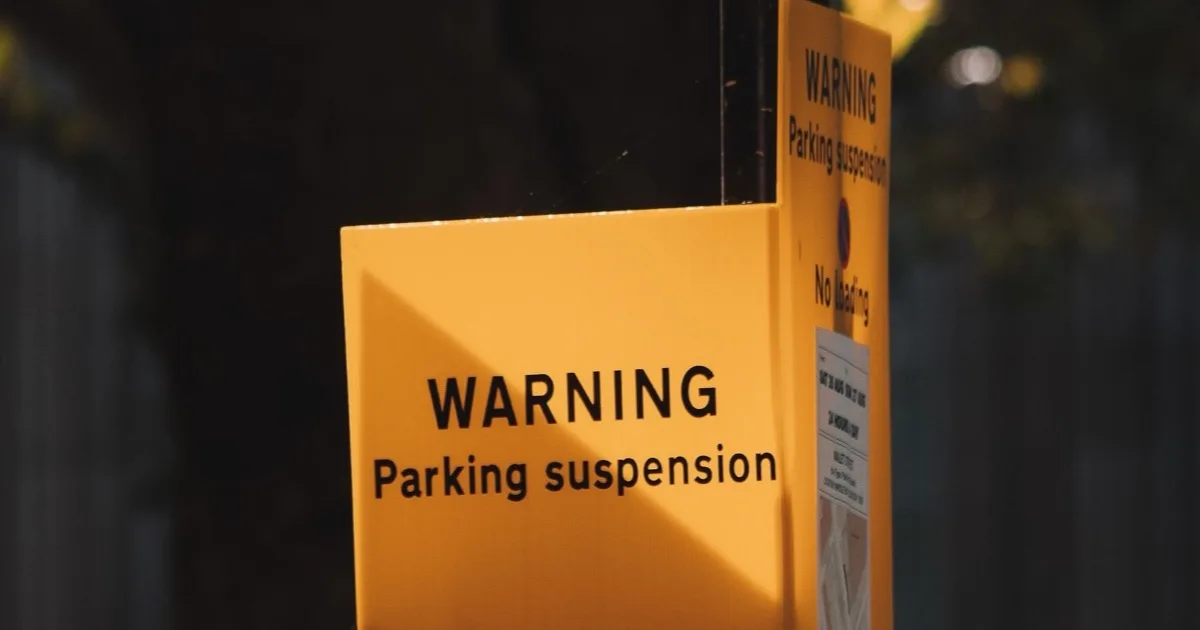
Most of what is written online about San Francisco moving permits is out of date. Articles still quote $239 or $280, and meter fees of $10 a day. Those numbers were accurate years ago. They are not accurate now, and if you budget from them you will be short.
This guide uses the SFMTA fee schedule currently in effect. It covers what the permit costs, how far ahead you have to apply, when the signs have to go up, and the situations where a permit will not help you at all.
What the permit actually is
The SFMTA calls it a Temporary Tow-Away No Stopping sign, usually shortened to TANS. It is not a parking pass. It is a sign, posted on the block, that makes the spaces it covers a tow-away zone for the dates and times printed on it.
That distinction matters. The permit does not give you a space. It gives the city the authority to tow vehicles out of one. If a car is sitting in your reserved zone on moving day, the signs are what let you call 311 and have it removed.
The permit covers the moving truck only. It cannot be used to hold a space for your own car, and SFMTA is explicit that it will not approve applications that amount to reserving public parking for private use.
What it costs in 2026
Moving in the Bay Area? Get a detailed written quote for your move.
Fees are set per application and based on the number of signs, which is determined by how much curb the SFMTA inspector decides your truck needs. Most residential moves land in the smallest bracket.
For permits booked through the SFMTA portal or 311, covering up to three days:
- 1 to 4 signs: $355
- 5 to 9 signs: $489
- 10 to 15 signs: $614
- 16 to 21 signs: $736
If the zone includes metered spaces, add $21 per meter, per day on top. Two blocked meters across a single moving day adds $42.
Two smaller fees catch people out. Applying for a window of four to seven days rather than up to three adds $64. Changing the design after approval also costs $64.
These figures are current for the fiscal year beginning July 1, 2026. The published schedule already shows the next increase: the smallest bracket goes to $370 and meters to $23 per day on July 1, 2027.
If you are moving from one San Francisco address to another, you need two permits, one for each end. Budget for both.
The five-business-day rule
This is where most moves go wrong.
SFMTA requires a minimum of five business days between the date you apply and the date enforcement starts. Legal holidays do not count as business days, and neither do weekends.
Work it forward rather than backward. Apply on a Friday and the five business days are the following Monday through Friday, which makes Saturday the earliest date your zone can be enforceable. A single city holiday in that stretch pushes it further.
For a move on a Saturday, that means applying no later than the previous Friday, with nothing going wrong. Ten days of cushion is the sensible target, and more if your date falls near a holiday.
One exception worth knowing: applications on Port of San Francisco streets require 15 calendar days, not five business days. If your address is along the Embarcadero or in the areas the Port controls, check the Port's jurisdiction map before you plan around the normal timeline.
When the signs have to go up
Approval is not the finish line. The zone only becomes enforceable once the signs have been posted for long enough.
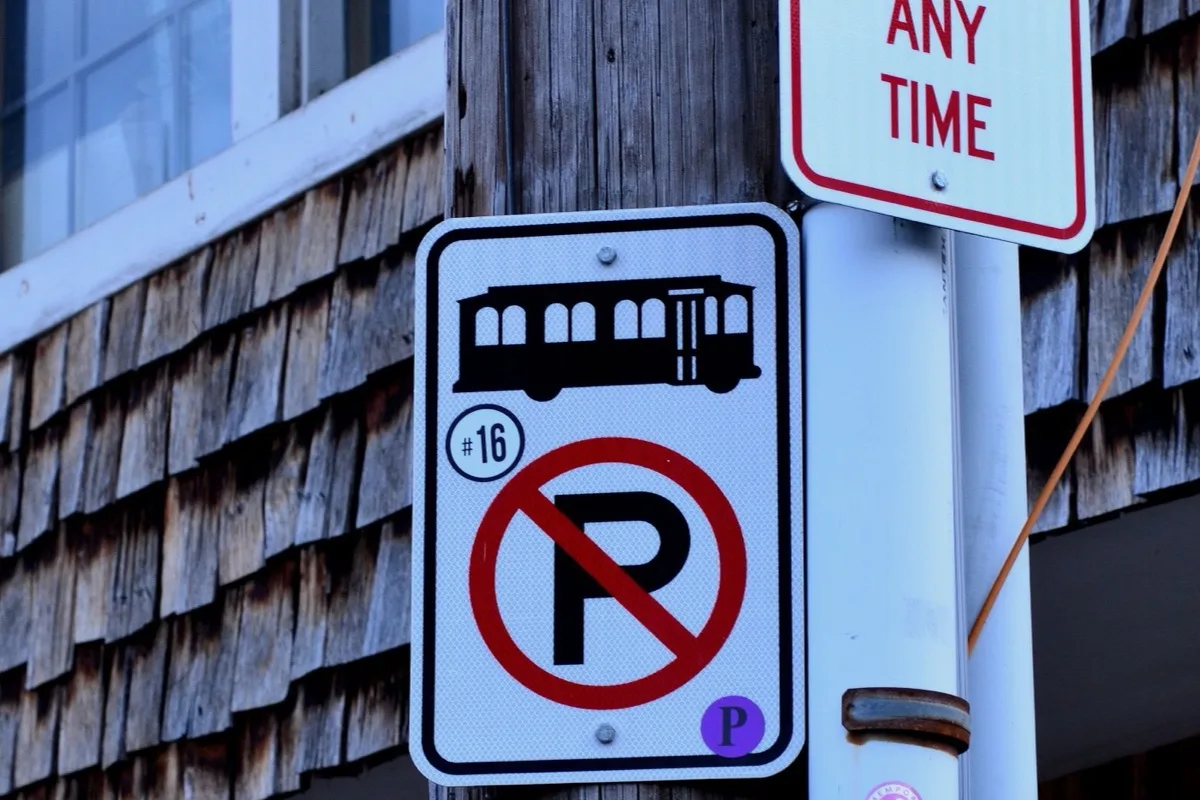
- Unmetered spaces: at least 72 hours before the enforcement start time
- Metered spaces: at least 24 hours before
If the signs go up late, the zone is not enforceable, and a car parked there cannot be towed. You paid the fee and got nothing.
You are also expected to notify SFMTA at least 24 hours in advance if there is a problem with the signs, so they have time to repost. Check the block the day before your move rather than the morning of.
What the permit does not cover
A temporary no-parking sign does not override other parking rules. SFMTA states this plainly, and it surprises people every week.
Your zone does not suspend:
- Street cleaning restrictions. If your block is swept on Tuesday morning, the sweeper still has priority.
- Existing No Stopping or No Parking signs. A tow-away commuter lane stays a tow-away commuter lane.
- Red curb zones. These are never available, permit or not.
There are also hour limits. Moving work under a TANS permit must start no earlier than 7am and end no later than 10pm.
And if you are using a portable storage container or a moving POD rather than a truck, this is the wrong permit entirely. Containers placed on the street fall under San Francisco Public Works, not SFMTA.
How to apply
Three routes, same result:
- The SFMTA online portal. First-time users register with an email address so staff can contact you about the request.
- Call 311, or 415.701.2311 from outside San Francisco.
- Email TemporarySign@sfmta.com with questions. Office hours are Monday to Friday, 7:00am to 3:30pm.
Have the address ready, the dates and times you need, and the meter numbers if any metered spaces fall inside the zone. Staff inspect the location and decide how many signs are required, which is what sets your final fee. You will not know the exact cost until after approval.
Payment is by credit card, cashier's or company check, or money order, made out to "SFMTA - Temporary Sign". Personal checks are not accepted.
You have 24 hours after the approval email to cancel or change the request without a fee. After that, changes and cancellations are billable.
Is it worth the money?
For a studio on a quiet block in the Sunset with reliable curb space, often not.
For almost everything else, yes, and the arithmetic is straightforward. Moving crews charge by the hour. If the truck has to park a block away, every item is carried that extra distance, on both ends. Most movers also apply a long-carry charge once the truck is beyond a set distance from the door, commonly around 75 feet.
A $355 permit that saves two hours of crew time on a three-person job usually pays for itself, before you count the reduced risk to your furniture and the people carrying it.
The moves where a permit is close to essential: narrow streets in North Beach and Russian Hill, anywhere on Nob Hill, blocks with no driveway cuts, Victorians with long entry stairs, and any commercial move downtown where double-parking a truck is not realistic.
How we handle it
We tell clients which end of the move needs a permit during the planning call, before anything is booked, because the five-business-day window has to be built into the date rather than discovered afterwards.
If you would rather not deal with SFMTA yourself, say so when you request a quote and we will cover it as part of the move plan. You can also read more about how we handle permits and parking across the city, or look at what a San Francisco move involves more broadly.
Before you book anything
Confirm your move date first, then work backwards: ten days for the permit application, 72 hours for sign posting on an unmetered block, and a check of the signs the day before. Everything else on moving day is easier to fix than a truck with nowhere to park.