
The property first
Floors, doorways, and railings are protected before anything is moved.
Protection and handling
Floors, door frames, and bannisters are covered before the first item leaves a room. Furniture is padded and wrapped rather than carried bare, taken apart where a doorway or elevator requires it, and rebuilt at the other end. The protection plan is part of the written estimate, not something decided on the day.
Floors, doorways, and railings are protected before anything is moved.
Furniture travels covered, not bare against a truck wall.
Disassembled where access needs it, reassembled where it belongs.
Most move damage is to the building, not the furniture. That work happens first.
Pieces are padded and then wrapped so the padding stays put in transit. Upholstery, wood surfaces, and glass each need different handling, and the difference shows up on arrival rather than at the door.
Beds, tables, desks, and large shelving come apart when a doorway, staircase, or elevator calls for it, and go back together at the destination. Fixings are kept with the piece they belong to. Furniture assembly and disassembly is a service in its own right and is listed in the written scope.
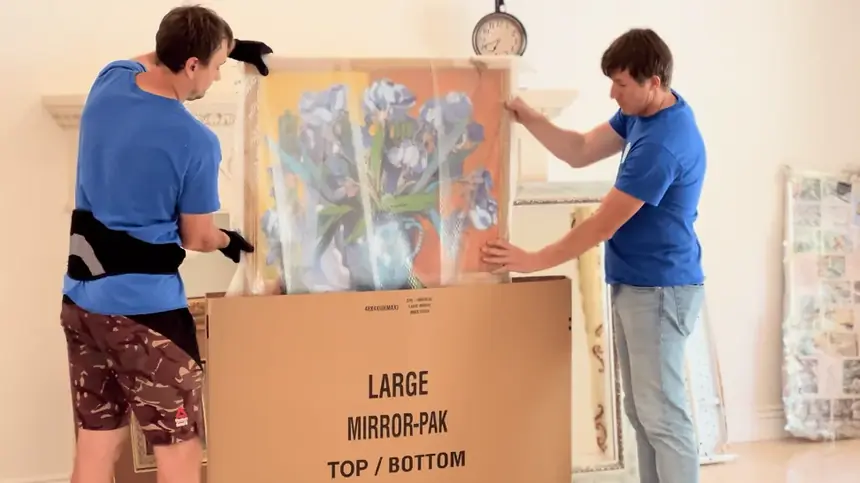
Art, antiques, mirrors, stone, electronics, and designer furniture are scoped before the move rather than handled as ordinary cartons. Tell your coordinator what is unusual and it goes in the written scope. White glove service covers these items specifically.
Collections move in order so they can be reshelved in order, which matters as much for a home library as for an institution. The same method applies to library and institutional moves.
Impel crews are W-2 employees on the company payroll, not subcontractors brought in for the day. Training is part of onboarding and covers furniture protection and wrapping, loading and unloading technique, safe lifting, equipment use, protecting the home itself, and careful handling of what is being moved. Whenever scheduling and routing allow, the same crew that loads also unloads, which keeps them familiar with the shipment and cuts out handoffs. On some long distance moves the logistics require a different arrangement, and you are told how the move will be handled when that happens.
The protection plan is only as good as what we know about. Flag these during the estimate.


Trained crews
Uniformed movers, padded and wrapped furniture, and a written estimate before anything gets loaded.
Get my quoteGood to know
Floor runners go down along the carry path, door frames and tight corners are padded, and bannisters are covered on stair carries. In buildings that require it, the elevator interior is protected too.
Padded and then wrapped, so the padding stays in place in transit. Wood surfaces are padded before wrapping so nothing presses into the finish.
The crew does, as part of the move, and fixings are kept with the piece. Tell your coordinator during the estimate so the time is in the scope.
They are scoped before move day rather than handled as ordinary cartons. Art, antiques, mirrors, stone, and electronics are listed in the written estimate with the handling they need.
Most of the time, yes. Whenever scheduling and routing allow, the same Impel crew loads and unloads, which gives them familiarity with the shipment and reduces handoffs. On some long distance moves the logistics require a different arrangement, and you are told in advance how it will be handled. Crews are W-2 employees rather than subcontractors.
Report it as soon as you notice it, photograph it, and keep the packing. The damage claims page explains how to report it and who answers.
Protection comes standard
Flag the fragile, the awkward, and the irreplaceable during the estimate, and the handling goes into the written scope.