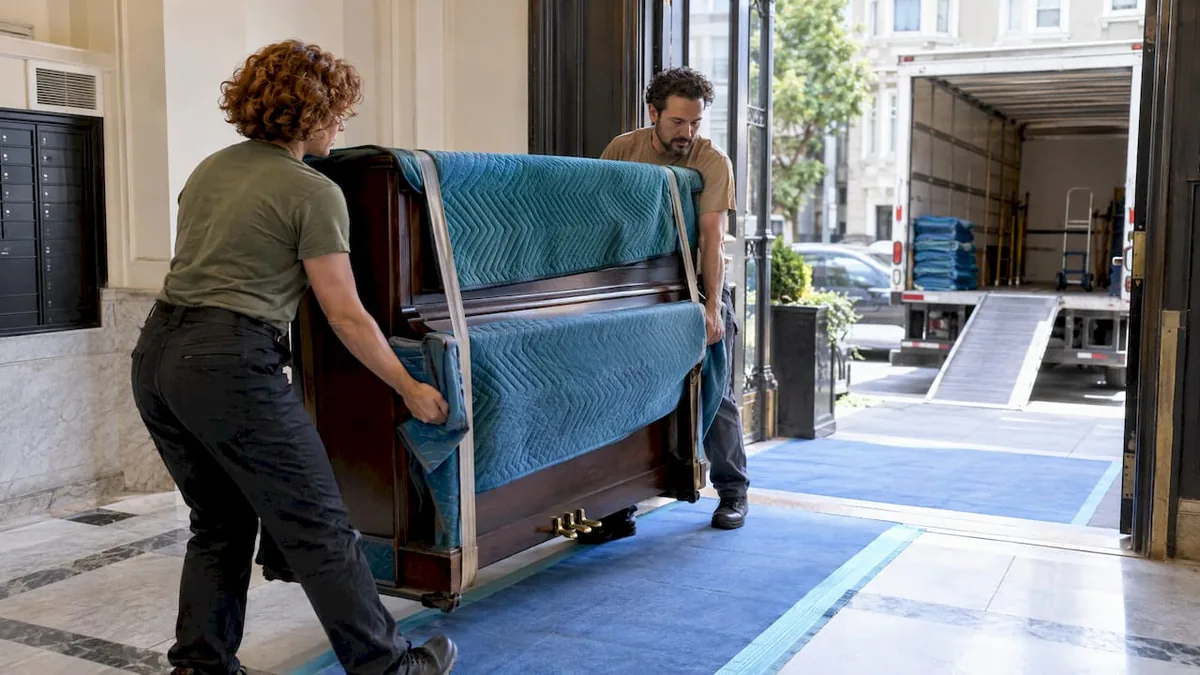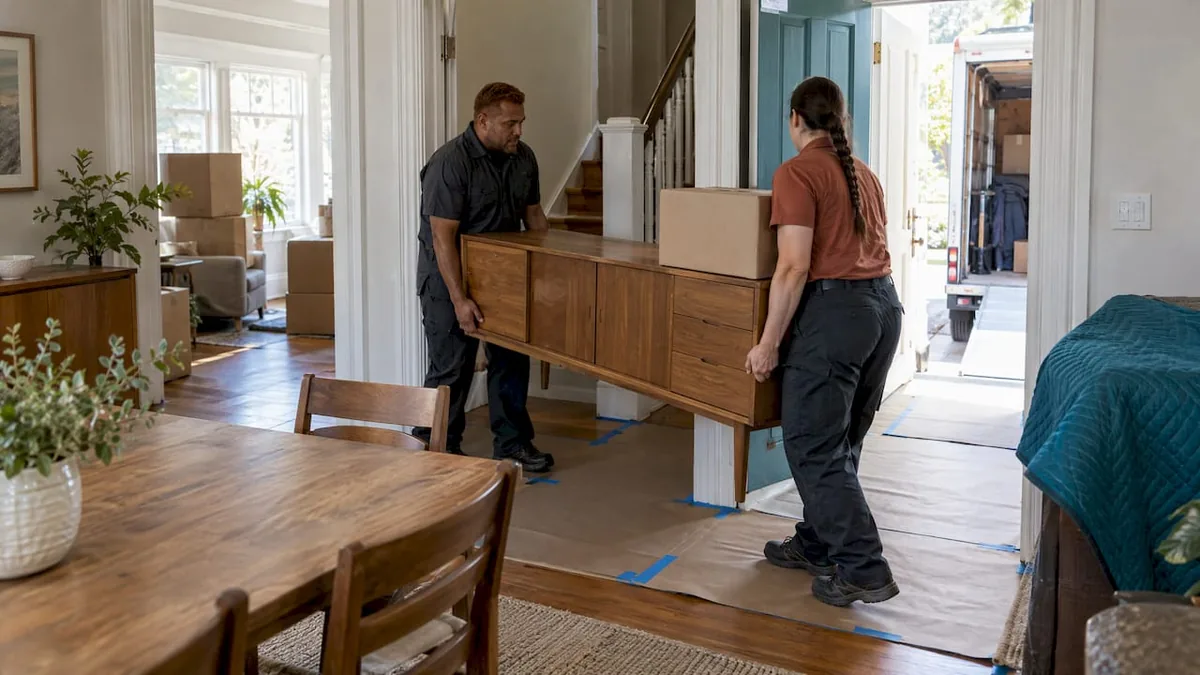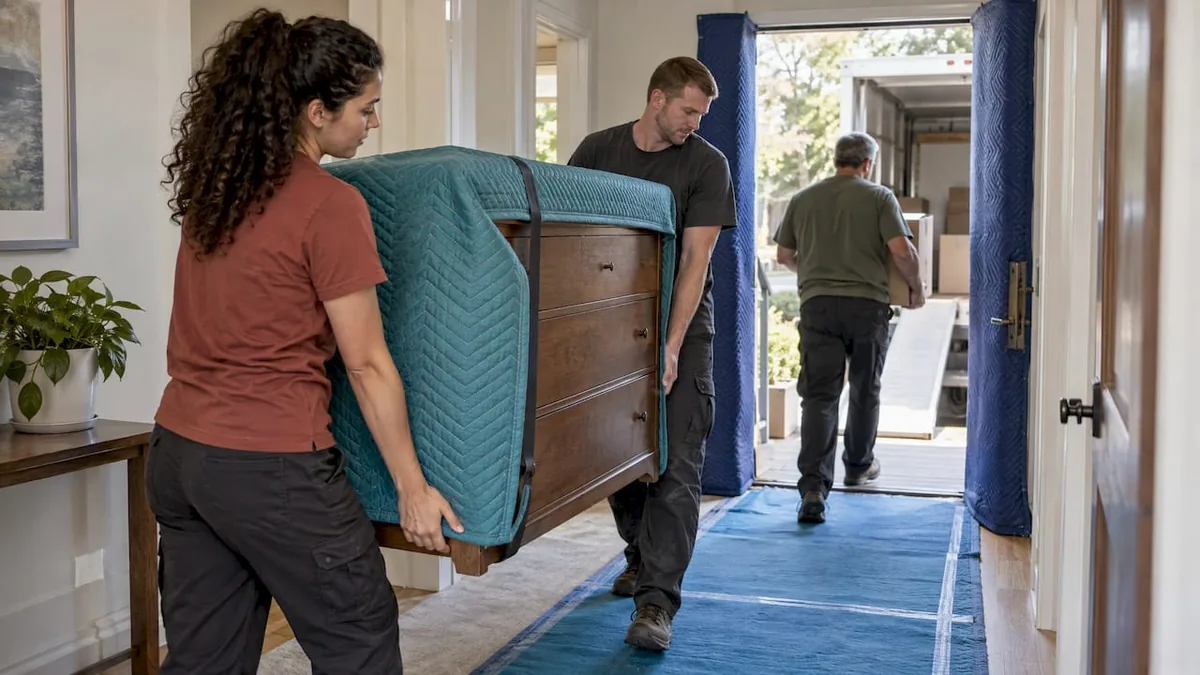
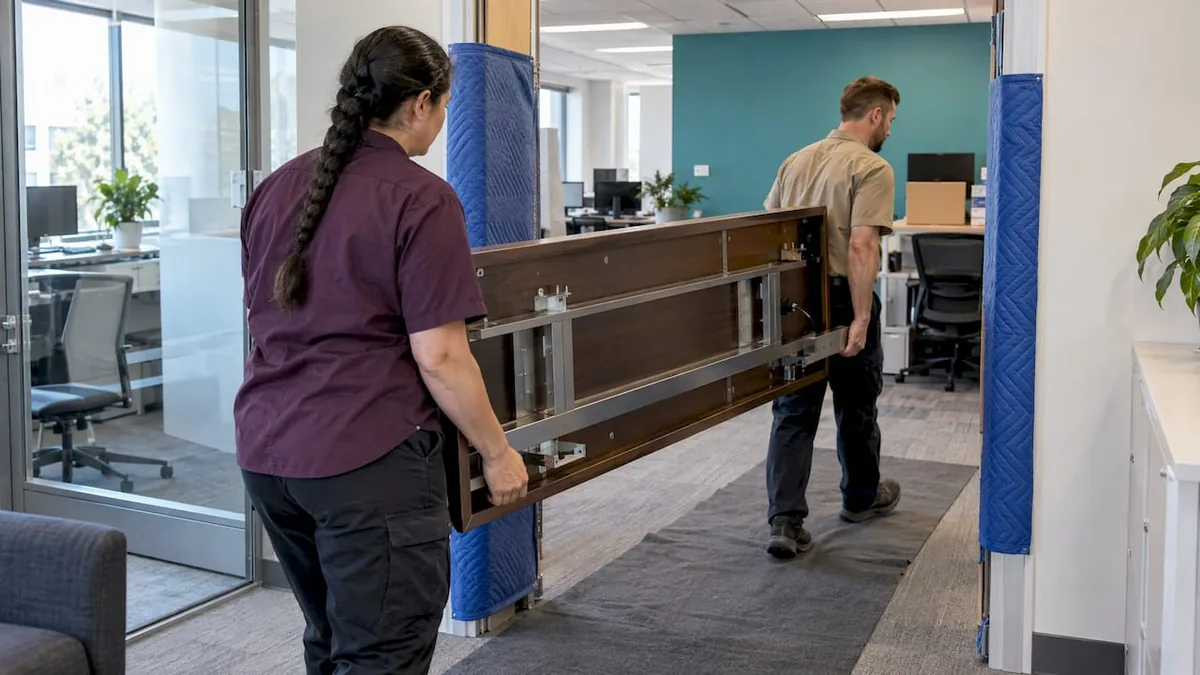
The right office movers do more than carry desks. They work from a documented scope, give you a written estimate, and keep one coordinator on your move from the first quote to the last workstation placed. That is how we run office moves at Impel Moving, a locally owned Bay Area company with its own uniformed, trained crews. This guide explains what an office moving company does, how to prepare, what to ask before you sign, and how to keep your team working through the move.
Key Takeaways
- Professional office movers handle packing, furniture, IT equipment and placement at the new space, so your staff stays on their real work.
- Plan the move with a named move manager and input from every department, well before the date.
- Ask for a written estimate built on a documented scope. The final cost comes from that estimate, not from a phone guess.
- Check that the mover is licensed and insured, and that its crews are its own employees, not day labor.
- Impel Moving serves San Francisco, the Peninsula, Silicon Valley and Marin, and you can start with a free written moving estimate.
Table of Contents
- What office movers actually do
- How to plan an office move in the Bay Area
- What to check before you hire professional office movers
- What does it cost to move an office?
- Coordinating packing, furniture and IT
- Moving a specific kind of office
- Impel Moving’s office moving service
- Our perspective on office moves
- FAQ
- Sources
What office movers actually do
An office move is a different job from a house move. The furniture is modular, the equipment is connected to a network, files may be confidential, and every hour of disruption affects people who are being paid to work. A professional office moving company treats it as a project with a schedule, not a single day of lifting.
Office moving services usually fall into these groups:
- Planning and walkthrough. A site visit at the current office, a count of workstations, conference rooms, storage and special items, and a plan for how each will be labeled and placed.
- Packing and unpacking. Desk contents, supply rooms, break rooms and files, packed and labeled by destination. Our packing services and unpacking cover this on both ends of the move.
- Furniture handling. Desks, cubicle panels, tables, chairs and shelving, protected and moved to marked locations. Furniture disassembly and reassembly is part of a booked moving service with Impel Moving.
- IT and equipment. Computers, monitors, printers, phones and, where needed, server rooms. See our page on IT and server relocation.
- Placement and cleanup. Items set in the right rooms at the new site, so employees arrive to a working layout.
- Furniture you no longer need. Old desks and chairs that will not make the trip can go through furniture disposal as part of the move.
The same crews also handle commercial movers work for larger floors, as well as specialty relocations: medical and dental offices, retail stores, restaurants, hotels and warehouses.
How to plan an office move in the Bay Area
The planning habits that keep disruption low are consistent. Cushman & Wakefield’s corporate relocation guide advises assigning a move manager, including every department in the plan, and using project management software so teams stay aligned. Here is how that works for a small or mid-size office.
1. Name one person inside your company
A move manager makes decisions, answers the mover’s questions and keeps a single list of open items. In a small office that may be the office manager. In a larger company it is often someone from operations or facilities. Without that person, questions go unanswered and the mover guesses.
On our side, you also have one person. Every Impel Moving job has one coordinator from quote to placement, so your move manager talks to the same person at each stage instead of being passed between departments.
2. Ask every department what it needs
Accounting needs locked files handled differently from the design team’s large-format printers. Reception needs to be working first. A department that is left out of planning is the one that finds its equipment in the wrong room. Collect a short list from each team: what must move, what must be handled with extra care, and when it must be running again.
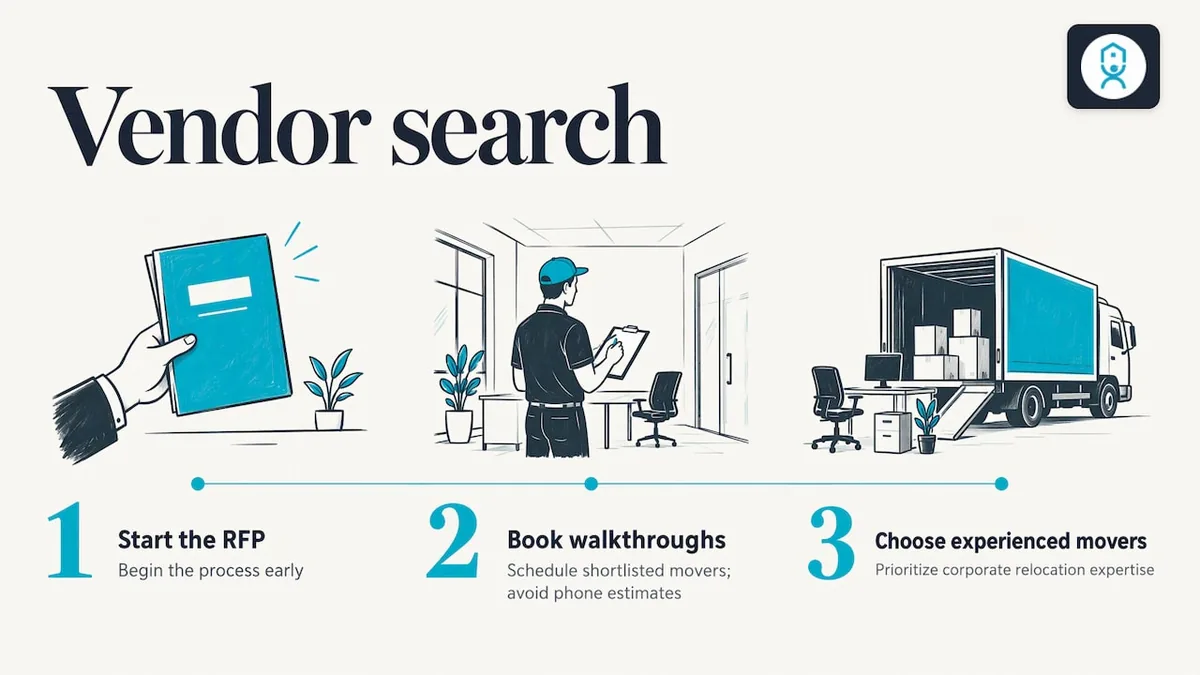
3. Start the vendor search early
The same guide recommends beginning the request-for-proposal process early, scheduling walkthroughs with shortlisted movers, and choosing vendors with corporate relocation experience, especially when you have sensitive equipment or confidential files. Book walkthroughs rather than relying on a phone estimate: a mover cannot write an accurate scope for rooms it has never seen.
4. Check the new space
Before move day, confirm that lighting, utilities, network connections and furniture at the new site are in order, and resolve punch-list items (the small repairs and unfinished details) before the crew arrives, as the Cushman & Wakefield guide suggests. A crew that arrives at a space with no power at the data closet cannot finish the job.
In San Francisco and other dense Bay Area business districts, also ask your landlord or building manager about freight elevator reservations, loading dock or curb access, and any insurance paperwork the building requires from a mover. Rules differ from building to building, so get them in writing early and share them with your coordinator.

5. Pick the move date to fit your business
Many offices move on a weekend or after hours to keep weekday work uninterrupted. Choose the window that costs you the least productive time, then work backward to set packing deadlines for each department.
Our office relocation checklist lays out these steps in order if you want a printable version, and the business and office moves blog collects more guidance.
What to check before you hire professional office movers
An office is a business risk, so hire on evidence. Use these checks with any mover you consider.
- License and insurance. Ask for the mover’s California permit number and its U.S. DOT number for long-distance work, and for proof of insurance. Impel Moving is licensed and insured under California permit Cal-T / MTR 0192323, and long-distance moves operate under US DOT 3549568.
- Who does the work. Ask whether the crew members are the company’s own employees. Our crews are Impel’s own uniformed, trained employees, never subcontractors or day labor, which means the people trained on your plan are the people on your floor.
- A written estimate with a documented scope. The estimate should list what is moving, which services are included and what is not. Ours is written from a documented scope, with no added charges on move day for work that should have been seen.
- A single point of contact. You should know who to call on the night before, during and the morning after.
- Provider type. Ask whether the company is a local mover that does the work itself or a broker that sells your job to someone else. Impel Moving is locally owned and operated, not a franchise or a broker.
- Fit for your kind of office. A law firm with paper files, a dental practice with chairs and imaging equipment, and a startup with a rack of servers need different handling. Look for a mover that lists your type of relocation by name.
What does it cost to move an office?
The honest answer is that it depends on the scope, and a trustworthy number comes only from a written estimate. The main drivers are the number of workstations, the volume of furniture and files, whether packing is included, how much IT equipment must be disconnected and reconnected, the distance, and building access such as stairs, elevators and parking.
We do not quote prices over the phone or in articles. For general budgeting, use the planning ranges published on our rates page, and understand that they are planning ranges, not quotes. The final cost comes from a written estimate based on your documented scope. If your move is local, our local moves carry a three-hour minimum.
Beyond the mover’s fee, budget for items that sit outside the moving contract: new network circuits, cabling, signage, and any restoration work your lease requires at the old space. Raise these with your move manager early so no one is surprised late.

Coordinating packing, furniture and IT
The most common office move problem is not broken furniture. It is a team that arrives Monday and cannot log in. Treat each category of equipment as its own workstream.
Packing and labeling
Label every box and piece of furniture with its destination, using a floor plan of the new space with each desk numbered. Employees pack their own desk contents by a set deadline, while the crew handles shared areas, supply rooms and files. For larger moves, having the crew pack everything removes that burden from your staff.
Furniture
Cubicle systems and large desks are typically taken apart and rebuilt. With Impel Moving, furniture disassembly and reassembly is part of the booked move, and standard residential moves already include furniture protection. Tell your coordinator which pieces are leased or fragile, and which are leaving for good.
If you are replacing furniture, our guide to office furniture removal when moving offices explains how to separate what stays from what goes.
IT equipment
Cushman & Wakefield recommends auditing technology assets, coordinating with IT to avoid service disruptions, and overlapping connectivity at both locations so testing can happen before cutover. In practice:
- List every workstation, monitor, dock, phone and printer, and tie each to a destination desk.
- Photograph the back of the network rack before anything is unplugged.
- Back up data before move day.
- Keep sensitive, data-bearing equipment under a clear handoff record.
- Have your IT lead or provider on site at the new office to test before staff return.
If you have a server room, read our server room relocation checklist and plan for cooling at the destination. A server room that loses climate control during a transition can overheat, and some companies bring in professional air conditioning rental to keep equipment cool while permanent systems are being set up.
Moving a specific kind of office
Different businesses need different handling, and Impel Moving lists dedicated pages for them:
- Medical and dental office movers for practices with exam equipment and patient files.
- Retail store relocation for fixtures and inventory.
- Small business movers for compact offices.
- Corporate relocation for larger companies moving multiple departments.
- Restaurant movers, hotel and hospitality relocation and warehouse and industrial movers for those industries.
Whether you are leaving a San Francisco high-rise, moving down the Peninsula, relocating a Silicon Valley campus or opening in Marin, the first step is the same: define the scope, then get it in writing. Our Santa Clara movers page covers that part of the South Bay.
Impel Moving’s office moving service
Our office relocation service covers planning, packing, furniture, IT equipment and placement, with Impel’s own uniformed, trained crews and one coordinator throughout. We work San Francisco, the Peninsula, Silicon Valley and Marin every day, and every move starts with a documented scope and a written estimate. Tell us how many people, how many rooms and when you need to be working again, and we will build the plan around it.

The next step is a free written moving estimate: request yours here.
Our perspective on office moves
The offices that move well share one habit: they decide the scope before they decide the date. When everyone agrees on what is moving, who packs what, which equipment needs special handling and where each desk lands, move day is mostly execution.
That is why we put so much weight on a documented scope and a written estimate. A scope on paper gives you a number you can plan around and gives our crew a plan to follow. It also means no surprise charges on move day for work that should have been seen.
We also believe the crew matters as much as the paperwork. Our movers are our own uniformed, trained employees, and one coordinator stays with your job from quote to placement. You should not have to explain your office twice to two different people.
If you are weighing office movers, ask each one the same questions, compare the written scopes side by side, and choose the team that can show you exactly how your move will run.
Julia
FAQ
How far ahead should I book office movers?
Start as soon as you have a lease date, because planning, walkthroughs and building coordination take time. Larger offices and server rooms need the longest lead. Contact us once you know your approximate move window and we will help you set a timeline.
Do office movers pack everything?
That depends on the service you book. Many offices have staff pack their own desks and let the crew handle shared areas, while others choose full packing. Impel Moving offers both packing and unpacking as part of a move, and your written estimate states what is included.
Can the move happen outside business hours?
Office moves are often scheduled around the business day so staff can keep working. Share your preferred window and any building restrictions on freight elevators or loading access when you request an estimate, and your coordinator will plan around them.
What should a written estimate include?
It should describe the documented scope: what is moving, which services are included, the locations and access conditions. Ours is built from that scope, and the final cost comes from the written estimate, not from a planning range.
Can you move IT equipment and servers?
Yes. Impel Moving lists IT and server relocation among its services, handled alongside the rest of the office move. Tell your coordinator early about racks, backups and the testing your IT team needs at the new site.
Sources
- Corporate Relocation: A Guide to Moving Your Office, Cushman & Wakefield
- Professional air conditioning rental by sector
Recommended
- Warehouse Moving Company: How to Choose One
- Commercial Moving Services in the Bay Area: What to Expect
- Office Relocation Checklist: A Step-by-Step Plan