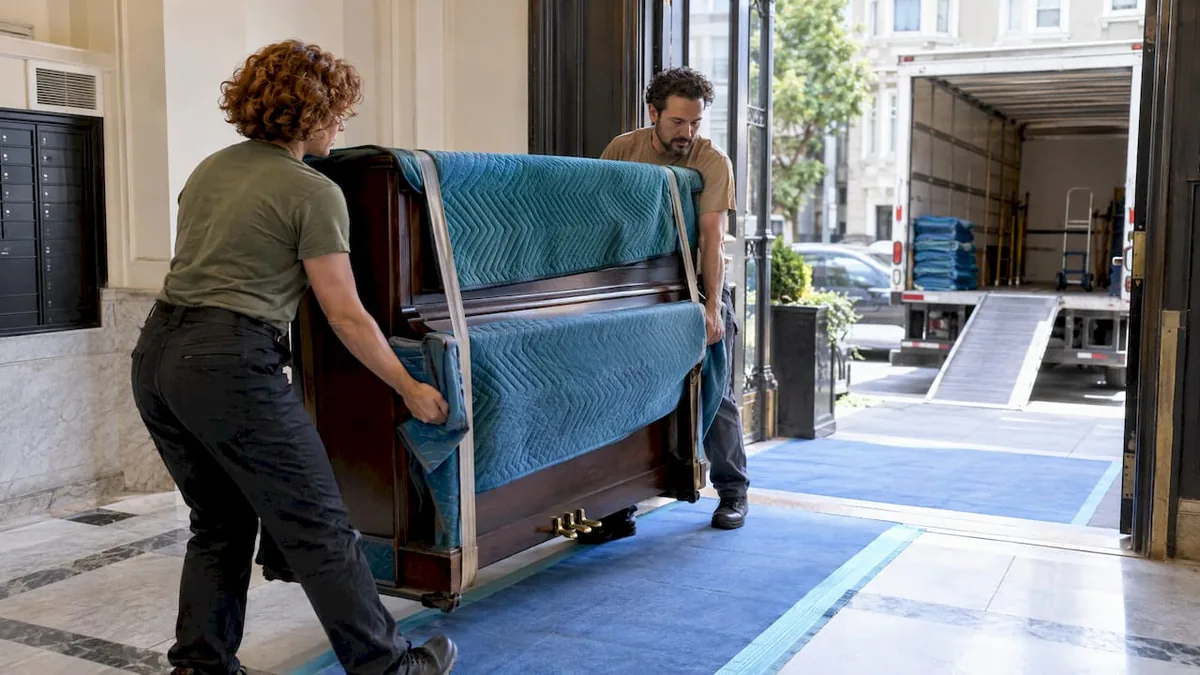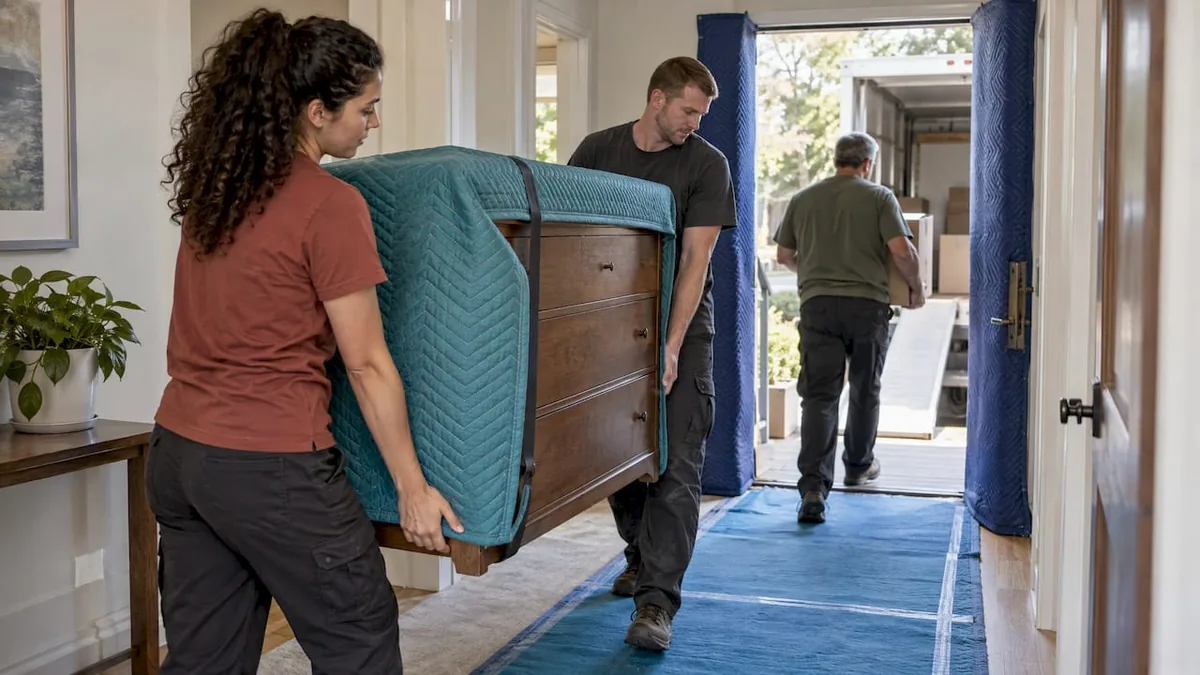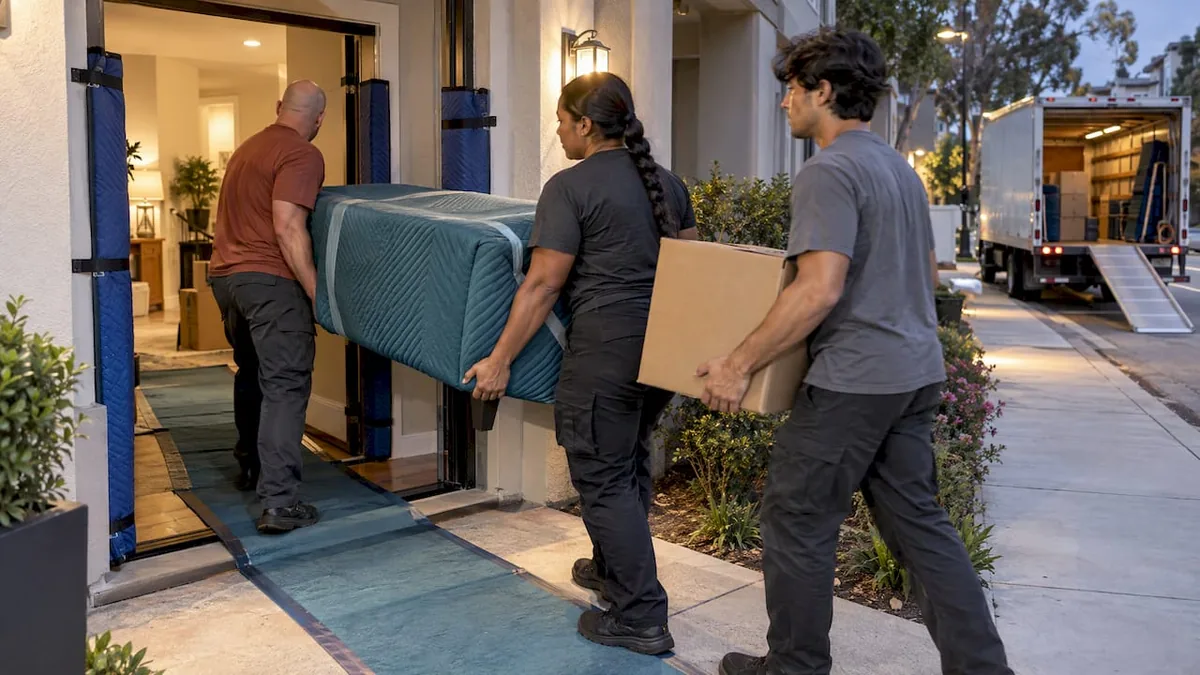
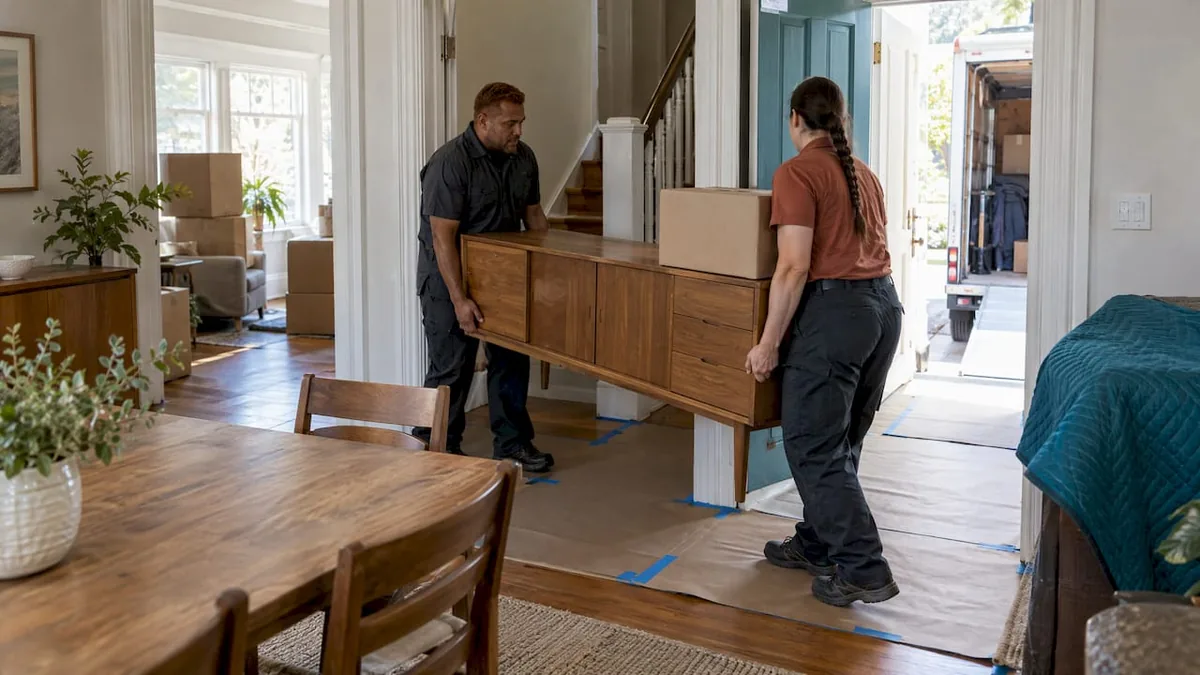
A house packing service sends a trained crew to your home to wrap, box and label your belongings before the move, so you are not packing for weeks around work and family. In San Francisco, the Peninsula, Silicon Valley and Marin, where many homes are tight on space and many moves involve stairs, narrow streets or elevator reservations, the strongest option is one team that packs, protects furniture and moves you. Impel Moving does this with its own uniformed, trained crews and one coordinator from quote to placement. Below is what packing services cover, how the day runs, what drives the price and how to choose well.
Key Takeaways
- A home packing service covers more than boxes: it means wrapping fragile items, protecting furniture, labeling by room and, if you book it, unpacking at the new place.
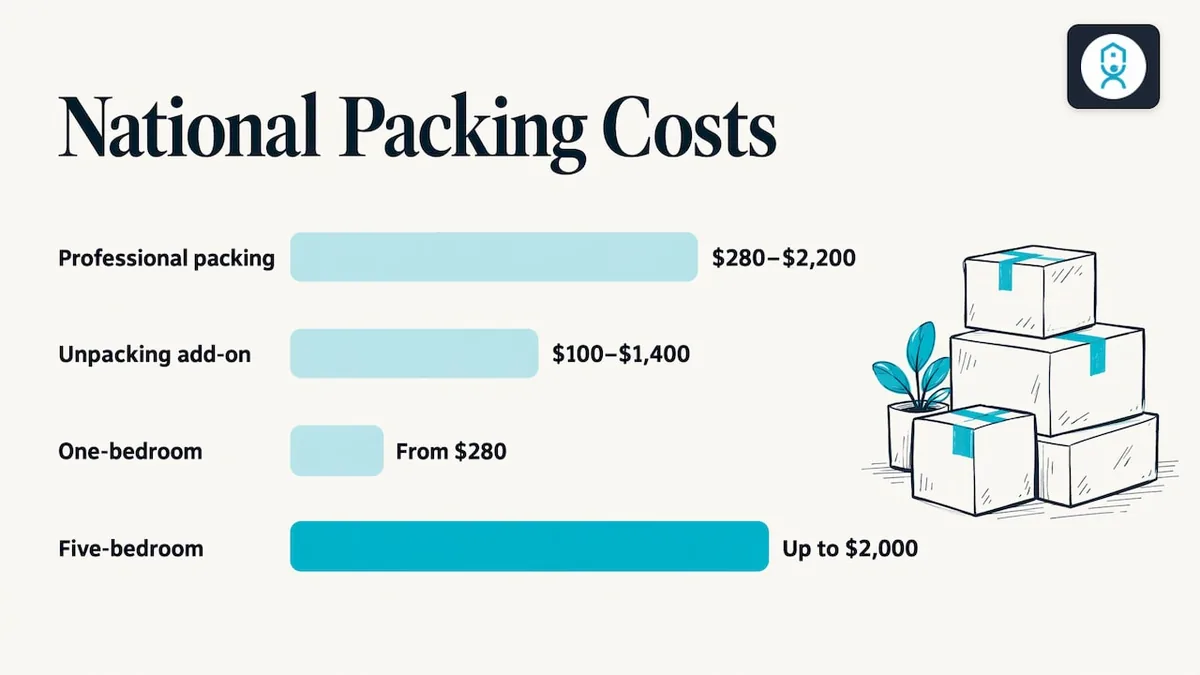
- Nationally, professional packing is reported at $280 to $2,200 including labor and materials, depending on home size, materials and how fragile your belongings are. Your own cost comes from a written estimate.
- Packing and moving with the same company means one schedule, one coordinator and one set of people accountable for your belongings.
- Before you hire anyone for a move within California, verify the company’s license with the state’s Bureau of Household Goods and Services.
- Free written estimate first, then a documented scope: that is how you avoid surprises on move day.
Table of Contents
- What house packing services include
- How a packing service works from first call to last box
- How furniture packing services protect your furniture
- The hardest rooms to pack
- What house packing costs
- Choosing a packing service you can trust
- Tipping your packing and moving crew
- Who needs a packing service most
- Our perspective on packing
- Book packing with Impel Moving
- FAQ
- Sources
What house packing services include
The phrase covers a range of work, so it helps to know the building blocks. A full home packing service typically includes:
- Room-by-room packing of kitchens, closets, bedrooms, living areas, garages and storage.
- Wrapping and cushioning for dishes, glassware, lamps, mirrors, frames and electronics.
- Labeling by room and contents, so boxes land where they belong.
- Furniture protection, such as padding and wrapping for tables, dressers, sofas and headboards.
- Unpacking, if you want boxes opened and items placed at the new home.
At Impel Moving, packing services and unpacking are listed services, and standard residential moves include furniture protection plus furniture disassembly and reassembly. Assembly and disassembly come as part of a booked moving service, not on their own.
Full packing or partial packing
You do not have to hand over the whole house. Many households pack their everyday belongings and book help for the rooms that take the most time and carry the most risk: the kitchen, the artwork, the glass and the contents of the garage. Others book everything, particularly when the move date is close or the household is busy. The right choice depends on how much time you have before the move, not on how much you own.
How a packing service works from first call to last box
1. Request a written estimate
A reliable packer starts with a scope: which rooms, how many items, what is fragile, where the truck can park and whether stairs or elevators are involved. At Impel Moving, every move gets a documented scope and a written estimate, with no added charges on move day for work that should have been seen. You can request a free written moving estimate to start.
The more detail you give, the closer the estimate. Mention the piano, the wine collection, the wall art, the home office and the storage unit. Items that surface on move day are the usual source of disputes.
2. Decide what you will handle yourself
Tell your coordinator what you want to pack and what the crew should pack. Keep your own packing for items you will need immediately and personal papers. Set aside valuables and documents so they travel with you.
Some things should not go into boxes at all. A mover’s licensed crew generally will not carry flammables, propane, paint or similar hazardous items, so plan to dispose of them separately. Ask your coordinator for the list before packing day.
3. Prepare the house the day before
A few steps make packing day faster:
- Clear walkways and make sure the crew can reach closets, cabinets and the garage.
- Empty and defrost the refrigerator if it is moving.
- Set aside anything that should not be packed: medications, jewelry, passports, laptops and chargers.
- Reserve elevator time and a parking spot if you live in a San Francisco apartment or condo building. Many buildings require this in advance, so confirm with your property manager.
If the movers arrive tomorrow and you are nowhere near ready, our guide on what to do when the movers arrive tomorrow and you are not packed walks you through the night before.
4. Packing day
A crew arrives with the supplies, works room by room and labels each box. You stay available to answer questions, but you do not need to supervise every box. Before the crew leaves, walk through the home with your coordinator to confirm every room is done and anything left out is intentional.
5. Move day and placement
When packing and moving come from the same company, the boxes you labeled for the second bedroom go to the second bedroom. Boxes are not shuffled between crews and no one is guessing what a label means. With full moving service, the same coordinator who wrote your estimate stays with you through placement.
6. Unpacking
If you book unpacking, the crew opens boxes and places items in the rooms you designated, so the home is usable the first night rather than the first month.
How furniture packing services protect your furniture
Searches for furniture packing service usually mean one thing: how do you get a dining table, a sectional or a dresser through a move without scratches or broken legs? Protection comes in layers:
- Padding and wrapping over wood finishes, upholstery and corners.
- Disassembly of beds, tables and large pieces so they fit through narrow Bay Area doorways, stairwells and elevators. At Impel Moving, standard residential moves include furniture disassembly and reassembly.
- Careful loading and placement, so heavy pieces do not press on delicate ones in transit.
You do not need to buy blankets or wrap before the crew arrives. Leave furniture where it stands and tell your coordinator about anything with glass, stone tops or antique finishes. Those details belong in the written scope.
Fragile, high-value and specialty items
Fine art, antiques, instruments and collectibles need handling that goes beyond standard wrapping. Our guide to moving art, antiques and valuables in the Bay Area explains how to plan for them, and our white glove service is built for those pieces. The principles carry well beyond one city: specialists who work with fine art and fragile items treat packing labor as its own line of work, and so should you when you scope a move with valuable pieces.
The hardest rooms to pack
The kitchen is the room most people dread, and the reason is simple: it holds hundreds of small, breakable, oddly shaped items, and each one needs its own wrapping. Glasses, plates, serving pieces and small appliances take far longer than clothing or books. If you only hand off one room, make it this one. For a closer look, see how to pack dishes and glasses for moving.
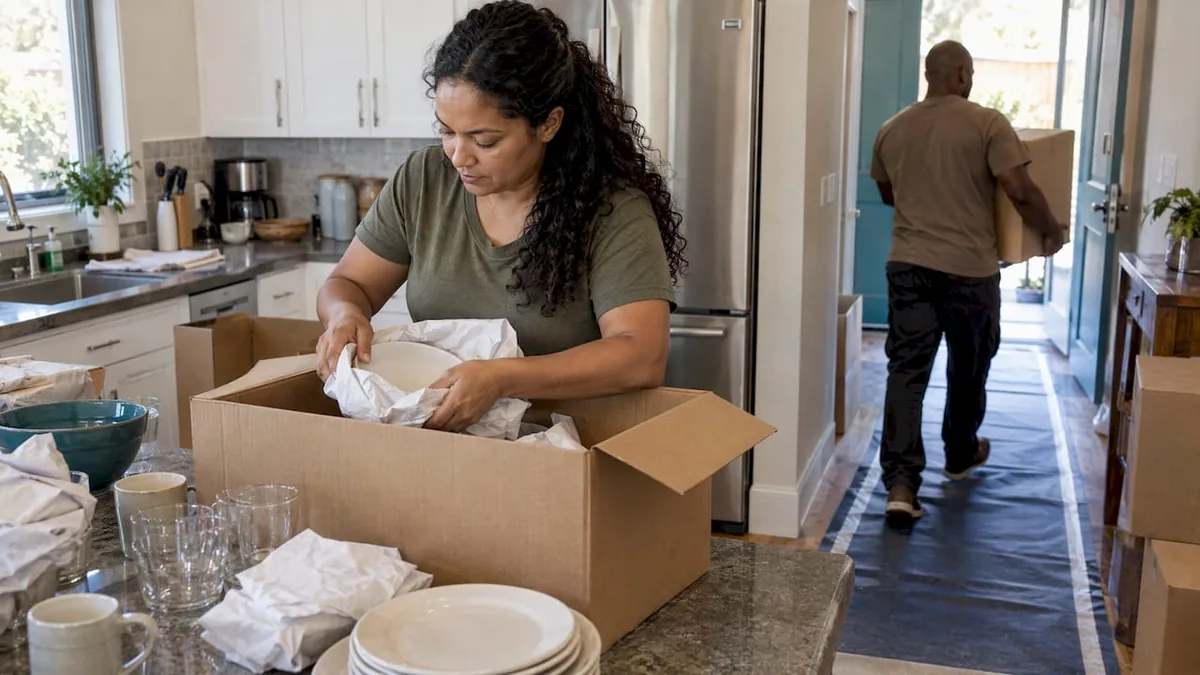
The garage and storage areas come next. They hold a mix of tools, sports gear, boxes and half-finished projects, and sorting is the real work. Declutter before packing day, and decide what you will donate or discard. If large unwanted furniture is part of the decision, furniture disposal is a listed Impel service, so it can be handled alongside your move.
Artwork, mirrors and flat-screen televisions are the third group. They are awkward rather than numerous, and they break when someone improvises. Tell your coordinator about them in advance.
What house packing costs
Packers price by home size, hours of labor, materials and how delicate your belongings are. Nationally, This Old House reports a range of $280 to $2,200 for professional packing including labor and materials, with unpacking adding $100 to $1,400. The same report lists the main cost factors: the date and time of the move, fuel fees, labor, whether materials are included or marked up, and the size and weight of the load. A one-bedroom can be packed for as little as $280, while a five-bedroom can run as high as $2,000, and fragile items can add up to two hours of labor.
These are national figures, not Bay Area prices and not Impel Moving prices. For planning ranges, see impelmovingca.com/rates. Those are planning ranges, not quotes, and the final cost comes from a written estimate based on your documented scope. If you are weighing a local move, note that local moves with Impel have a three-hour minimum.
What pushes the cost up
- A larger home or more rooms packed.
- Fragile or high-value items that need extra wrapping and time.
- Stairs, long carries and elevator limits, common in San Francisco apartments and hillside homes.
- Materials priced separately rather than included.
- Packing on a busy date or with a short lead time.
The simplest way to keep the number predictable is to give your coordinator a complete picture before the estimate is written.
Choosing a packing service you can trust
A packer will handle everything you own, so check the basics before you sign.
- Verify the license. Within California, movers must hold a permit from the state. The Bureau of Household Goods and Services lets you search for a company’s license and file a complaint if something goes wrong. Impel Moving is licensed and insured under California permit Cal-T / MTR 0192323, with US DOT 3549568 for long-distance moves.
- Ask who is in your home. You want the company’s own trained employees, not workers hired by the day. Impel’s crews are its own uniformed, trained employees.
- Get the scope in writing. The estimate should list rooms, services and anything that would change the price.
- Ask about a single point of contact. One coordinator who knows your move is easier than a chain of dispatchers.
- Ask whether the company is local. A locally owned company that works San Francisco, the Peninsula, Silicon Valley and Marin every day knows the buildings, the parking rules and the streets. Impel is locally owned and operated, not a franchise or a broker.
For packing technique and room-by-room checklists, see our packing tips for moving and the packing and specialty items archive.
Tipping your packing and moving crew
Tipping is optional, and some companies have their own policy, so ask your coordinator beforehand. For reference, Ally’s August 2026 tipping guide gives a customary tip of $20 to $50 per mover per day, paid in cash to each worker. This Old House’s tipping guide suggests a different rule of $4 to $10 per hour per mover, and notes that most moves involve two to three crew members, so plan your budget per person.
Who needs a packing service most
Some households gain more than others from handing off the boxes:
- Families with children, where packing competes with school, work and everything else.
- San Francisco apartment and condo residents, where building rules, elevator windows and tight stairwells leave little room for a slow packing day. See our apartment movers page.
- Peninsula and Silicon Valley homeowners with larger homes, garages and years of accumulated belongings. Our large home movers cover these moves.
- People moving into or out of the Bay Area, who need packing and a long-distance plan to line up. See long distance moving.
- Businesses and practices that need offices, medical suites or stores packed on a schedule. See office relocation.
Our perspective on packing
Packing is where a move is won or lost. The truck is only the last part of the job. What you open at the new place depends on how the boxes were wrapped, labeled and sorted days before.
That is why we want the same company on both sides of the job. Our crews are our own uniformed, trained employees, never day labor, and each customer has one coordinator from quote to placement. When the person who scoped your rooms is the person who sees your belongings land in them, there is nobody to pass a problem to.
We write the estimate from a documented scope, in writing, so move day does not bring added charges for work that should have been seen. Standard residential moves include furniture protection and furniture disassembly and reassembly, because that is how large pieces get through Bay Area doorways and stairwells safely.
If you have time, pack your personal items and let us handle the kitchen, the fragile pieces and the furniture. If you do not, let us handle the house.
Julia
Book packing with Impel Moving
Impel Moving is a locally owned and operated Bay Area moving company, not a franchise or a broker. We pack, unpack and move homes in San Francisco, the Peninsula, Silicon Valley and Marin with our own uniformed, trained crews, under California permit Cal-T / MTR 0192323. Start with our packing services page, or ask for a free written moving estimate from our residential movers team.
FAQ
How much does it cost to pack a house for moving?
Nationally, professional packing runs $280 to $2,200 including labor and materials, depending on home size and what you own. Your own cost comes from a written estimate. For Impel Moving, planning ranges are published at impelmovingca.com/rates, and the final cost comes from the estimate.
Can I book packing without booking a move?
Impel Moving lists packing and unpacking as services on its site, and many customers pair them with a move so one crew handles both. Contact us for a free written estimate and we will confirm the scope for your situation.
What is the hardest room to pack?
For most households it is the kitchen, because it holds so many small, fragile items that each need wrapping. The garage is a close second, because sorting takes as long as packing. These two rooms are the best candidates to hand off if you only want help with part of the house.
How much do you tip movers?
Tipping is optional. As a guide, Ally’s tipping guide gives $20 to $50 per mover per day, paid in cash. Ask your company about its tipping policy beforehand.
How do I check that a mover is licensed in California?
Use the license search at the Bureau of Household Goods and Services. Impel Moving operates under California permit Cal-T / MTR 0192323 and US DOT 3549568 for long-distance moves.
Sources
- How Much Do Professional Packers Charge? - This Old House
- The Ultimate Guide to Tipping Movers in 2026 - This Old House
- How Much Should You Tip? - Ally