
An office move affects everyone at once. Employees need to keep working, clients need to reach you, and systems need to come back online on schedule. When the plan is loose, the damage shows up as lost days, missing equipment, and a first week spent searching for things.
A successful office relocation is mostly a planning exercise. This checklist breaks the process into a timeline, so each task happens early enough to avoid a scramble.
Six months or more before the move
- Review your current lease. Confirm the end date, notice requirements, and what condition the space must be left in, including any furniture or cabling removal.
- Define what the new space needs. Count current and future headcount, meeting rooms, storage, and any special rooms such as server closets or labs.
- Appoint a move coordinator. Choose one internal person to own the project and make decisions. For larger offices, name a contact in each department.
- Set the move date. Many businesses choose a weekend or overnight move so work is not interrupted.
Three to four months before
Moving in the Bay Area? Get a detailed written quote for your move.
- Select your moving company. Look for commercial experience, proper licensing and insurance, and the ability to work after hours. Ask how they handle technology, furniture reassembly, and building requirements.
- Get the new floor plan. Assign every desk, office, and room a number. This plan becomes the map for labeling and placement.
- Start the IT plan. Order internet and phone service for the new space early, since installation lead times can be long. Plan network cabling, Wi-Fi, security systems, and access control.
- Decide what is moving. Walk the office and decide which furniture and equipment moves, which is replaced, and which is recycled or removed.
One to two months before
Confirm building requirements at both locations
Commercial buildings have rules that can stop a move if they are missed. Ask property management at both the old and new buildings for:
- Certificate of insurance requirements, including the exact wording and limits they need
- Freight elevator reservations and dimensions
- Loading dock access and time limits
- Approved move hours, which are often evenings or weekends
- Floor and wall protection rules for common areas
Build a labeling system
A clear labeling system is what makes placement at the new office fast.
- Assign a color to each floor or department.
- Label every box, piece of furniture, and piece of equipment with the color and the destination desk or room number from the floor plan.
- Post matching signs at each location in the new office so the crew can place items directly.
Communicate with employees
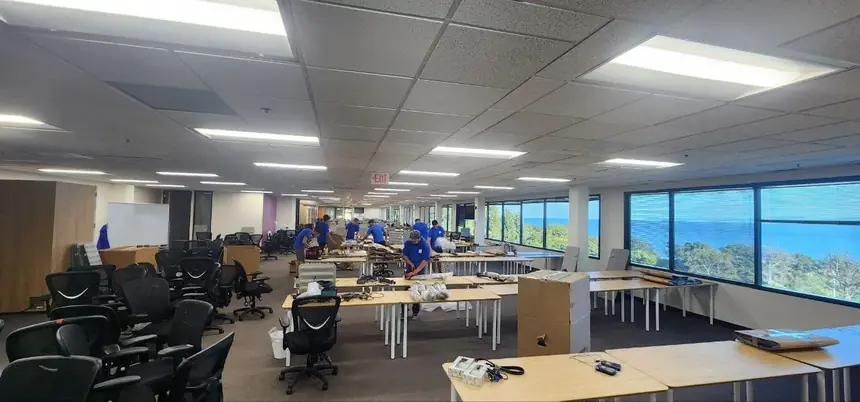
Share the move timeline, packing instructions, and what each person is responsible for. Send updates regularly, and give employees one place to ask questions, such as a shared document or a dedicated chat channel. Most offices ask employees to pack their own desk contents and personal items, while the moving crew handles furniture, equipment, and shared spaces.
Plan items that need special handling
Some equipment needs its own plan and sometimes its own vendor.
- Servers and network racks need a documented shutdown, labeled cables, and a tested restart plan.
- Leased printers and copiers often must be prepared or moved by the leasing company. Check your agreement.
- Filing cabinets and safes should be emptied or locked, with keys kept by the move coordinator.
- Artwork, lab equipment, and specialty furniture should be listed separately so the crew brings the right protection.
- Plants should be moved by the team or a plant service, not packed in closed boxes.
Plan address updates
Make a list of everywhere your business address appears: your website, Google Business Profile, invoices, letterhead, business cards, bank and payroll accounts, insurance policies, business licenses, and vendor accounts.
Two weeks before
- Back up all data and confirm the IT cutover plan, including who will reconnect servers, network equipment, and phones.
- Distribute packing materials and labels to employees.
- Notify clients, vendors, and delivery services of the new address and move date.
- Confirm the schedule with your moving company, building management at both locations, and IT vendors.
- Arrange removal of furniture and equipment that is not moving.
Moving week
- Employees finish packing and label everything by the agreed deadline.
- IT disconnects and labels equipment, cables, and peripherals.
- Clear out kitchens, refrigerators, and supply closets.
- Confirm freight elevator and loading dock reservations.
- Walk the new office to confirm signage matches the floor plan.
Moving day or weekend
Keep the move coordinator on site at both locations, or split the role between two people. The coordinator answers crew questions, approves any changes, and makes sure nothing is left behind.
A final walkthrough of the old office should cover every room, closet, and storage area before the keys are returned.
The first week in the new office
- Test everything. Confirm internet, phones, printers, security access, and every workstation before employees arrive.
- Check placement. Walk the floor plan and fix any items placed in the wrong area.
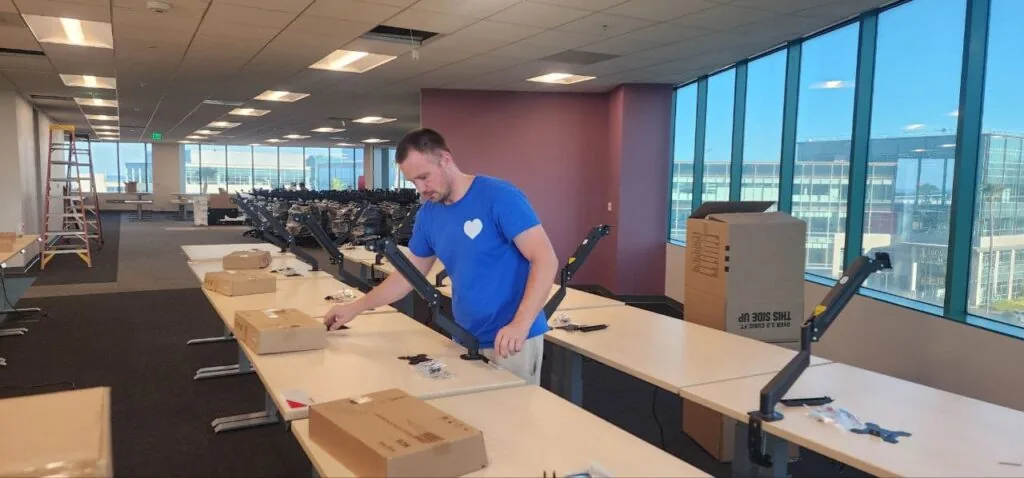
- Reassemble and adjust. Confirm desks, monitor arms, and shared furniture are installed and stable.
- Gather feedback. Ask employees to report missing or damaged items within the first few days.
- Finish address updates. Work through the remaining items on your address list, and update your Google Business Profile once you are open at the new location.

Common office move mistakes
- Starting IT planning too late. Internet and phone installation can take weeks, and a new office without connectivity is not a working office.
- Skipping building rules. A missing certificate of insurance or an unreserved freight elevator can stop a move before it starts.
- Labeling by name instead of location. Names change and people move desks. Label by floor plan number so every item has one clear destination.
- Moving everything. Old furniture, broken equipment, and years of paper files slow down the move. Decide what is not moving well before the date.
- No single decision maker. When nobody owns the plan, small questions on moving day turn into long delays.
Plan the move with one team
Office moves go smoothly when planning, building coordination, and setup are handled together. Impel's office moves and commercial moves include after-hours and weekend scheduling and certificates of insurance, and technology moves are planned with our IT and server relocation process. Larger multi-department moves follow our corporate relocation approach.