Commercial moving services relocate an office, store, clinic, restaurant or warehouse, and a good one does it on a fixed plan so your business loses as few working hours as possible. For a Bay Area business, the strongest choice is a locally owned mover whose own trained employees do the work, who documents the scope before the move and who gives you a written estimate and one coordinator from first call to final placement. That is how Impel Moving runs commercial moves in San Francisco, the Peninsula, Silicon Valley and Marin.
This guide explains what is included, how to plan the timeline, how to prepare staff and equipment, and what to check in any written estimate.
TL;DR
- A commercial move covers more than carrying boxes: planning, packing, furniture handling, equipment, IT and placement in the new space.
- Start early. One planning guide recommends getting mover bids two to three months ahead and fixing the move plan at least six weeks before moving day.
- Cost depends on scope, so the reliable number is a written estimate built from a documented walk-through, not a generic average.
- Check the mover’s California permit and U.S. DOT number, and ask who actually does the work: employees or day labor.
- Impel Moving offers a free written moving estimate for offices, retail, medical and dental, restaurants, hotels, warehouses and IT relocations.
Table of Contents
- What commercial moving services include
- Why a local, employee-based crew matters for a business move
- How to plan a commercial move and limit downtime
- How to prepare staff, furniture, files and equipment
- How commercial moving is priced
- What to look for in a written estimate
- Items that need special handling
- Our perspective
- Plan your commercial move with Impel Moving
- FAQ
- Sources
What commercial moving services include
A residential move empties a home. A commercial move keeps a business running while it changes address. That difference shapes everything a commercial mover does.
The core work usually covers:
- Planning and scope: a documented list of what moves, from where to where, with floor access, elevators, loading areas and parking noted.
- Packing and unpacking: cartons for desks, files and supplies, plus crating for delicate items. Impel Moving offers packing services and an unpacking service for the new space.
- Furniture handling: disassembly, protection, transport and reassembly of workstations, conference tables and shelving. See our furniture assembly and disassembly service.
- Specialty equipment: servers, network gear, medical and dental equipment, retail fixtures, kitchen equipment and warehouse racking.
- Disposal: furniture that is not going to the new space can leave through furniture disposal, so you do not pay to move what you will not use.
- Placement: furniture and boxes set in the locations your floor plan calls for, not left in a pile.
Impel Moving handles these business types: offices, corporate relocations, retail stores, medical and dental offices, restaurants, hotels and hospitality, warehouses and industrial sites, and IT and server rooms. Each has its own page, listed below.
| Type of move | What usually drives the plan | Impel Moving page |
|---|---|---|
| General office | Workstations, files, furniture, timing around work hours | Office relocation |
| Multi-site or company-wide | Phasing, coordination across teams | Corporate relocation |
| Retail | Fixtures, inventory, reopening date | Retail store relocation |
| Medical and dental | Equipment, patient files, reopening schedule | Medical and dental office movers |
| Restaurant | Kitchen equipment, short closure window | Restaurant movers |
| Hotel | Furniture and fixtures in volume | Hotel and hospitality relocation |
| Warehouse | Racking, heavy equipment, stock | Warehouse and industrial movers |
| Servers and IT | Shutdown sequence, labeling, restart testing | IT and server relocation |
Why a local, employee-based crew matters for a business move
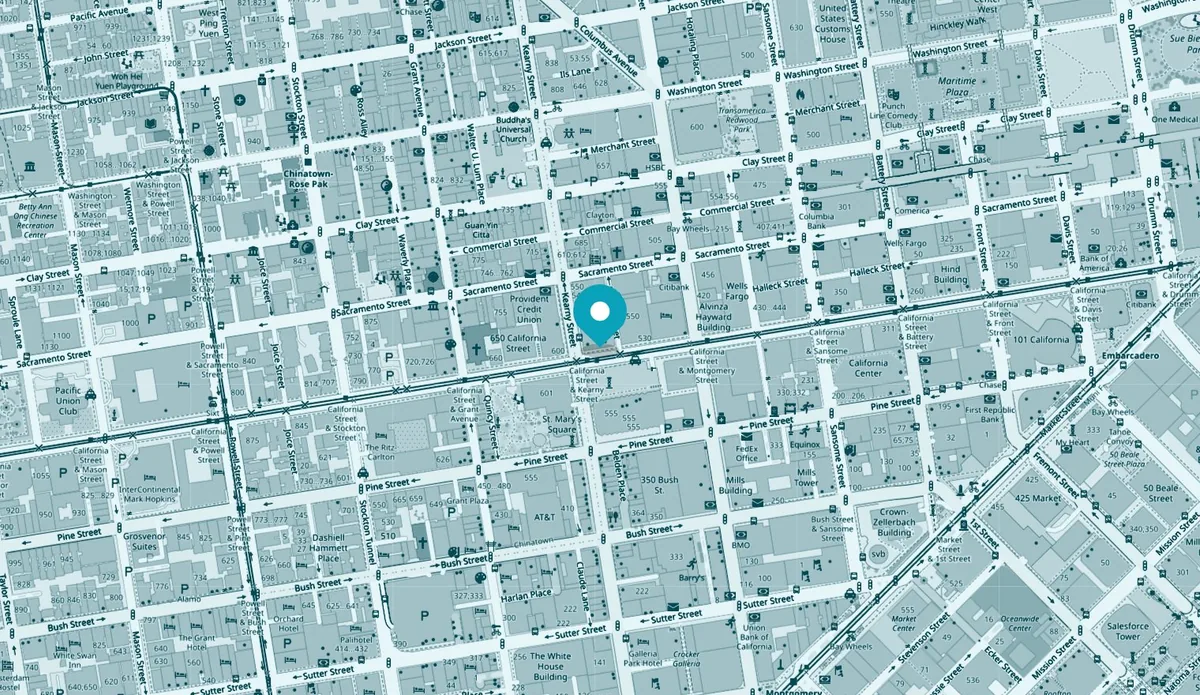
Office moves happen in tight spaces: shared elevators in downtown San Francisco towers, loading zones on narrow streets, building rules about move hours and certificates of insurance. They also happen where business data sits on desks and in file cabinets. The people carrying your property matter.
Impel Moving is locally owned and operated, not a franchise or a broker. Its crews are its own uniformed, trained employees, never subcontractors or day labor. In practice that means the people who walk your space during the estimate belong to the same company that does the move, and you deal with one coordinator from quote to placement instead of a chain of handoffs.
The company is licensed and insured under California permit Cal-T / MTR 0192323, and long-distance moves operate under US DOT 3549568.
How to plan a commercial move and limit downtime
Downtime is the real cost of a business move. Every hour staff cannot work, or a store cannot sell, is lost revenue. Planning is how you shrink it.
Build the timeline backward from the move date
One commercial real estate firm’s relocation guide recommends starting IT, internet, phone and security coordination at least three months before moving, seeking mover bids two to three months ahead, and setting the move plan at least six weeks before the move. In the Bay Area, where lease dates and building availability can be tight, treat those as minimums.
A practical sequence:
- Three months out: confirm the lease end and the new space’s ready date, and begin IT, phone, internet and security arrangements for the new location.
- Two to three months out: request written estimates from movers. Walk the space with each one.
- Six weeks out: lock the move plan, floor plan and move date.
- Two weeks out: hand packing instructions to every employee.
- Move week: labels on everything, IT shut down on schedule, building access confirmed.
- After the move: unpack, test systems and resolve punch-list items.
If your old lease ends before the new space is ready, read our guide on what to do when the office lease ends and the new space is not ready.
Name one person to run it
The State of Oregon’s Office Relocation Planning Guide recommends choosing a move coordinator supported by an advisory team, setting a target move date with a Gantt-chart timeline (a bar chart showing tasks against dates), and giving the mover, IT and wiring contractors floor plans in the same standard format. It also recommends labeling every item with either its location in the new space or a surplus, recycling or disposal designation.
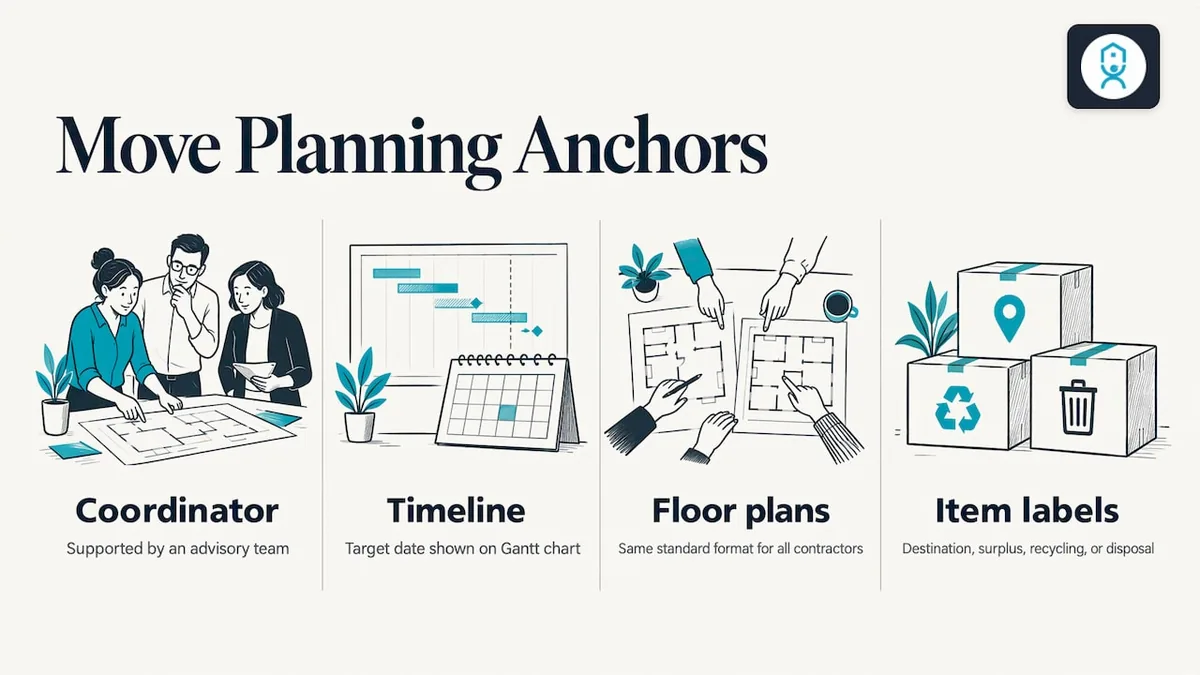
That last point saves money. Items marked for disposal before the move never get packed, loaded or unloaded. On our side, one Impel Moving coordinator stays with you from quote to placement, so your internal lead has one counterpart to call.
Our office relocation checklist turns this timeline into a task list you can hand to your move lead.
How to prepare staff, furniture, files and equipment
Staff
Confusion is the usual cause of delays on move day: boxes without labels, desks that were not emptied, personal items left behind. A U.S. office-relocation guide published August 14, 2025 by a commercial real estate firm recommends distributing packing instructions and labels, holding employee Q&A sessions and sharing a short reminder list. Another guide says to give employees packing instructions at least two weeks before the move, covering cartons, personal items, computers and phones, furniture, files, plants, labeling, housekeeping, unpacking and post-move setup.
A simple instruction sheet should answer:
- What each person packs themselves (personal items, desk contents) and what the crew handles.
- How to label: name or department, plus the destination room or workstation on your floor plan.
- What stays unpacked until move day (for example, the computer a person needs until the last afternoon).
- Where plants and personal valuables go. Employees should carry their own valuables.
If you would rather not rely on staff to pack, Impel Moving’s packing services take that off your team’s plate.
Furniture
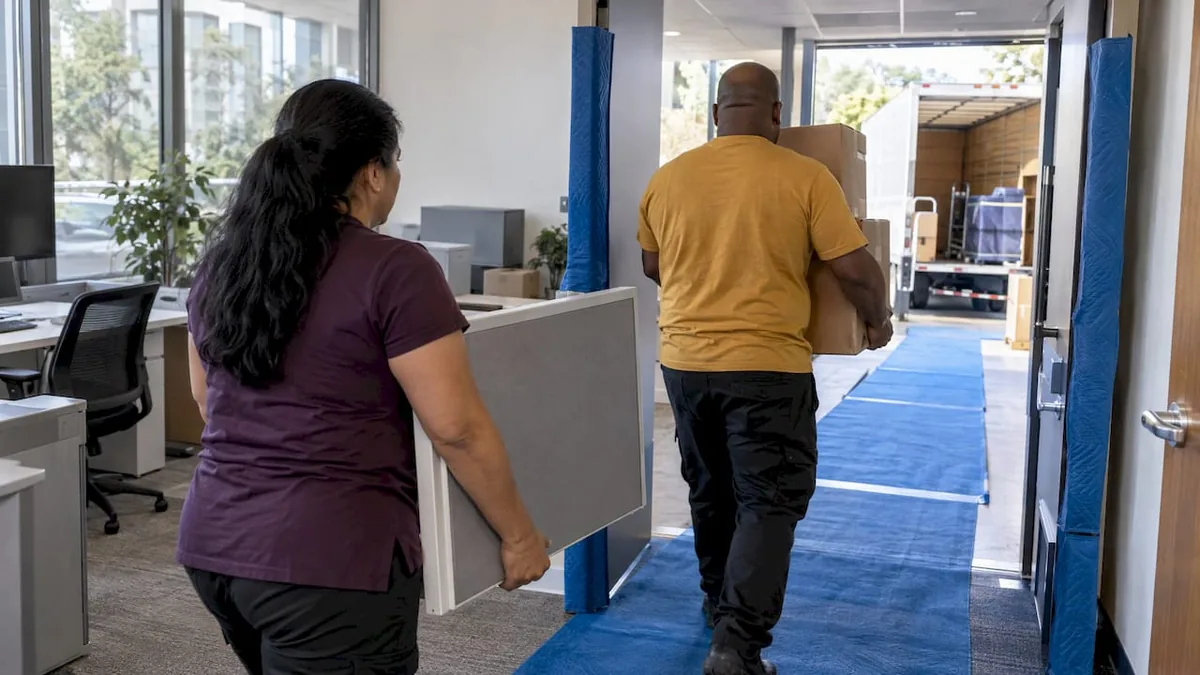
Workstations, shelving and conference tables need to come apart and go back together correctly. Decide in advance which pieces go to the new space and which do not. Furniture that is not making the trip can be removed rather than carried across town; our article on office furniture removal when moving offices explains how to sort it.
Files and records
Label file boxes by department and destination, keep a list of what is in each, and have the person responsible for records confirm they arrived. For regulated records, such as patient charts in a medical or dental practice, decide with your compliance lead who is present while they move. Our medical and dental office movers page covers how those moves are handled.
IT and sensitive equipment
This is where unplanned downtime hides. A 2026 data-center planning report from a relocation logistics firm says to inventory servers, storage systems, switches, racks and cables and map each item to its destination rack position, network relationships, power requirements and handling needs. It also says the plan should define responsibilities, shutdown and restart sequences, cable labeling, packing and crating, access windows, backup and rollback, and testing before systems return to production.
For a small Bay Area office, the same logic scales down:
- Back up everything before the move, and confirm the backup restores.
- Photograph the back of each rack or workstation before unplugging.
- Label every cable at both ends.
- Decide who powers systems down and who powers them up.
- Test before staff arrive on the first morning.
Impel Moving handles IT and server relocation, and our server room relocation checklist gives your IT lead the sequence in detail.
How commercial moving is priced
No honest mover can give you a reliable number without knowing the scope. Business moves vary too much: a 12-person office in a SoMa elevator building and a 40-person floor in Palo Alto are different jobs even if the square footage looks similar.
The factors that move an estimate are straightforward:
- Volume: how much furniture, equipment and how many files.
- Access: floors, elevators, stairs, loading dock or street loading, parking permits, building move hours.
- Services added: packing, unpacking, furniture disassembly and reassembly, disposal, IT handling.
- Specialty items: servers, medical equipment, kitchen equipment, racking.
- Timing: moves outside regular business hours can change crew scheduling.
- Distance: a local move and a long-distance move are scoped differently.
Impel Moving publishes planning ranges on its rates page to help you budget. They are planning ranges, not quotes, and the final cost comes from a written estimate based on a documented scope. If a local move is part of your plan, local moves with Impel Moving carry a three-hour minimum.
Be careful with national averages you see in search results. They are built from other cities and other kinds of jobs, and Bay Area building rules and labor markets make them a poor benchmark for your move.
What to look for in a written estimate
The estimate is where a business finds out whether the move will go as planned. Use this checklist with any mover you consider.
- A documented scope. It should list what is moving, the origin and destination, access conditions and the services included. If it is a single line with a total, it is not a scope.
- Written, not verbal. You should be able to read exactly what you are paying for.
- No move-day surprises for work that should have been seen. Ask how the estimate handles access issues, stairs, long carries and elevator limits that a walk-through would reveal. Impel Moving’s written estimates are based on a documented scope, with no added charges on move day for work that should have been seen.
- Who does the work. Ask whether the crew are the company’s own trained employees or hired by the day. Impel Moving uses its own uniformed, trained employees.
- Credentials. Ask for the company’s California permit number and U.S. DOT number for long-distance work. Impel Moving is licensed and insured under Cal-T / MTR 0192323 and US DOT 3549568.
- One point of contact. Ask who you call on move day and who you call afterward.
- Building requirements. Many Bay Area office buildings require proof of insurance and reserved elevator times. Ask the mover to handle the paperwork with building management.
Send each mover the same information so the estimates compare fairly, and compare what is included, not only the total.
Items that need special handling
Some business items need a conversation before move day, not a surprise on it. Ask your coordinator for a list of anything the crew cannot or should not carry, and put it in the written scope. Common candidates include chemicals, cleaning supplies, batteries and certain medical or lab materials. Plan to move high-value or irreplaceable items yourself or through a handling plan agreed in writing. Our careful handling page explains how Impel Moving protects belongings in transit, and the white glove service is available for items that need extra care.
Our perspective
Most business moves that go wrong do not fail on move day. They fail weeks earlier, when nobody wrote down what was moving, who was packing what and how the new space would be laid out.
That is why we treat the walk-through and the written scope as the most important part of the job. Our estimate comes from that documented scope, and we do not add charges on move day for work that should have been seen. A business owner should be able to read the estimate and know exactly what the move will look like.
We keep the team small on your side too: one coordinator from quote to placement. Our crews are our own uniformed, trained employees, and we work in San Francisco, the Peninsula, Silicon Valley and Marin every day. We know which buildings need insurance certificates, which streets make loading hard and how long a freight elevator really takes.
If you are weighing a move, begin with a documented scope and a timeline, and then decide on the date. We would be glad to help you with both.
Julia
Plan your commercial move with Impel Moving
If your business is relocating in the Bay Area, Impel Moving offers commercial movers for offices, retail, medical and dental practices, restaurants, hotels, warehouses and IT rooms. Packing, unpacking, furniture assembly and disassembly and furniture disposal can be part of the same written estimate, handled by one coordinator.
The next step is a free written moving estimate. Tell us the address, the size of the space and your target date, and we will build the scope from there. You can start at our office relocation page or visit impelmovingca.com.
FAQ
What is the difference between commercial movers and residential movers?
Commercial movers plan around a business’s operations: work hours, equipment, IT, files, building rules and reopening dates. Residential movers focus on household furniture and belongings. Impel Moving offers both, so a business owner can also use the residential movers for a home move.
How far ahead should I book a commercial mover?
One planning guide recommends seeking mover bids two to three months before the move and setting the move plan at least six weeks ahead. If your move has IT, medical equipment or a short closure window, start at the earlier end of that range.
Can a mover handle servers and IT equipment?
Yes. Impel Moving offers IT and server relocation. A safe plan inventories each item, defines shutdown and restart sequences, labels cables and tests systems before they go back into production.
How do I get a commercial moving estimate?
Request a free written moving estimate from Impel Moving. We document the scope, including the space, access, services and any specialty items, so the written estimate reflects the actual move. The final cost comes from that estimate, not from planning ranges.
Sources
- Office Relocation Planning Guide, Oregon Department of Administrative Services
- Steps & Timing to Prepare for your Office Relocation, Cresa
- Corporate Relocation: A Guide to Moving Your Office, Cushman & Wakefield
- Capitol Relocation & Logistics highlights data center move planning, AJOT