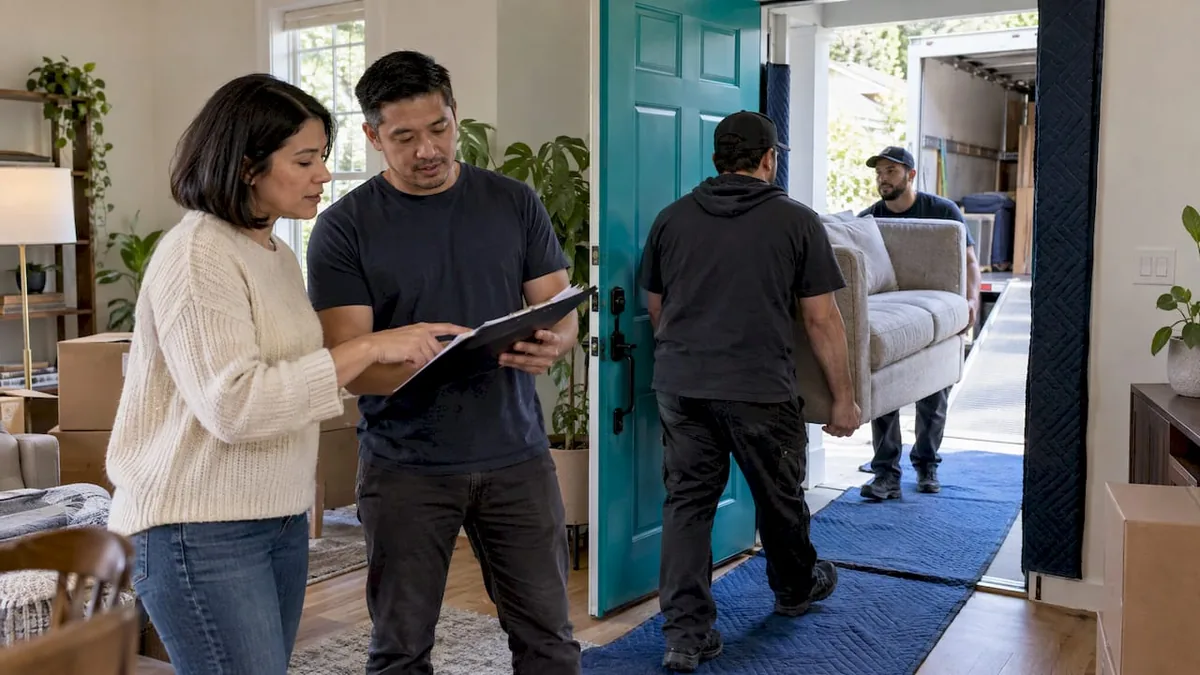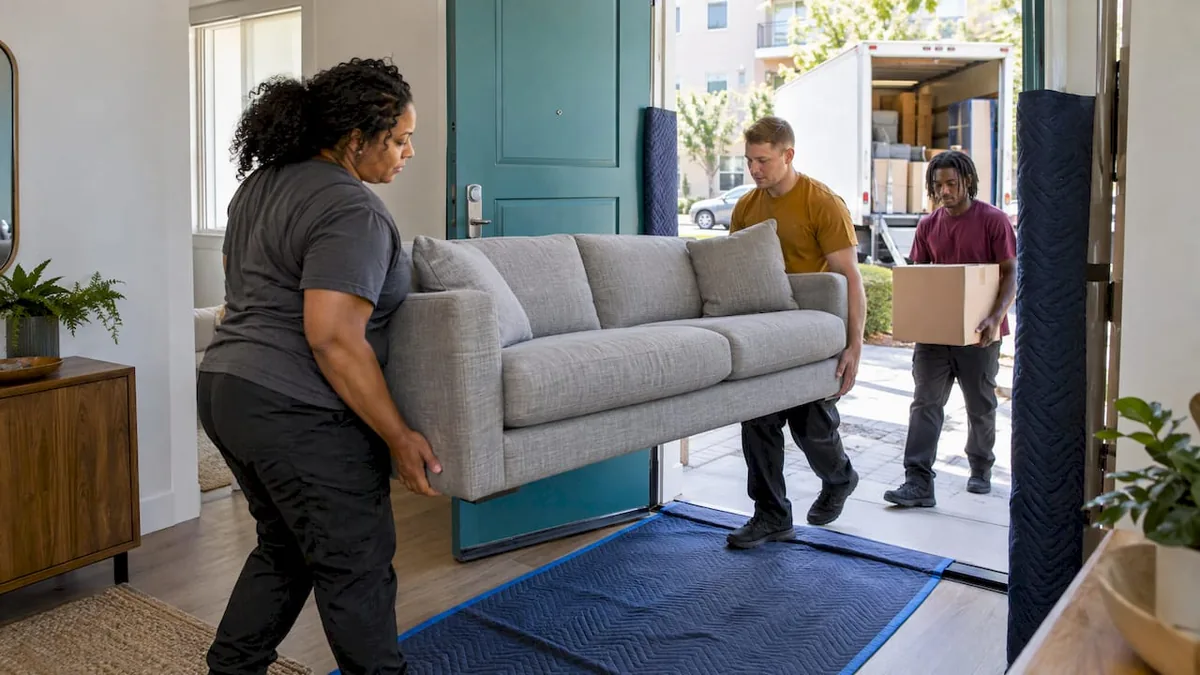
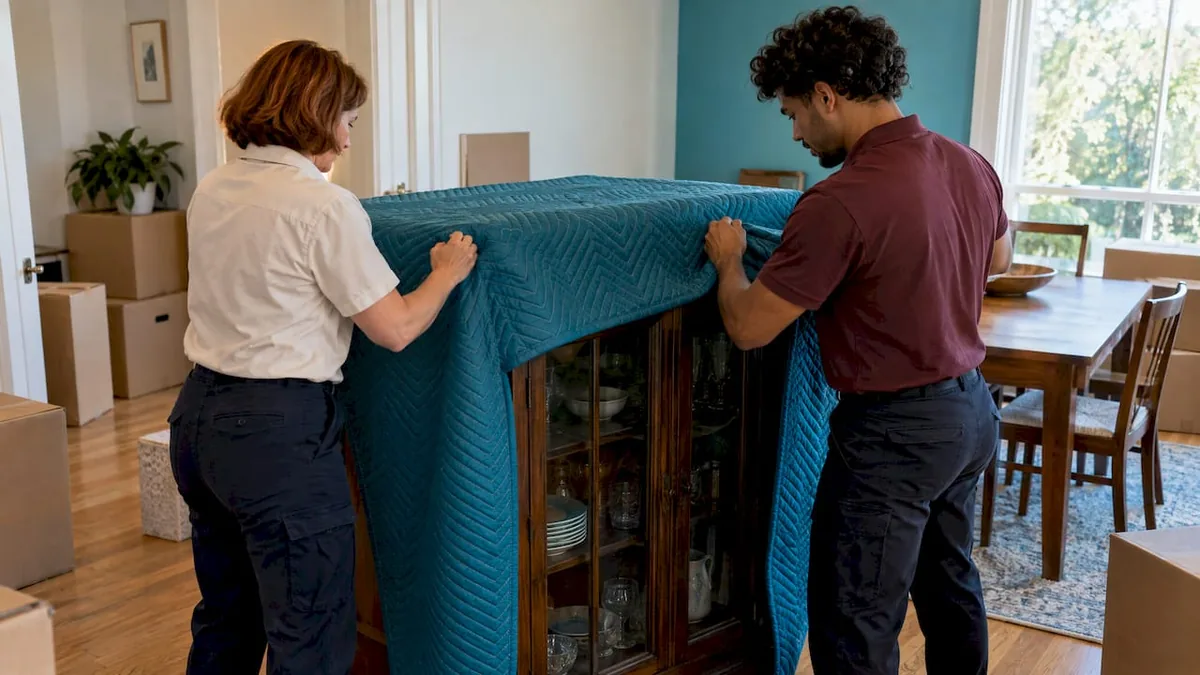
White glove movers handle your move from start to finish: they pack, protect, carry, assemble and place your belongings where you want them, so you don’t have to lift a finger or supervise every box. The label is not regulated, so what you get depends on the company. The right one gives you a written quote, a licensed and insured crew, and one team that stays with your move from planning to the last piece of furniture. That is how we run white glove moves at Impel Moving in the Bay Area.
TL;DR
- White glove means a hands-off, end-to-end move: packing, careful handling, assembly, unpacking and placing items in the right rooms.
- The term has no legal definition, so ask what is included, in writing, before you sign.
- In California, a mover must hold a state license, and a moving agreement must be signed by both sides at least three days before the move.
- Compare estimates on scope and liability coverage, not only on price.
- One dedicated, full-time team for the whole move is the best protection for fragile and high-value items.
Table of Contents
- What white glove moving means
- What white glove movers typically include
- White glove or a standard full-service move?
- How a white glove move runs, step by step
- Preparing for your move
- What white glove costs and how to compare quotes
- Licensing, insurance and liability: what to check
- Why one dedicated team matters
- Hiring white glove movers in the Bay Area
- Book a white glove move with Impel
- FAQ
- Sources
What white glove moving means
A standard move gets your things from one address to another. A white glove move aims to take the work off you entirely. One real estate agent quoted by Better Homes & Gardens says the main difference is that the crew packs furniture at both ends so the client doesn’t need to be hands-on, and sets up the home according to instructions on where each object goes.
The name comes from the Gilded Age, when butlers wore white gloves to avoid leaving fingerprints on furnishings. Today, as another agent in the same article explains, it is shorthand for a service built around expensive furniture, artwork and antiques.
In practice, white glove is a level of care and scope, not a different kind of truck. It suits you if:
- You are moving a family home and don’t have the days to pack and unpack.
- You own pieces that are valuable, awkward or easy to scratch: a marble table, a glass cabinet, a large piece of art.
- You are moving into an apartment or condo where the crew has to protect hallways, elevators and finishes.
- You want furniture put back together and in the right room before the crew leaves.
What white glove movers typically include
Because there is no standard, two companies can both say “white glove” and offer different things. A Redfin guide published in September 2026 describes the service as a premium, specialized option designed to make moving as hands-off as possible. It lists professional packing, custom crating for delicate items, furniture assembly, unpacking, and placing belongings in their designated rooms.
Here is how that breaks down, and how it maps to what we offer.
| Part of the move | What it means for you | At Impel |
|---|---|---|
| Packing | Crew packs every room with proper materials | Packing services |
| Handling valuables | Extra protection for art, antiques, high-value items | Specialty and high-value item support |
| Assembly | Beds, tables and shelving taken apart and rebuilt | Furniture assembly and disassembly |
| Delivery and placement | Items carried into the right rooms | White glove delivery |
| Unpacking | Boxes opened, contents set out, materials removed | Unpacking services |
| Furniture you no longer need | Taken away rather than moved | Furniture disposal |
The Redfin guide quotes a moving company manager who says white glove is not one step but the standard across the whole move, from planning through packing, protection, unpacking, installation and final placement. We agree with the idea: a crew that is careful on delivery day but rushed at the packing stage has not delivered white glove service.
White glove or a standard full-service move?
A full-service move already covers a lot: packing, loading, transport and unloading. The gap between the two is mostly in the detail:
- Planning. White glove starts with a closer look at what you own, especially hard-to-move items, and a plan for where everything lands.
- Protection. Furniture, floors and walls are padded and guarded, and fragile items are packed for their shape, not just boxed.
- Finish. Furniture is reassembled, items are placed, and boxes are unpacked, rather than stacked in the nearest room.
If you want the full-service basics first, see our full moving service. If your move includes art or antiques, read how we approach moving art, antiques and valuables in the Bay Area.
How a white glove move runs, step by step
Here is the sequence you should expect, whichever company you choose, and where each step can go wrong.
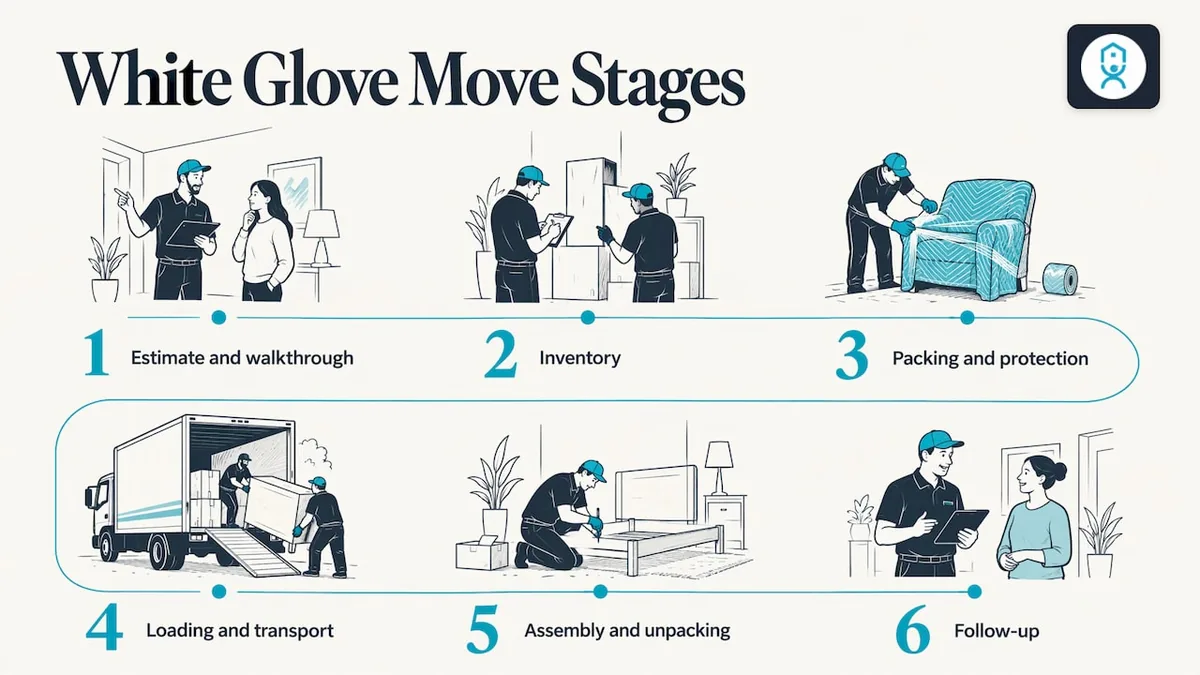
1. Estimate and walkthrough
The quote should come after someone has seen what is being moved. In California, a visual inspection is required with the estimate for moves within the state, according to the state’s Bureau of Household Goods and Services. For interstate moves, federal guidance says the same: get a written estimate based on an in-person inspection.
This is where it goes wrong: a quote given over the phone from a room count. It looks cheap, then grows on move day. We give clear written quotes so you know what you are agreeing to before the work begins.
2. Inventory and special items
Point out everything the crew should treat differently: a glass-top table, a grandfather clock, a framed painting, a safe, a piano. The state bureau advises customers to take an inventory of belongings with video or photos before the move starts. It takes ten minutes, and it settles any later question about what condition an item was in.
3. Packing and protection
This is the heart of white glove. Items should be packed by shape and fragility, furniture padded and wrapped, and nothing left loose in a drawer or box that could shift. Our crews are full-time, trained employees, not subcontractors, so the person wrapping your cabinet does this work every day.
4. Loading, transport and unloading
The crew loads in a planned order, protects entries and floors, and carries items into the rooms you marked. If you are moving a longer distance, ask whether your things stay on one truck from pickup to delivery. We explain why that matters in SF to LA: will your things stay on one truck?
5. Assembly, placement and unpacking
Beds go back together, tables are reassembled, and items are set where you said they should go. Boxes are unpacked if you booked that service. This is the step most people picture when they think white glove, and it is where one dedicated team pays off: the same crew that took your furniture apart puts it back together.
6. Follow-up
A good mover checks in after the move. Our support runs from planning through post-move follow-up, so if something needs attention, you already know who to call.
Preparing for your move
You don’t pack for a white glove move if you book packing, but a little preparation makes the day smoother.
For fragile and valuable items
- Photograph or video your valuables and any furniture with existing marks.
- Set aside what you carry yourself: jewelry, passports, medications, laptops and important papers.
- Tell the estimator about any item with special requirements, such as a large mirror, a stone top or a statement chandelier.
- Measure big pieces and the doorways, stairs and elevators they must pass through.
For apartments and condos
- Ask building management about moving hours, elevator reservations and parking for the truck, at both addresses.
- Many buildings require a certificate of insurance (COI), a document from the mover’s insurer that proves coverage. Request it early, since approval can take days. Our licensing, insurance and COI page explains what we can provide for Bay Area buildings.
- Reserve the elevator for the full length of the job, not only the loading window.
For offices
- Label by person or department, and decide on a floor plan for the new space before move day.
- List the equipment that needs careful handling, such as servers, printers and monitors.
- Plan the downtime: schedule the move for a weekend or evening if you can.
Office moves follow the same principles with a different checklist. See our office movers and commercial movers pages.
What white glove costs and how to compare quotes
Price is the question everyone asks, and no honest company can give a number without knowing the move. Cost depends on the volume of belongings, the number of crew members and hours, stairs or elevator access, distance, how much packing and assembly you add, and whether you have items needing special handling. Our services have no published price. We give a clear written quote after we understand your move.
When you compare quotes, line them up on the same list:
- Scope. Does the quote include packing, materials, assembly, unpacking and placement, or are these extras?
- Crew. Will your move be handled by the company’s own employees, or by subcontracted labor on the day?
- Estimate type. Is it binding or non-binding? Federal rules for interstate moves cap required payment at delivery for a non-binding estimate: the 110 percent rule limits it to no more than 10% above the estimate.
- Liability coverage. What happens if something breaks, and at what value?
Federal guidance also cautions that choosing a mover solely on the lowest price may mean sacrificing safe, on-time delivery. The lowest number often leaves out the very things you are paying a white glove mover to do.
Licensing, insurance and liability: what to check
This is the part that protects you, and you should do it before you sign anything.
License. Companies moving household goods within, into or out of California must be licensed with the Bureau of Household Goods and Services. The bureau also suggests confirming the business address and checking reputation through sources such as the Better Business Bureau. For moves across state lines, check the mover’s authorization and complaint history in FMCSA’s mover search tool. We walk through the process in how to check a San Francisco mover is licensed. Impel is licensed and insured.
The agreement. For California moves, the company must give you a moving agreement or bill of lading, signed by both parties, at least three days before the move. Read it, and make sure the services you were promised are on it.
Liability. A mover is legally liable for loss or damage during transport to the extent set by the Surface Transportation Board’s released rates order. In plain terms, there are two typical levels for interstate moves: full value protection, or a minimal released-value option, which pays by weight (60 cents per pound per article) and rarely matches what a piece of furniture or art is worth. If you own valuable items, ask about your coverage options and choose one that fits their value before move day. You can also ask your homeowner’s or renter’s insurer how your policy treats items in transit.
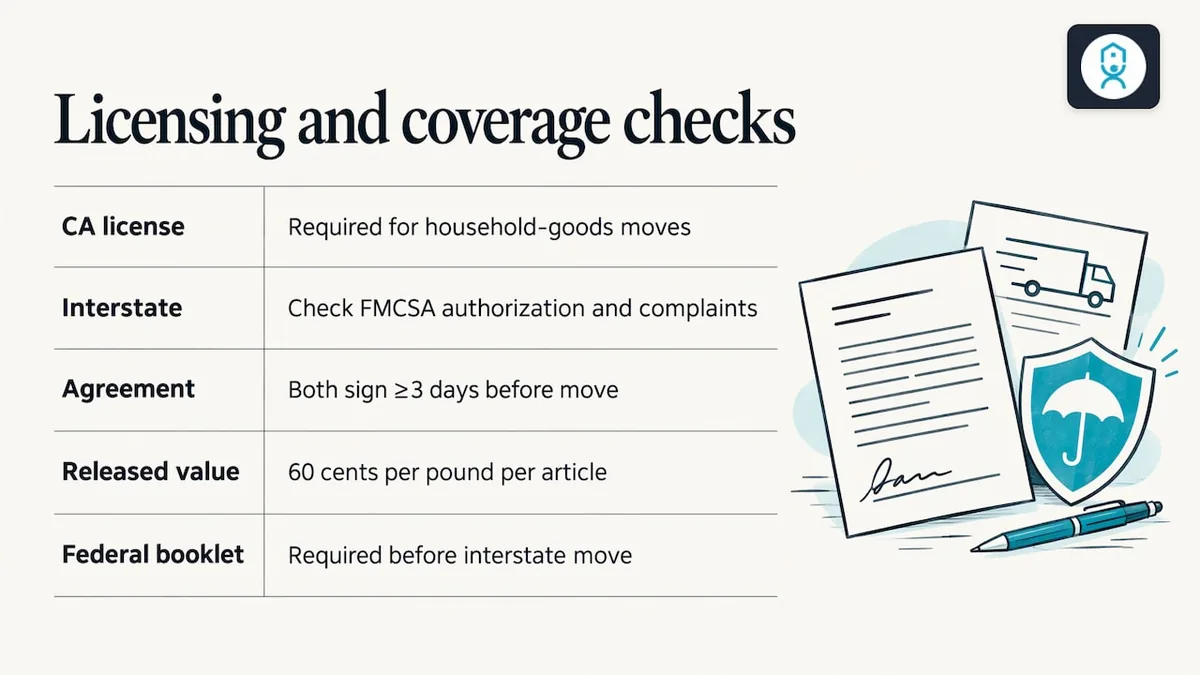
Federal booklet. For interstate moves, your mover is required to give you the booklet “Your Rights and Responsibilities When You Move”. Read it before the move starts.
Why one dedicated team matters
Most of what goes wrong in a move is a handoff problem. The person who saw your home isn’t the person who packs it, who isn’t the person who unloads it, and nobody in the chain owns the result.
That is why we assign one dedicated team to each move, from the first walkthrough to the last box. They employ their craft full time. They are our employees, not subcontractors, and they know what was promised because they were in the room when it was promised.
White glove is a standard you can only keep if the same people are accountable from start to finish. We believe it is also easier on you: one team to brief, one team to ask, and a clear written quote that says what the move includes.
If you are weighing white glove against a standard move, think about your most valuable and most awkward items. If losing or damaging them would hurt, white glove is the right choice.
Julia
Hiring white glove movers in the Bay Area
Bay Area moves have logistics other regions don’t: narrow streets and steep hills in San Francisco, buildings with strict elevator windows, tight parking, and long walks from the truck. A crew that plans for these in advance protects your furniture and your schedule. We know these conditions and adapt every plan to them. You can see how we work in your area on our pages for San Francisco movers and San Carlos movers.
If you are moving out of the Bay Area, our long distance moving service follows the same standard.
Book a white glove move with Impel
We are a family-owned Bay Area company handling residential and commercial moves. White glove service from us can include packing, careful handling of specialty and high-value items, white glove delivery, furniture assembly and disassembly, unpacking and furniture disposal, handled by one dedicated team of full-time, trained staff, with a clear written quote and support from planning through follow-up.

To plan your move, see our white glove service page or start with residential movers. For an office, go to commercial movers.
FAQ
Is white glove moving the same as full-service moving?
Not quite. Full service covers packing, loading, transport and unloading. White glove adds a higher level of care and finish: protection for fragile and valuable items, furniture assembly, unpacking and placement in the rooms you choose. Always confirm what is included in the written quote.
Do white glove movers handle apartments and offices?
Yes. In apartments the crew protects hallways and elevators and works within building rules, so ask your building about elevator reservations and any COI requirement. For offices, the crew handles furniture, equipment and room-by-room placement, and we offer office relocation for that.
How do I know a white glove mover is legitimate?
Check the license first. In California, movers must be licensed with the Bureau of Household Goods and Services, and you can also check business address and reputation. Get a written estimate after an in-person or video inspection, and confirm that the company carries insurance.
What should I do before the movers arrive?
Photograph valuables, set aside papers, jewelry and medications to carry yourself, and measure large furniture against doors and elevators. Book the elevator and parking with building management. Walk the crew through special items on the day.
Sources
- What Is White-Glove Moving? Everything to Know, Better Homes & Gardens
- What Does White-Glove Moving Include? Redfin
- Steps to Select a Mover, FMCSA
- Before Requesting Services from Any Mover (Subpart B), FMCSA
- Consumer Guide to Household Moving, California Bureau of Household Goods and Services