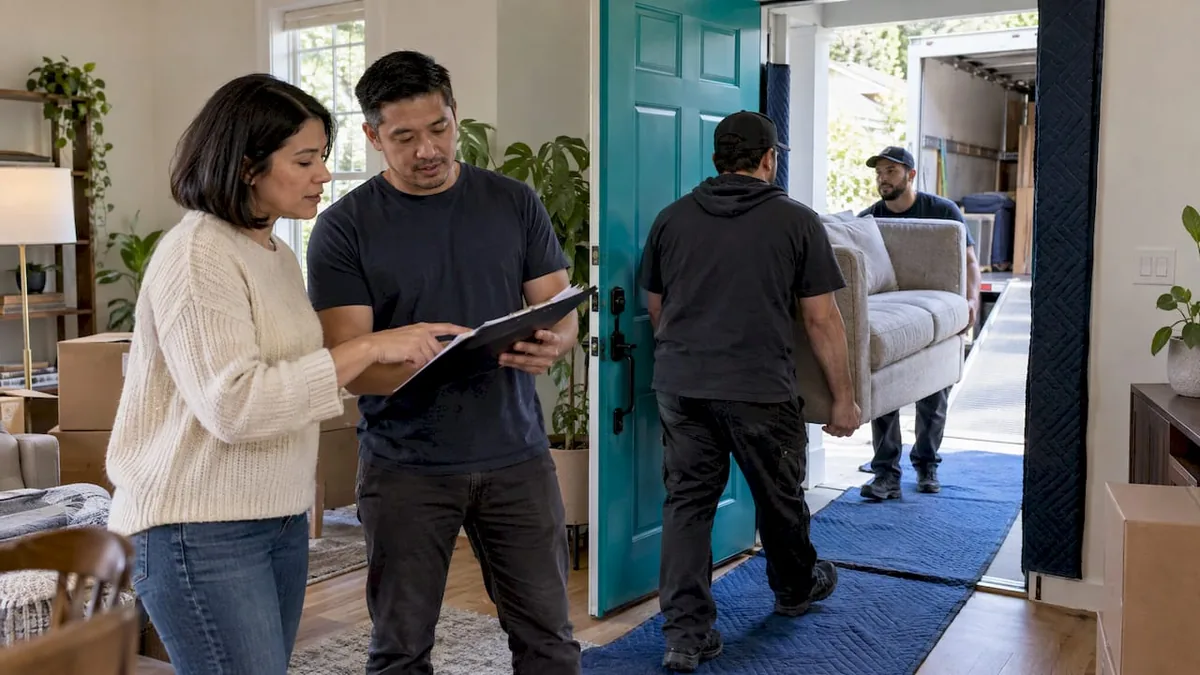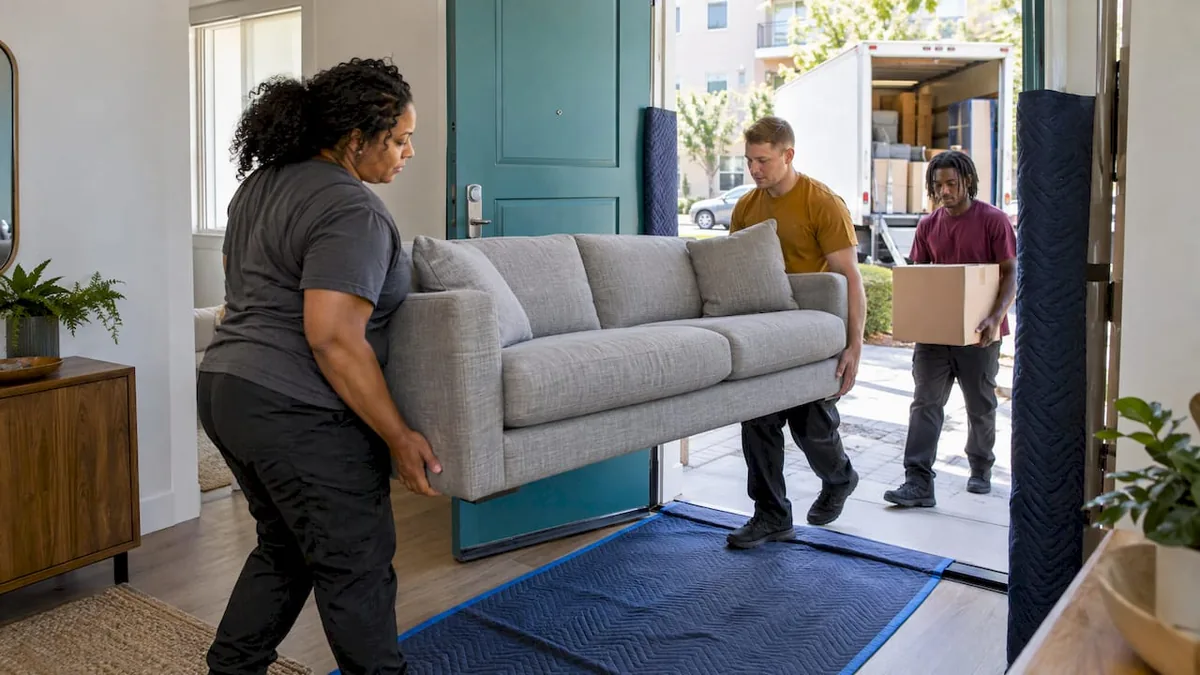
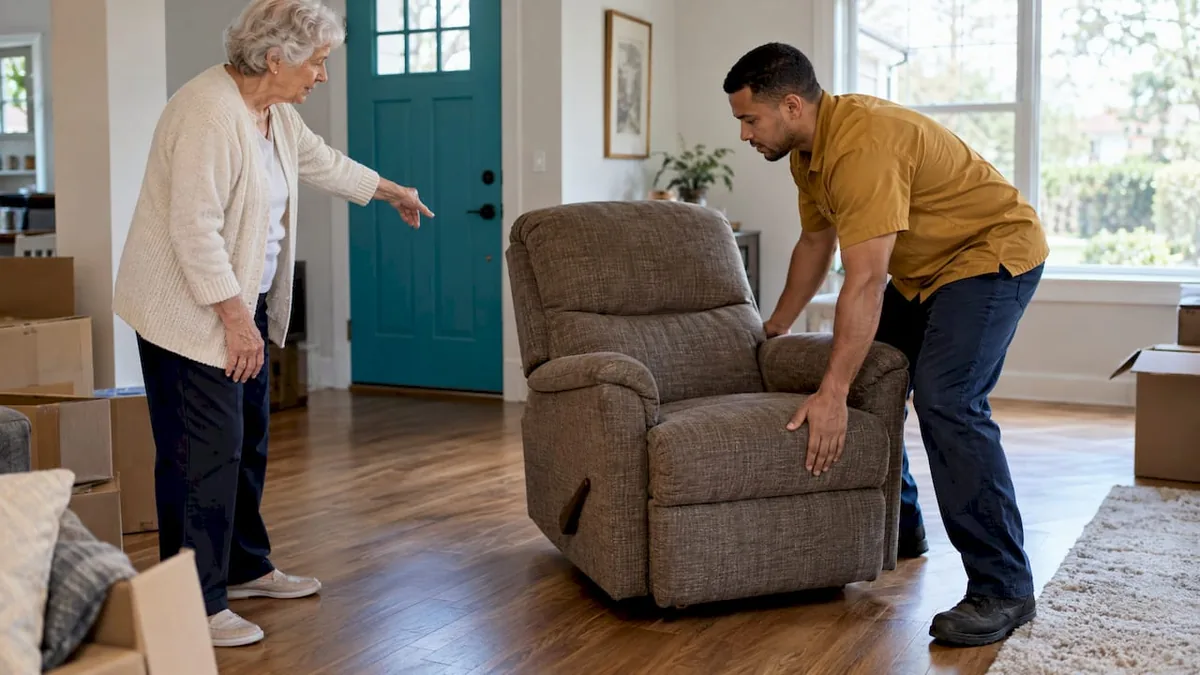
The best moving service for a senior is one team that stays with the move from the first walkthrough to the last box unpacked, quotes the job in writing, and is made up of trained, full-time employees rather than a changing cast of subcontractors. Older adults often move out of homes they have lived in for decades, so the job is as much about patience and order as it is about lifting. At Impel Moving, a family-owned Bay Area company, we assign one dedicated team to each move and give clear written quotes, which is the structure a senior move needs.
This guide covers what senior moving services include, how the process runs from downsizing to move-in, how to vet a mover, and how to prepare an older adult and their belongings for moving day.
TL;DR
- Senior moving help usually covers planning, downsizing, packing, the move itself and setting up the new home, so look for a mover that handles the physical work from start to finish.
- Start decluttering six months to a year ahead, and keep sorting sessions short for the older person.
- Insist on a written estimate, and check licensing and insurance before you sign.
- One dedicated team and full-time trained staff mean fewer strangers in the home and fewer surprises on the day.
- Inventory, photograph and label everything, and keep documents and medications with the family, not on the truck.
Table of Contents
- What senior moving services actually include
- How a senior move works, step by step
- Moving to a smaller home or senior living community
- How to vet a mover before you sign
- Why one dedicated team matters for an older adult
- Preparing the person and their belongings for moving day
- Do charities help seniors with moving expenses?
- How we help seniors move in the Bay Area
- Our perspective on senior moves
- FAQ
- Sources
What senior moving services actually include
The term covers a range of help. The National Association of Senior & Specialty Move Managers (NASMM) describes senior moving and relocation services as support with both the emotional and physical aspects of a move, typically including planning, downsizing, sorting, floor plan design, arranging the sale or donation of belongings, overseeing the movers and setting up the new home.
In practice, the hands-on part of that list is what a moving company delivers:
- Packing and unpacking. Wrapping dishes, glassware, framed photos and keepsakes, then placing them where the older adult can reach them in the new home.
- Careful loading and transport. Furniture protected, boxes counted, fragile and high-value pieces handled separately.
- Furniture assembly and disassembly. Beds, dressers and shelving taken apart and rebuilt so the new bedroom is usable the first night.
- Disposal of what stays behind. Furniture that will not fit the smaller home needs somewhere to go.
- Set-up at the new place. Furniture placed to the floor plan, boxes unpacked, so the person is not facing a wall of cartons.
We offer each of these: packing, unpacking, furniture assembly and disassembly, furniture disposal and white glove handling for delicate or high-value items.
How a senior move works, step by step
A calm move is a long one. The families who get the best result start early and break the work into small pieces.
1. Start six months to a year ahead
The Family Caregiver Alliance suggests beginning to declutter six months or a year before the move, limiting sorting and packing to no more than two hours a day for the parent. Longer sessions tire people out and lead to rushed decisions they regret.
2. Measure the new home and plan the furniture
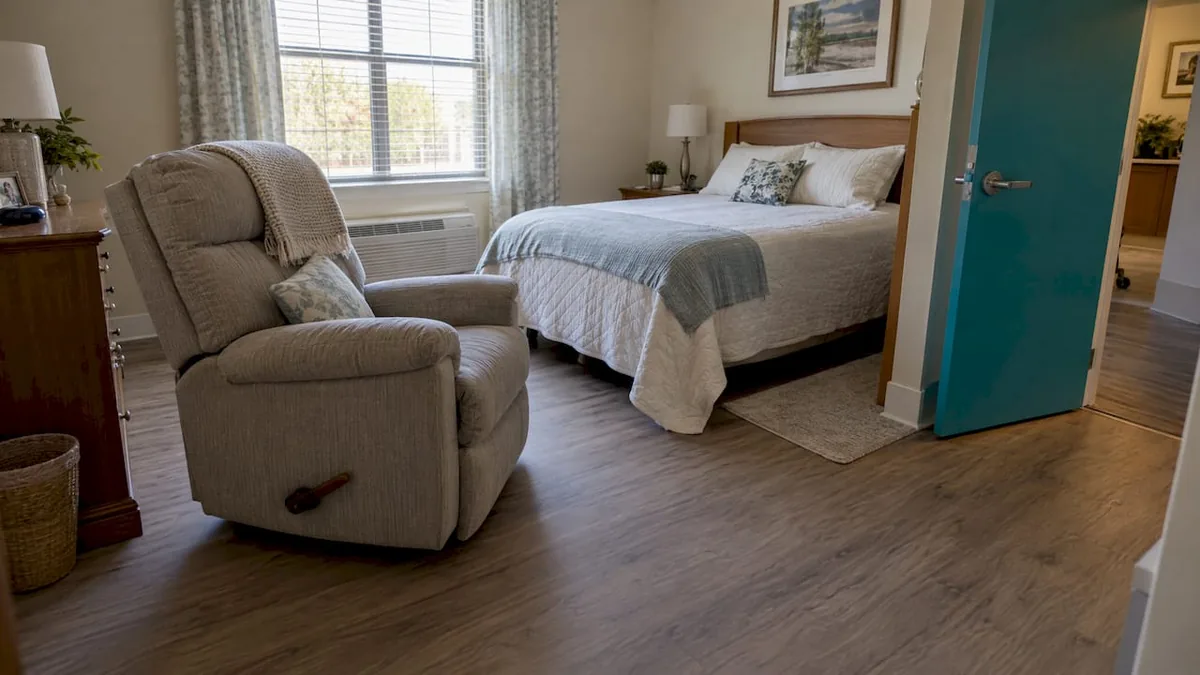
The same checklist recommends an accurately measured floor plan of the new home and a decision about where major furniture will go. Do this before deciding what moves. For a senior living community, ask for the residence layout and dimensions, then draw the room roughly to scale, as AgingCare.com advises. A recliner that does not fit is a painful discovery on move-in day.
3. Sort with the person, not around them
AARP’s caregiver plan begins by asking the senior to name the six possessions that are dearest, meaning the ones that matter most emotionally, not the most valuable or most needed. It then uses color-coded labels and boxes marked Move, Sell, Toss, Donate, Up for Grabs and Pass Along, starting with the least-used rooms. Starting in the guest room or basement builds momentum before anyone faces the bedroom or the kitchen.
Sometimes family is not the best helper for this stage. A neutral outsider with no history attached to an object can sort through belongings in an organized and thorough way, according to a Caring.com expert.
4. Get written estimates and set a firm date
Gather estimates from movers once you know roughly what is moving. A firm date lets the family coordinate travel, the move-in schedule at a community and the end of the old lease or the sale. More on estimates in the next section.
5. Pack early, and let professionals do the heavy part
Packing is the most physically draining stage and the one that most often stalls. Hand the kitchen, closets and garage to a packing crew while the older adult keeps control of the personal items: photographs, correspondence, jewelry and medications. When a crew packs, the family’s role shifts from labor to decisions.
6. Handle the logistics around the move
Caring.com’s guide lists the tasks that surround moving day: mail forwarding, updating online accounts and switching prescriptions to a pharmacy near the new home. Put these on a calendar several weeks before the move.
7. Unpack the bedroom first
The same guide suggests unpacking the bedroom first and labeling a few boxes “unpack first”. The first night in a new place goes better when the bed is made, the lamp works and the medications and glasses are where they were expected to be.
Moving to a smaller home or senior living community
A move to a smaller place changes what you need from the move itself. A long-term care publication notes that a downsizing home should be chosen with aging in place in mind: no stairs, wide doorways, accessible bathrooms and a layout that allows for changing mobility. Grab bars, better lighting and easy-to-use appliances add safety.
If the destination is assisted or independent living, Caring.com’s guide to moving to assisted living recommends that families assess finances, talk to doctors, tour communities together, and read long contracts carefully before signing. It also notes that the National Academy of Elder Law Attorneys can help you find a lawyer to review the paperwork. Those decisions belong to the family, a physician and, for contracts, an attorney. Once they are made, the mover’s job is to deliver a smooth transfer on the community’s schedule.
When a community has a loading dock, elevator reservation or move-in window, tell the mover early. Our team works with the access constraints that come with Bay Area apartments and buildings, and for tall buildings we also have a page on San Francisco high-rise moves.
How to vet a mover before you sign
Families moving an older relative are also a target for unscrupulous operators, so a few checks are worth the time.
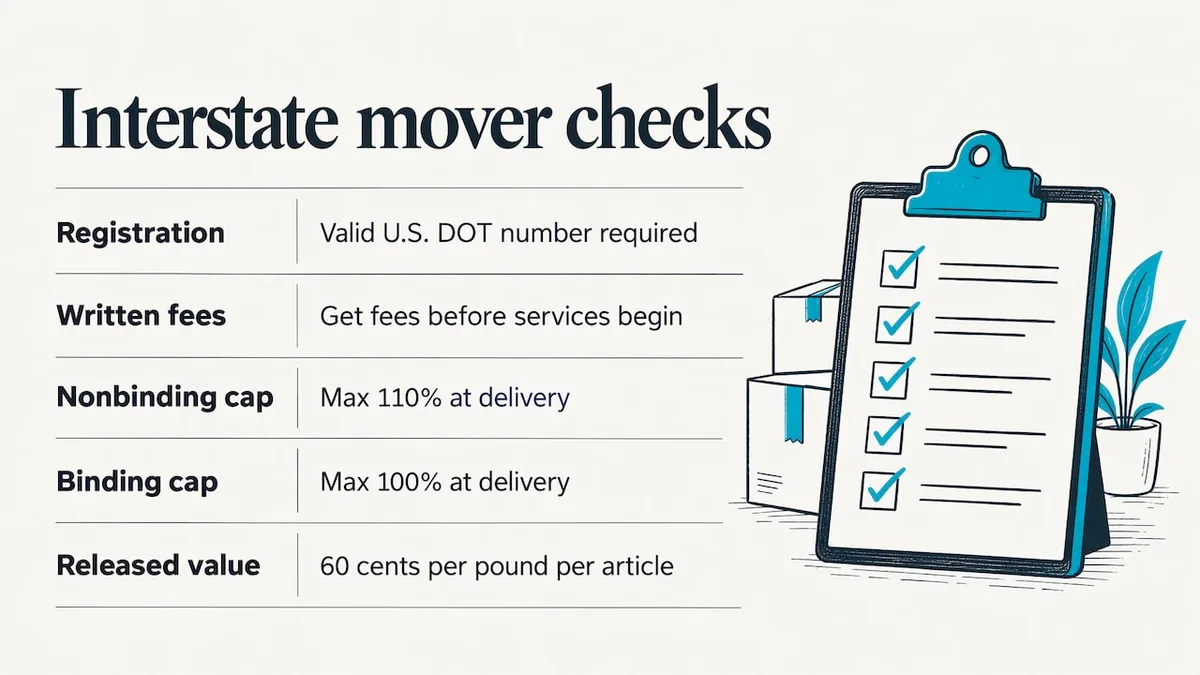
Check registration. The Federal Motor Carrier Safety Administration requires interstate household goods movers and brokers to be registered and hold a valid U.S. DOT number, and consumers can verify it in the FMCSA database, along with insurance and complaint history. Ask any mover for its credentials. Ours are on our licensing and insurance page.
Get the estimate in writing. NASMM recommends getting fees in writing before services begin and asking whether a written contract will be provided. Costs vary by region and the services provided, and members may charge by the hour or a flat fee, so no single price applies to every senior move. Clear written quotes are part of how we work.
Know the payment rules on interstate moves. Under federal rules, a mover cannot require payment above 110 percent of a non-binding estimate, or 100 percent of a binding estimate, at delivery. Any excess is billed 30 days after delivery. These protections apply to interstate moves. For a move that crosses state lines, ask which type of estimate you are getting.
Understand liability coverage. Interstate movers must offer two levels: Full Value Protection, under which the mover is liable for the replacement value of lost or damaged items, and Released Value Protection, which limits liability to 60 cents per pound per article. Choose the level knowing what is inside the boxes: a 10-pound framed heirloom is not covered at replacement value under the lower tier.
Know where complaints go. Consumers can report fraud or service complaints on interstate moves to the FMCSA National Consumer Complaint Database or the DOT Inspector General’s fraud hotline.
If your move is within the Bay Area, our guide to checking that a San Francisco mover is licensed walks through what to ask for.
Why one dedicated team matters for an older adult
A senior move is a series of small decisions made in an emotionally loaded setting. Different crews for packing, loading and delivery mean the person has to explain, over and over, which dresser is staying and which cabinet holds the good china. Strangers turning up at the door on move day can also be unsettling.
Our model is built to avoid that. One dedicated team handles each move, our staff are full-time and trained rather than subcontractors, and support runs from planning through post-move follow-up. The people who walk through the home at the estimate are the people the family knows through the whole job. For a long-distance move, our SF to LA article explains how we approach keeping belongings together.
Preparing the person and their belongings for moving day
AARP’s caregiver guidance is specific, and it is worth following closely.
- Gather the essentials long before the movers arrive. Passports, wills, birth certificates, legal and tax records, Social Security information, bank accounts, checkbooks, credit cards, bills, jewelry, heirlooms and family photos should be set aside well in advance. Carry them in the car with you.
- Photograph furniture from all sides. If something is scratched or damaged in transit, you have proof of its condition.
- Label boxes legibly. Contents and destination room on each box make unloading faster and the new home functional sooner.
- Count boxes and pieces. Count before they go on the truck and again as they come off.
To these, we add one family-level step: keep medications, glasses, hearing aids, chargers and a change of clothes in a bag that travels with the older adult, not on the truck.
Handle the emotional side with care
AARP’s approach to downsizing centers on emotional preservation: let the loved one choose what stays and what goes, and if a collection is too large to take, find ways to remember it without moving it. Its example is a family photo of three generations in Nana’s sweatshirts that turns a collection into a new memory.
AgingCare.com’s Carol Bradley Bursack adds that being critical of what a parent chooses to keep can bring packing to a screeching halt, and that many elders who grew up in hard times fear throwing things away. Build trust first. An “undecided” box gives everyone a way to move forward without forcing an answer.
Do charities help seniors with moving expenses?
This is the question many families ask once they see the numbers. Federal help is narrow: the government does not offer free money for home repairs or improvements, and HUD’s Home Equity Conversion Mortgage lets eligible homeowners over 62 access part of their home’s value for maintenance, repairs or living expenses. For moving costs specifically, ask your local Area Agency on Aging and the community you are moving to what assistance exists in your area. A financial adviser or an elder law attorney can advise on how to fund the move for your situation.
How we help seniors move in the Bay Area
If you are moving an older relative within the Bay Area or out of it, our residential movers team can take on the physical side of the move: packing, loading, transport, furniture assembly and disassembly, furniture disposal and unpacking at the new home. Our full moving service combines these under one team, and we also handle long-distance moves. We are licensed and insured, and we give clear written quotes before the move.

To plan your move, start at impelmovingca.com and request a written quote.
Our perspective on senior moves
Most of the senior moves we plan begin the same way: a family member calls, worried, and the first thing the older person needs is not a truck but a clear plan and a face they recognize. That is why we assign one dedicated team to each move.
We believe a move for an older adult should never feel like a handoff between strangers. Our staff are full-time and trained, not subcontractors, so the crew that packs the kitchen understands the plan for the new home. Our quotes are clear and in writing, so families can make decisions without pressure.
The work is mostly patience: wrapping a lifetime of dishes carefully, assembling the bed first, putting the framed photos where they can be seen. We take the lifting, the packing and the set-up off the family’s hands so they can spend their time with the person who is moving.
Julia
FAQ
What is the difference between senior movers and regular movers?
The trucks and lifting are the same. The difference is in pace, planning and patience: more help with packing and unpacking, set-up at the new home, and a crew that works with the family’s timeline and the older adult’s decisions. A mover that offers one dedicated team and full-service packing and unpacking covers this well.
How far in advance should we book a senior move?
Start planning six months to a year ahead if you can, since decluttering and floor-plan work take time. Request written estimates once you know roughly what is moving and the date is firm. If the timeline is shorter, a full service that includes packing can make up much of the difference.
How much do senior moving services cost?
Costs depend on region, the size of the home and the services included, and NASMM notes that no single price fits every case. Get a written estimate before you commit. We provide clear written quotes for Bay Area moves.
Can the mover handle furniture that will not fit the new home?
Yes. We offer furniture disassembly, assembly and disposal, so pieces that will not fit the smaller space can be dealt with during the same move rather than left for the family.
Sources
- FAQs, NASMM
- Downsizing a Home: A Checklist for Caregivers, Family Caregiver Alliance
- Steps to Help Caregivers Plan a Manageable Move, AARP
- How Caregivers can Relocate Loved Ones with Less Stress, AARP
- A Guide to Moving for Seniors, Caring.com
- Moving to Assisted Living, Caring.com
- Moving Mom or Dad? How to Make Downsizing or Senior Living Transitions Easier, LTC News
- 11 Downsizing Tips for Seniors Moving to Assisted Living, AgingCare.com
- Moving Companies, National Association of Senior Advocates
- Questions About How to Protect Yourself From Fraud, FMCSA
- Frequently Asked Questions, FMCSA