
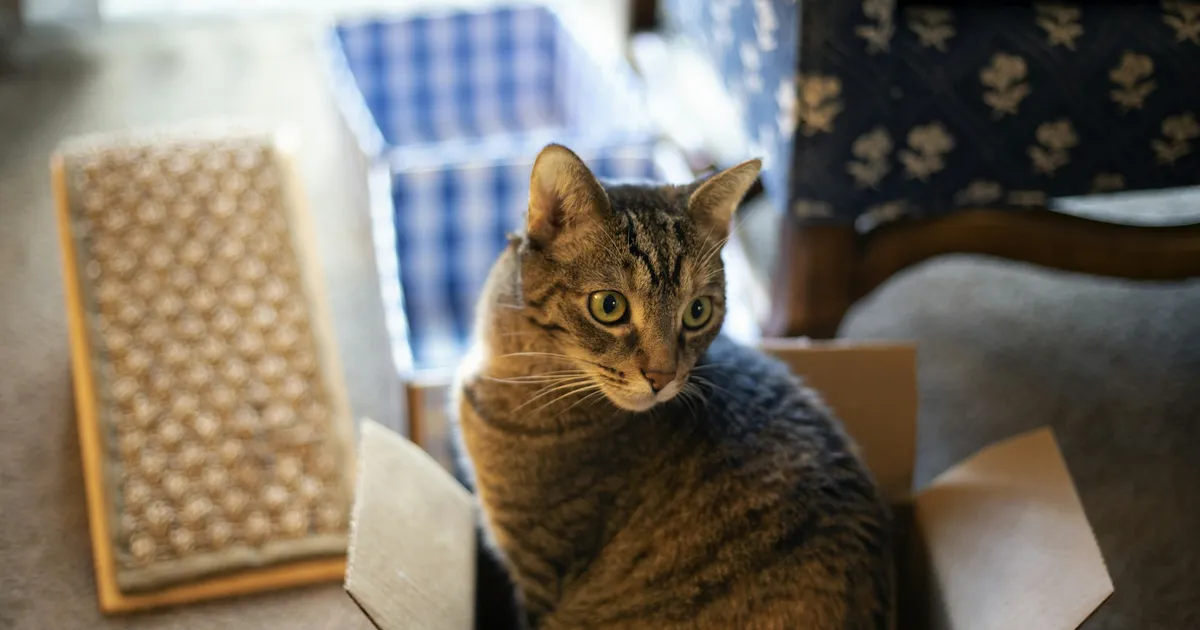
Pets notice a move long before the truck arrives. Furniture shifts, boxes appear, and familiar routines start to change. For cats and dogs, who rely on predictable surroundings, that change can bring stress, hiding, or escape attempts.
The good news is that most pet moving problems are preventable with a little planning. This guide covers what to do in the weeks before the move, how to keep pets safe on moving day, what changes for a long-distance move, and how to help them settle in once you arrive.
Four to six weeks before the move
Start with the paperwork and health details, since these take the longest to sort out.
- Visit your veterinarian. Confirm vaccinations are current, refill any medications, and request a copy of your pet's records. If your pet gets anxious in the car, ask your vet about options well before moving day.
- Update the microchip. A microchip only helps if the registry has your current phone number. Update it now and add the new address as soon as you have it.
- Order a new ID tag. Put your cell phone number on it so the tag works during the move, not just after.
- Check local rules at the new address. Most California cities and counties require dogs to be licensed. Look up the requirements for your new city, and read your new lease or HOA rules for any pet policies.
- Find a new vet. Choose one near the new home before you need one, and ask them to receive your pet's records.
Two weeks before: make boxes boring
Moving in the Bay Area? Get a detailed written quote for your move.
Many cats and dogs react to packing because it appears all at once. Bring out boxes and suitcases early and leave a few open on the floor so pets can sniff and explore them.
Keep feeding times, walks, and play sessions as close to normal as you can. Routine is the most calming thing you can offer a pet during a move.
If your cat will travel in a carrier, leave it out in a favorite room with a soft blanket and a few treats inside. A carrier that has been part of the furniture for two weeks is far less frightening than one that appears on moving morning.
The day before the move
- Pack a pet essentials bag: food for several days, bowls, medications, a leash and harness, waste bags or a small litter box and litter, a favorite toy, bedding, paper towels, and a copy of vet records.
- Decide where your pet will be during the move. For many dogs, a day with a trusted friend or a daycare is the calmest option. For cats, a closed room in the home usually works best.
- Give dogs a long walk or play session so they are ready to rest the next day.
Moving day: keep pets safe and out of the way
Moving day is when most pets slip out. Doors are propped open for hours, strangers walk in and out, and the house is noisy.
Set up a safe room. Choose a bathroom or empty bedroom that the crew does not need. Put your pet inside with water, bedding, a toy, and a litter box for cats. Close the door and tape a sign to it that says "Pet inside, please keep closed."
Tell the crew. Let your moving team know there is a pet in the home and which room to avoid. A good crew will work around it and leave that room for last.
Move the pet last and yourself. Once the truck is loaded, move your pet directly into the car in a secure carrier or harness. Pets always travel with you, never on the moving truck.
Never leave a pet alone in a parked car, even for a few minutes. Cars heat up quickly, even on mild Bay Area days.
Long-distance moves with cats and dogs
A move to another city or state adds time on the road, and that changes the plan.
- Practice car rides. Short trips in the weeks before help pets get used to the carrier and the motion.
- Secure carriers in the car. Use a seat belt or a crash-tested harness so the carrier does not slide during stops.
- Plan stops and overnight stays. Give dogs a chance to walk and drink every few hours. If the drive takes more than a day, book pet-friendly lodging ahead of time.
- Check entry and travel rules. Many states have health certificate requirements for pets arriving from elsewhere, and airlines set their own rules for pets in the cabin or in cargo. Ask your vet what paperwork your trip needs.
- Keep cats contained at stops. A cat that bolts from a car in an unfamiliar place is very hard to find. Open carriers only inside a closed room.
Settling into the new home
Set up one quiet room first, before letting pets explore. Put out their bed, bowls, toys, and litter box so familiar smells are waiting for them.
Cats usually do best staying in that room for a few days, then gaining access to the rest of the home one area at a time. Many experts recommend keeping cats indoors for at least two weeks after a move so they bond with the new home before they ever go outside.
For dogs, walk the new neighborhood on a leash together so they learn the smells and sounds around them. Keep meals and walks on the same schedule as before. Check fences, gates, and balcony railings before letting dogs out alone.
Expect a few days of odd behavior, like hiding, pacing, or skipping a meal. If changes last longer, call your new vet.
Birds, fish, and small pets
Smaller animals need their own plan, and they should also travel with you rather than on the truck.
- Birds are sensitive to drafts, fumes, and temperature swings. Move them in a secure travel cage, keep the cage partly covered to reduce stress, and keep the car at a comfortable temperature.
- Fish should travel in sealed containers filled with water from their own tank. Drain and pack the aquarium separately, keep the filter media damp, and set the tank back up as soon as you arrive.
- Rabbits, guinea pigs, and reptiles need a ventilated carrier, familiar bedding, and a stable temperature for the whole trip. Set up their enclosure first in the new home.

A move that works for the whole household
The more predictable moving day is for you, the calmer it will be for your pet. When the crew arrives with a plan, you can spend the day with your cat or dog instead of answering questions and chasing loose ends.
Impel plans residential moves across the Bay Area and long-distance moves beyond it, with one coordinator who knows about your pet before the crew arrives.