A piano is one of the heaviest and most fragile things in a home at the same time. It is heavy enough to injure the people carrying it and delicate enough to be damaged by a single bump against a door frame. That combination is why piano moves go wrong more often than almost any other item in a household move.
This guide walks through how a piano move works, what upright and grand pianos each need, and how to decide whether your move is a job for a few strong friends or for a trained crew.
Why pianos are harder to move than other furniture
Most furniture is heavy in a predictable way. A piano is not. Many upright pianos weigh somewhere between 300 and 800 pounds, and grand pianos often weigh more. That weight is also unevenly distributed. The cast iron plate inside carries most of it, so a piano can tip or swing in a way a dresser never would.
Inside the case sit thousands of moving parts: keys, hammers, dampers, and strings held at high tension. A hard jolt can knock the action out of regulation, crack a leg joint, or scratch a finish that took a craftsman weeks to apply. And unlike a sofa, a piano cannot be tilted onto its side or stood on end without a plan.
The small casters under many pianos are not built for moving. On older instruments they are often decorative, and rolling the piano across a room can snap them or gouge the floor.
Before moving day: measure, plan, and protect
Moving in the Bay Area? Get a detailed written quote for your move.
A safe piano move starts days before anyone lifts. Walk the full path from the piano to the truck and write down what you find.
- Measure everything. Record the piano's height, width, and depth, then measure every doorway, hallway, turn, and elevator on the route. Grand pianos are usually moved on their side, so measure their length and height as they will travel, not as they stand.
- Count the stairs and landings. Note how many steps there are, whether the staircase turns, and whether there is room to pause and reposition at each landing.
- Check both buildings. Apartment and condo buildings often require a certificate of insurance, a reserved elevator, and a set move window. Ask the property manager early.
- Clear the route. Remove rugs, pictures near corners, and anything that could catch a strap or a shoulder.
- Close and lock the keyboard lid. If the lid does not lock, secure it with padding and a strap so it cannot open. Never tape directly onto the finish.
How to move an upright piano
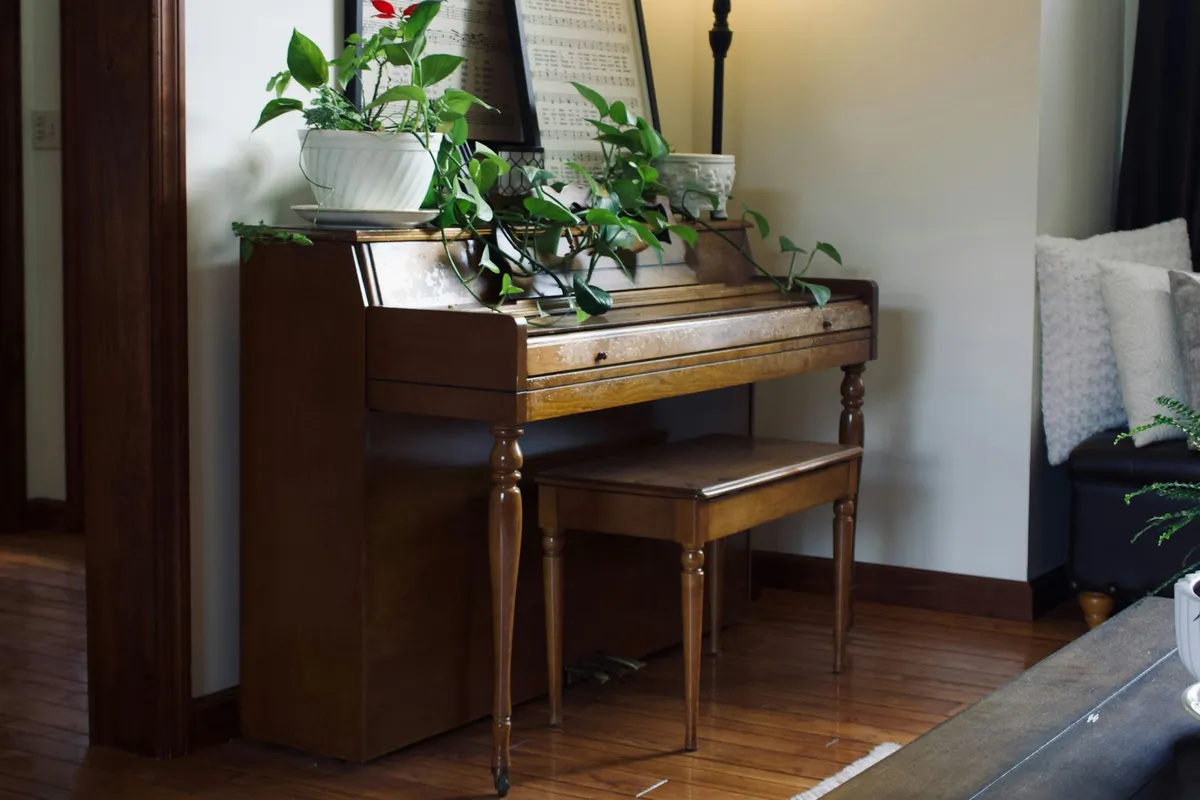
An upright piano travels in the same position it stands in. The goal is to keep it vertical, balanced, and wrapped from the moment it leaves the wall until it is placed in the new room.
- Wrap the piano. Cover the whole case in thick moving blankets and secure them with stretch wrap or straps, paying extra attention to the corners and the keyboard side.
- Position the crew. Upright pianos need at least two people, and three or four is safer. One person guides and watches the path while the others lift and steady.
- Lift onto a piano dolly. Tilt the piano back slightly, slide a heavy-duty dolly under the center of the weight, and lower it evenly. Lift with your legs, keep your back straight, and never lift by the legs or the keyboard lid.
- Roll slowly and keep it upright. Move at walking pace, call out thresholds and turns, and stop before any change in floor surface.
- Load it against the truck wall. Once inside, the piano is strapped upright against a solid wall with padding between the case and the truck.
How to move a grand piano
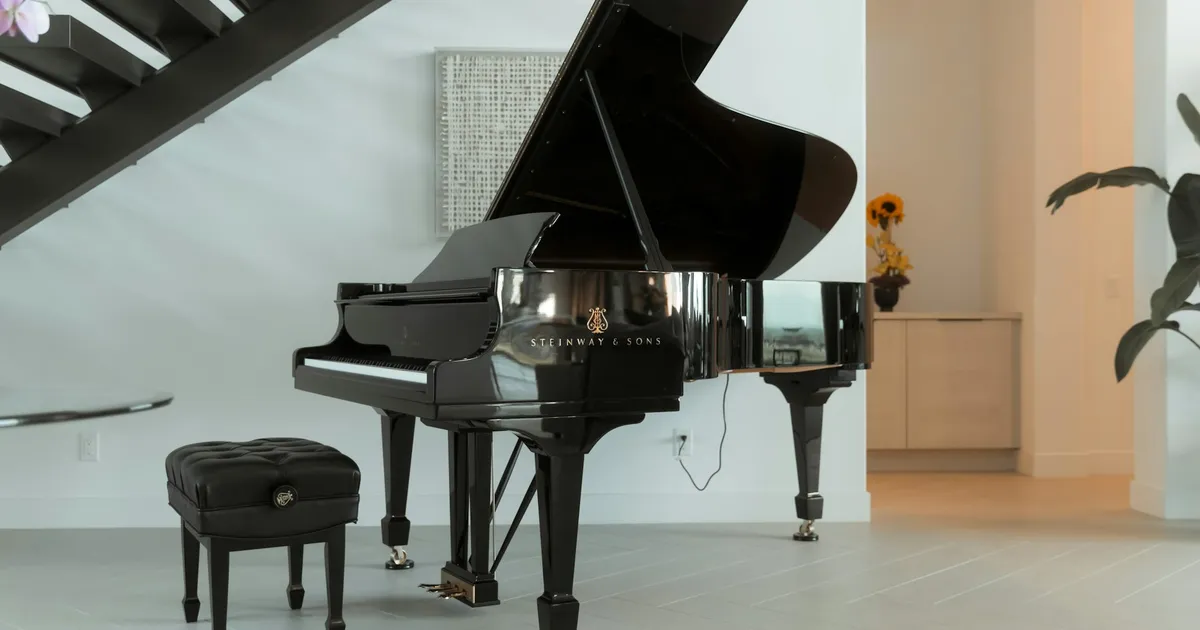
A grand piano is moved on its side, and it is partly taken apart first. This is technical work, and the order of steps matters.
- Remove the music desk and close the lid. The lid is closed or removed, depending on the model, and the music desk is wrapped separately.
- Remove the pedal lyre. The lyre holds the pedals and connecting rods and should be detached and wrapped so it is not bent during the tilt.
- Place a padded piano board. The crew positions a padded board, sometimes called a skid board, beside the piano.
- Take off the legs one at a time. While the crew supports the case, the legs are removed on one side, the piano is lowered onto the board with its straight side down, and then the remaining leg is removed.
- Strap, wrap, and roll. The piano is strapped to the board, wrapped in blankets, and rolled on a dolly to the truck.
- Reassemble in reverse. At the new home the legs, lyre, and lid go back on before the piano is set upright and leveled.
Stairs, hills, and tight access
In the Bay Area, the route is often the hardest part of a piano move. San Francisco Victorians have long, steep front stairs. Hillside homes in Oakland, Mill Valley, and Los Gatos can mean narrow paths and sloped driveways. High-rise buildings add service elevators with fixed dimensions and strict move hours.
Stairs change the physics of the job. On a staircase, the people below the piano carry far more of the weight than the people above it, and a slip has nowhere to go. That is why crews plan each step, use a padded board and straps rather than bare hands, and rest the piano only on flat landings.

After the move: placement and tuning
Place the piano on an inside wall if you can, away from heating vents, fireplaces, radiators, and direct sun. Pianos respond to temperature and humidity, and steady conditions help them hold their tune.
Even a careful move can shift the tuning. Most piano technicians suggest waiting a few weeks after delivery so the instrument can settle into the new room, then booking a tuning.
When to hire professional piano movers
A do-it-yourself piano move can make sense for a small upright on one floor with a clear, flat path. For most other situations, the risk of injury and damage is higher than it looks. Consider a trained crew if:
- The piano is a grand, a large upright, or an antique.
- The route includes stairs, a steep driveway, or a tight turn.
- The building requires a certificate of insurance or a reserved elevator.
- The piano has sentimental or high value and you want it wrapped and handled as a specialty item.
Impel's white glove service covers pianos, art, antiques, and designer furniture, planned in writing before move day. If the piano is part of a full household move, it is scoped alongside your house move so one crew handles everything.