Moving a safe is a job for a licensed, insured crew with the right equipment, not a favor you ask of friends. Gun safes alone commonly weigh 600 to 1,000 pounds, and professional help typically runs a few hundred dollars. The price depends on weight, stairs and distance. Before you hire anyone, confirm the mover’s license and insurance, get a written quote, and tell the company about the safe up front.
This guide covers what safe moving services include, how crews handle heavy safes, how to prepare, what it costs, and how to vet a mover so your safe and your home arrive undamaged.
TL;DR
- A safe is dense, top-heavy and awkward. Pros use dollies, ramps, straps and enough people for the job, so nobody is hurt and floors and walls stay intact.
- Tell your mover the safe’s size, weight, location and any stairs before booking, so the quote and the crew match the job.
- Expect to pay more for stairs, tight turns and heavier safes. Industry estimates for a gun safe run from about $200 to $525 on average.
- Verify the mover: authorization, insurance, complaint history and a written estimate based on an in-person look, as the FMCSA advises.
- For interstate moves, understand valuation. The default protection can be as low as 60 cents per pound per article.
Table of Contents
- What safe moving services include
- Will a moving company move a safe?
- How professional movers handle a heavy safe
- How to prepare a safe before moving day
- How much does it cost to move a safe?
- How to check that a safe mover is qualified and insured
- Safety risks when moving a safe, and how to reduce them
- Our perspective
- Moving a safe as part of a bigger move
- Plan your move with one dedicated team
- FAQ
- Sources
What safe moving services include
A safe move is more than lifting. A proper service covers the whole path from where the safe sits now to where it will sit next:
- A walk-through of the route. The crew looks at doorways, hallways, turns, steps, thresholds and the landing spot.
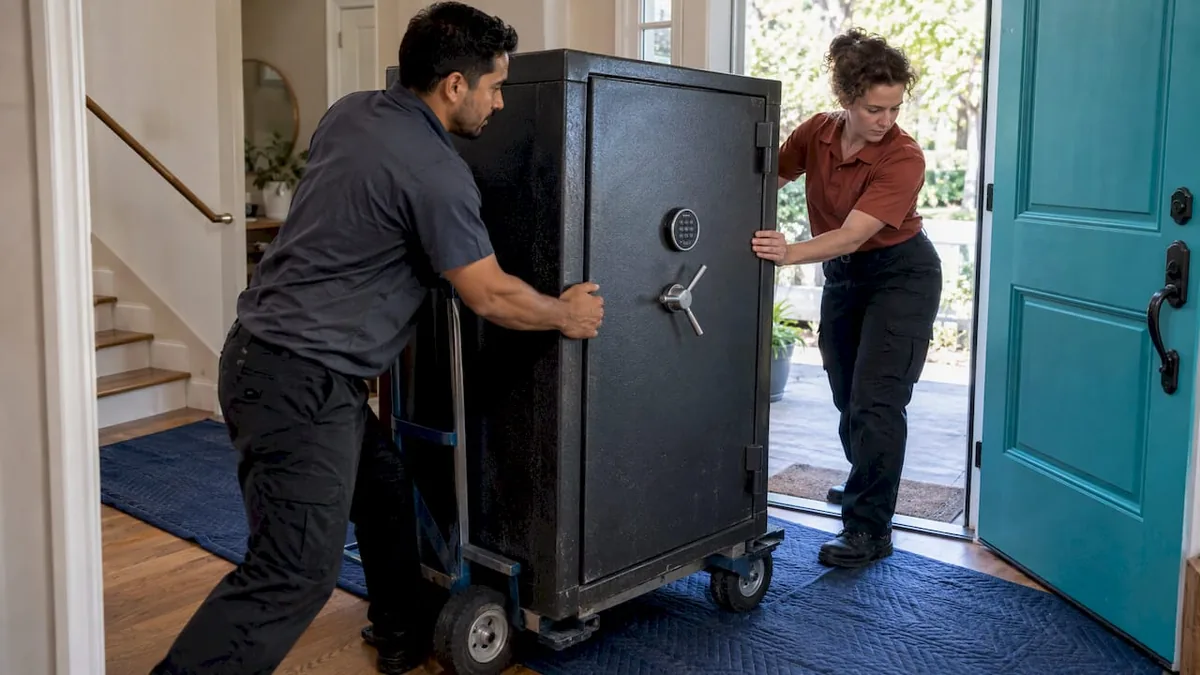
- Equipment matched to the weight. That usually means heavy-duty dollies, straps, blankets, floor protection and, for the heaviest units, powered or hydraulic equipment.
- A trained crew. Safes shift weight suddenly. Experienced movers know where to stand, when to stop and when a job needs more people.
- Placement. The safe is set where you want it, often against a wall, in a closet or on a concrete garage floor, and leveled so the door swings properly.
- Protection for your property. Floors, door frames and stair edges are padded before anything rolls.
Safes come in many types: gun safes, fire safes, home vaults, office safes and small document or media safes. A small fireproof box can ride in a normal move like any other fragile item. A large floor safe is a specialty job and should be quoted as one.
Will a moving company move a safe?
Many will, but not all. Some movers decline safes above a certain weight because they lack the equipment or the insurance for it. Others treat a safe as a specialty item with its own line on the quote.
That is why the first call matters. Give the mover these details:
- The make, approximate dimensions and weight of the safe (the manufacturer’s label or manual usually lists it).
- Where it is now: basement, garage, upstairs bedroom, office suite.
- Where it is going, and whether the path has stairs, narrow turns or elevators.
- Parking and loading access at both addresses.
- Whether it is part of a bigger household move or a standalone job.
At Impel Moving we handle specialty and high-value items as part of our residential and commercial moves, and our crews are full-time, trained employees rather than subcontractors. If you have a heavy or high-value piece, mention it when you request a free quote so the plan is built around it from day one.
How professional movers handle a heavy safe
Weight is only part of the problem. A safe is dense for its size, its center of gravity can be high, and the door is often the heaviest part. Here is how a good crew approaches it.
Planning the path
Before lifting, the crew measures the safe against every opening on the route. Door frames sometimes need hinge-pin removal for clearance. Carpet runners, plywood or floor protection go down where the dolly will roll.
Equipment that does the lifting
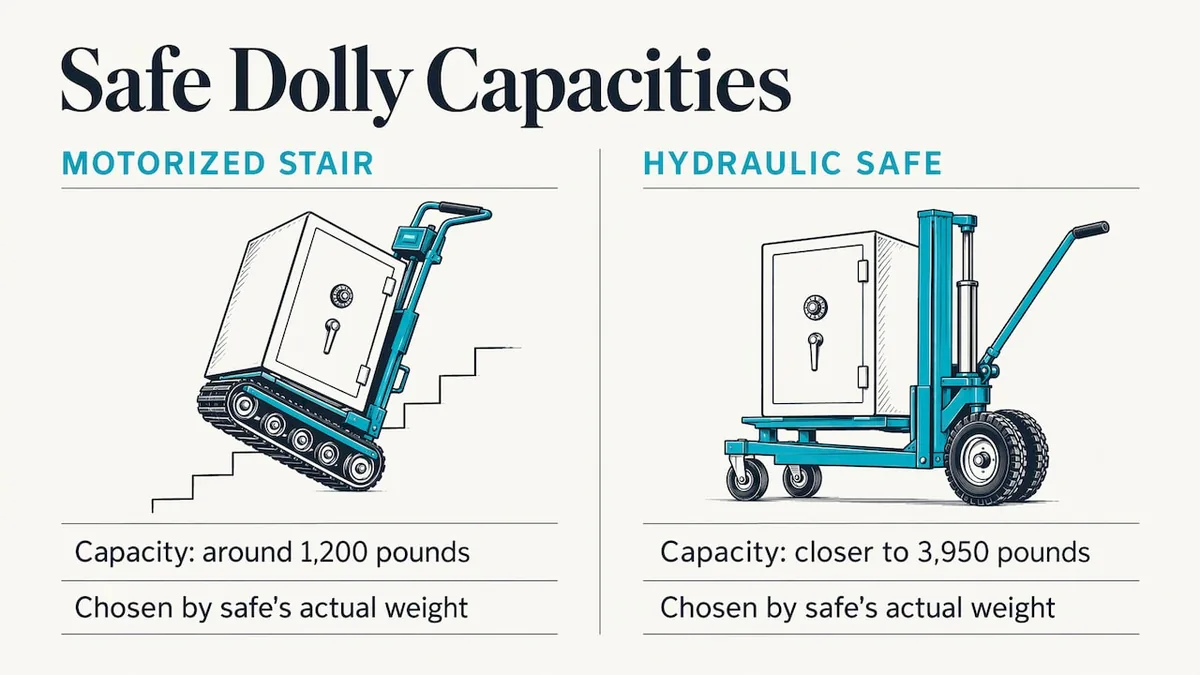
People should not be the lifting mechanism. Specialty dollies are rated for weight. One equipment guide notes that motorized stair-climbing dollies are usually capable of around 1,200 pounds, while hydraulic safe dollies can handle closer to 3,950 pounds. A crew picks the tool based on the actual weight of your safe, not a guess.
Keeping it upright
Most safes are moved upright and strapped securely to the dolly. Tipping or laying one down can damage the door mechanism or insulation, so check the manufacturer’s guidance before anything is tilted.
Stairs and tight spaces
Stairs are where injuries and damage happen. They are also the main reason quotes rise. If your safe is in a basement or on a second floor, say so early. In some cases the safest plan involves extra crew members or specialized rigging, and a good mover will tell you that before moving day.
Loading and securing
In the truck, the safe is placed against the bulkhead or a wall, strapped to anchor points and cushioned so it cannot slide or tip during turns and braking. A safe that shifts in transit can damage everything around it.
How to prepare a safe before moving day
A little prep keeps the crew fast and the safe protected.
- Empty it. Remove all contents, which also reduces weight. Move valuables, documents and cash yourself, and keep them with you.
- Handle firearms legally and safely. If the safe holds firearms, unload and transport them separately and lawfully. Rules differ by state and city, so check with California’s Department of Justice or your local law enforcement before moving them across lines.
- Secure loose parts. Take out shelves, racks and door organizers. Pack them separately, or ask your mover how they want them handled.
- Keep the door locked. Lock it so the door cannot swing open on the dolly. Keep the combination or key with you and do not hand it to anyone.
- Photograph it. Take photos of the safe, the floor and walls along the route before the move. They help if there is ever a damage claim.
- Clear the path. Move furniture, rugs and boxes out of the route and have the destination space ready.
- Check the destination floor. A safe concentrates a lot of weight on a small footprint. If you are placing it on an upper floor, confirm the structure can handle it with a qualified professional, such as a contractor or structural engineer.
- Plan anchoring. Many owners bolt safes to the floor or wall. If you plan to, have the right drill, anchors and spot ready.
For the rest of your move, our packing tips cover how the pros keep everything else organized so the safe is the only complicated item on the truck.
How much does it cost to move a safe?
Cost depends on what the job demands, not a fixed rate. The main drivers:
| Factor | Why it changes the price |
|---|---|
| Weight and size | Heavier safes need more crew and more specialized equipment |
| Stairs | Each flight adds labor, risk and sometimes rigging |
| Distance | A same-building move costs less than a cross-region move |
| Access | Narrow doors, tight turns and long carries add time |
| Placement | Bolting down, leveling or tricky positioning takes extra time |
| Bundled or standalone | A safe added to a larger move is often easier to plan than a one-off trip |
For a sense of the range, Angi reports that professional gun safe moves average between $200 and $525, with movers typically charging $25 to $50 per mover per hour. The same source puts DIY gear such as dollies and straps at $40 to $65, but says moving a gun safe yourself risks your physical safety given the weight. These are national averages. Bay Area labor, parking and building access can change the number.
We do not publish a flat price for safe moves, because the right number depends on your route. You can read how our written estimates work on our Bay Area moving costs page, and how to read a moving quote explains what each line should tell you.
Two cautions on quotes. First, a quote that comes without anyone seeing your home is a guess. The FMCSA advises getting written estimates based on an in-person inspection. Second, the California Moving & Storage Association warns that extremely cheap rates are a red flag that service will fall short.
How to check that a safe mover is qualified and insured
A safe is expensive, heavy and sometimes irreplaceable. Check the company before you hand over the job.
Licensing and authorization
The FMCSA tells consumers to make sure the mover is authorized and insured and to look up its complaint history in the agency’s search tool. It also notes that a U.S. DOT number is required for interstate moves, while intrastate requirements vary. For a local California move, our guide on how to check a San Francisco mover is licensed walks through the steps, and our licensing and insurance page explains what we carry and how to request a certificate of insurance.
Insurance that matches the job
The CMSA advises confirming that movers carry required coverage, including workers’ compensation and cargo insurance. Workers’ compensation matters for safes in particular, since this is the kind of lift where a crew member can be hurt. Ask for proof, not a promise.
Understand valuation on interstate moves
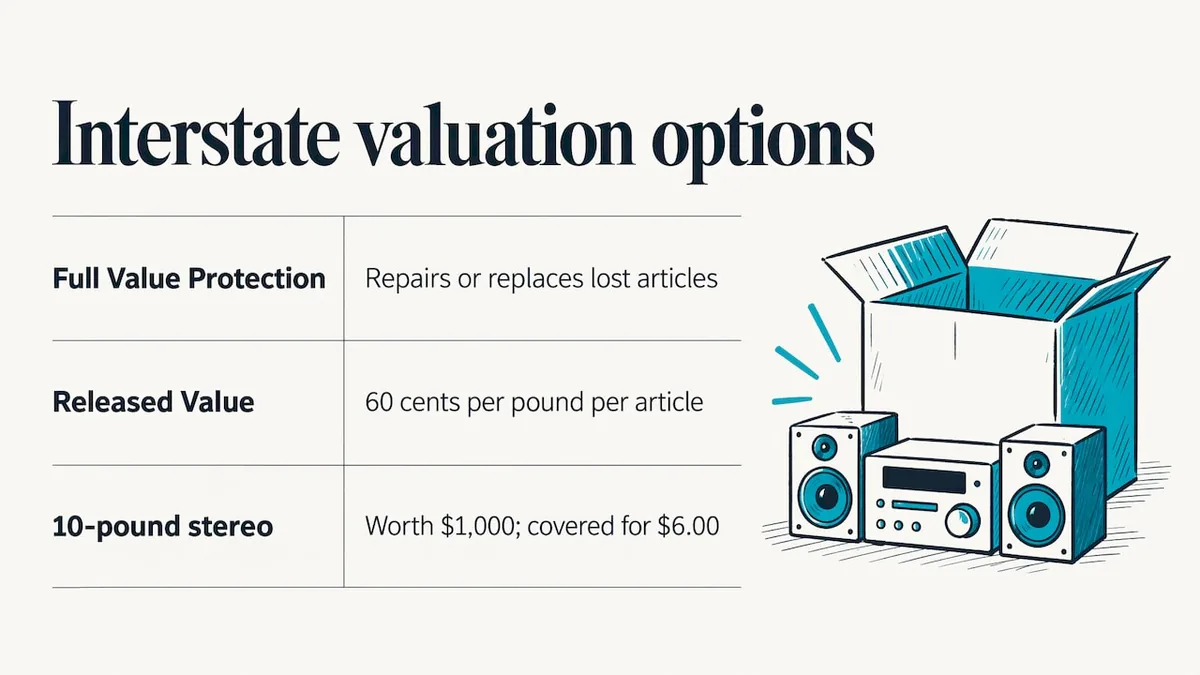
Liability for loss or damage is not the same as insurance, and the default can surprise people. Federal rules require interstate household goods movers to offer Full Value Protection or Released Value. Under 49 CFR Appendix A to Part 375, Full Value Protection means the mover repairs or replaces any article lost, destroyed or damaged in its custody. Released Value provides minimal protection at 60 cents per pound per article, so a 10-pound stereo worth $1,000 would be covered for only $6.00.
With a safe, apply that math to your own situation: a 600-pound safe at that rate is a very different number than its replacement cost. Ask which option your quote includes, choose deliberately, and put it in writing.
Get it in writing
A solid written quote names the services, the crew, the equipment where relevant, the handling of stairs and any special items. The FMCSA also notes that movers must deliver goods for no more than 10 percent above a non-binding estimate on regulated household goods moves.
Safety risks when moving a safe, and how to reduce them
| Risk | How it is reduced |
|---|---|
| Back and crush injuries | Use rated equipment and enough trained people, never improvised lifting |
| Tipping on stairs | Plan the route, use stair-capable equipment, add crew where needed |
| Floor and wall damage | Protect floors, pad corners and door frames |
| Shifting in the truck | Strap to anchor points and place against a solid surface |
| Wrong-weight assumptions | Confirm real weight from the label or manual before the quote |
| Contents shifting inside | Empty the safe and remove loose shelves |
The common thread is that every one of these risks is a planning problem. Surprises on moving day, such as an undisclosed second floor or a hallway that is two inches too narrow, are what turn a routine job into an injury or a damage claim.
Our perspective
Most of the safe moves that go wrong start with a vague phone call. The customer says “I have a safe,” the company says “no problem,” and nobody asks how heavy it is or how many stairs are between it and the truck.
That is why we build every move around one dedicated team from start to finish. The crew that sees your home during planning is the crew that does the work, so the details you mention on the quote do not get lost between departments. Our teams are full-time, trained employees, not subcontractors, and that consistency matters most on a job where one bad lift is costly.
Bay Area moves add their own challenges: steep driveways, narrow stairwells, older buildings, tight parking and elevator reservations. We plan for those in writing, with clear, upfront quotes, so you know what to expect before moving day.
If you own something heavy or high-value, tell us early. It is far easier to plan well than to improvise on the stairs.
Julia
Moving a safe as part of a bigger move
Most people do not move a safe alone. It travels with a home, an apartment or an office, and that is usually the smoother route. One crew, one plan, one written quote.
- Home moves. A safe in a garage or bedroom closet is planned alongside furniture and boxes. Our residential movers and local movers teams plan the sequence so the heaviest item is loaded when the crew is fresh and the path is clear.
- Long-distance moves. If the safe is heading out of the area, ask about handling and valuation. Our long distance moving page explains how those moves are planned, and our post on whether your things stay on one truck covers a common concern on California routes.
- Offices and businesses. Office safes, records vaults and secure storage are part of many commercial relocations. Our commercial movers team plans these around your business schedule.
- Valuables. If the safe protects art, antiques or collectibles, our guide to moving art, antiques and valuables shows how careful handling is planned.
Plan your move with one dedicated team
Impel Moving is a family-owned Bay Area company handling residential and commercial moves, from apartments and large homes to offices. We provide packing and unpacking, furniture assembly and disassembly, white glove delivery and support for specialty and high-value items. Every move gets one dedicated team and a clear written quote, and we are licensed and insured. Tell us about your safe, your stairs and your timeline, and we will build the plan around them.

Ready to start? Get a free moving quote, or look at our full moving service if you want packing, moving and setup handled together.
FAQ
Will a moving company move a safe?
Many will, but it depends on the safe’s weight and the company’s equipment and insurance. Always disclose the safe when you request a quote so the crew and equipment are planned for it. A mover who agrees without asking about weight or stairs has not really planned the job.
How much does it cost to move a safe?
It depends on weight, stairs, distance and access. As a national reference, Angi reports averages of $200 to $525 for gun safes. For a number that fits your home, ask for a written quote based on an in-person or detailed review of the route.
How do I know a safe mover is insured?
Ask for proof of cargo and workers’ compensation coverage, and check the mover’s authorization and complaint history in the FMCSA search tool. For interstate moves, also confirm which valuation option your quote uses. Put the answers in writing.
Can I move a safe myself?
Small safes, yes, with care. Heavy ones are another matter: gun safes often weigh 600 to 1,000 pounds, and Angi’s guidance says moving one yourself risks your physical safety. Hiring a trained crew protects you, your floors and the safe.
Should I empty the safe before the move?
Yes. Emptying it lowers the weight and protects the contents. Carry valuables and documents yourself, and transport any firearms separately and in line with California and local rules.
Sources
- How To Move A Gun Safe | Angi
- Safe Dolly | Moving Authority
- Steps to Select a Mover | FMCSA
- Guidance Q&A Question 1: What is Valuation and Insurance? | FMCSA
- 49 CFR Appendix A to Part 375 | Cornell Law School
- Selecting a Mover | California Moving & Storage Association
- Firearms | California Department of Justice